

More news on this day
A new chapter in sustainable travel is unfolding at an Italian shipyard, where Viking’s hydrogen-powered cruise ship Viking Libra is emerging as a high-profile test of whether large-scale ocean tourism can align with tightening climate ambitions.
Get the latest news straight to your inbox!
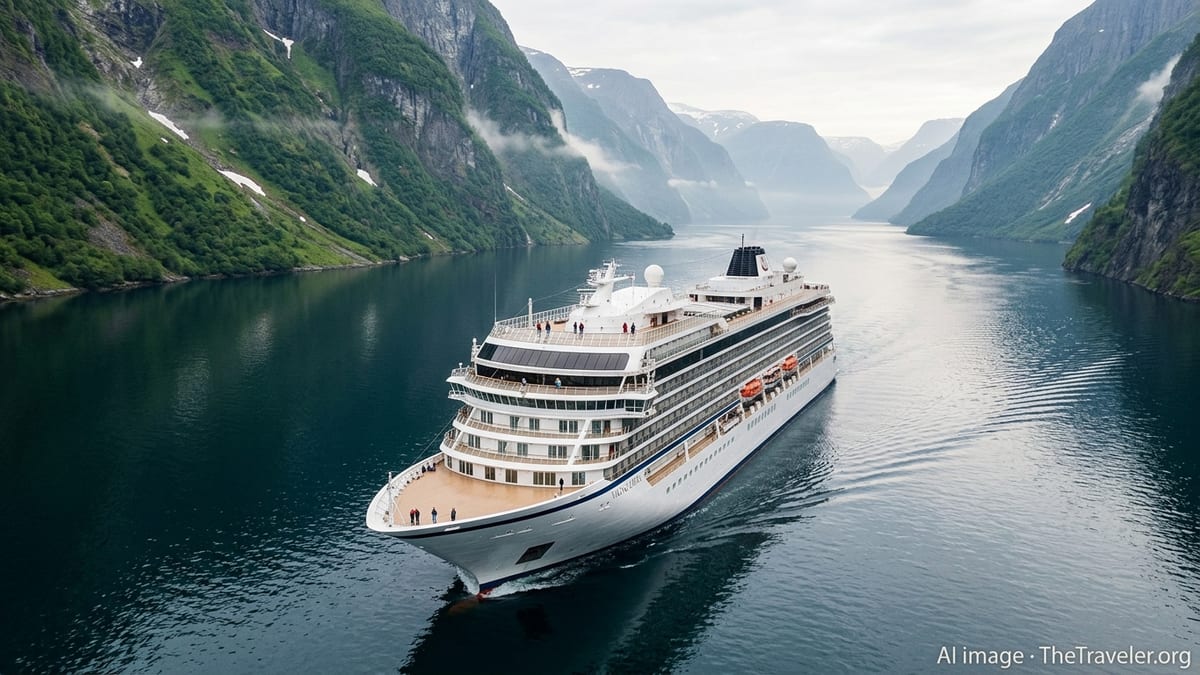
Viking Libra Positions Hydrogen at the Heart of Cruise Innovation
Viking Libra, under construction at Fincantieri’s Ancona yard in Italy, is widely described in industry coverage as the world’s first cruise ship designed to use hydrogen stored on board for both propulsion and electricity generation. Publicly available specifications indicate the 47,000-gross-ton vessel will carry around 998 guests in nearly 500 cabins, putting it in the small-to-midsize segment of the global cruise market rather than among today’s largest mega-ships.
The ship is being built around a hybrid propulsion architecture in which liquefied hydrogen feeds proton exchange membrane fuel cells supplied by Isotta Fraschini Motori, a Fincantieri subsidiary specializing in advanced powertrains. The fuel cell installation is expected to deliver up to six megawatts of power, enabling periods of zero-emission operation where only water vapor and warm air are released.
Industry reports indicate Viking Libra is scheduled to enter service in late 2026, following a construction timeline that has included a keel-laying milestone in 2025 and progressive fit-out through 2026. Analysts describe the project as a flagship for both Viking and Fincantieri, intended to demonstrate that hydrogen, long discussed as a marine fuel of the future, can be scaled to a full-size cruise ship carrying paying passengers.
Although conventional marine fuels will remain on board as a backup, the technical design aims to maximize low- and zero-carbon operation, particularly in ports and environmentally sensitive waters. This hybrid model mirrors broader trends in shipping, where early hydrogen deployments are often paired with batteries and conventional engines to manage cost, safety and reliability.
A Visible Turning Point for Sustainable Ocean Tourism
Viking Libra’s development comes as regulators, investors and travelers place mounting pressure on the cruise industry to curb greenhouse gas emissions and air pollution. European Union climate policies are tightening around maritime transport, and several destinations, including parts of Norway’s fjords, are moving toward stricter emissions rules for visiting ships.
Publicly available information on Viking’s fleet shows that the company has already experimented with alternative power systems. Earlier ocean vessels, such as Viking Neptune, have tested smaller fuel cell installations, and newer ships like Viking Vela incorporate preparations for future use of low-carbon fuels. Viking Libra, however, is being framed as the first in the fleet where hydrogen is central to the propulsion concept rather than a limited pilot.
Environmental groups and maritime analysts generally view fuel cells as an attractive option because they convert chemical energy directly into electricity without combustion. When supplied with green hydrogen produced from renewable electricity, this pathway can allow ships to operate with minimal lifecycle greenhouse gas emissions. However, experts also highlight that the true climate benefit depends heavily on how the hydrogen is produced and transported, and whether it is available at scale in ports.
For the travel sector, Viking Libra functions as a high-visibility test case. Cruise ships are among the most recognizable symbols of mass tourism, and their energy choices can influence public perceptions of whether long-distance leisure travel can be compatible with climate goals. The decision to invest in hydrogen at this scale signals that at least some operators expect demand for low-emission cruising to grow and are preparing for future regulation that could penalize more carbon-intensive vessels.
Technical Design Targets Zero-Emission Operations in Sensitive Waters
According to technical briefings published by Fincantieri and industry media, Viking Libra’s power system has been engineered with a particular focus on operating in emission-controlled areas. The hydrogen and fuel cell installation is expected to support voyages in regions where local rules restrict conventional marine fuels, including fjords and other coastal environments that are vulnerable to air pollution and climate impacts.
The ship’s design closely follows the layout of recent Viking ocean vessels, using a relatively compact hull and passenger capacity to limit overall energy demand. Reports indicate that this allows the vessel to make more meaningful use of hydrogen, which is less energy-dense by volume than traditional marine fuels and requires large, heavily insulated storage tanks when carried as a liquid.
Hydrogen fuel cells will be complemented by other efficiency measures already familiar across the cruise sector, such as optimized hull forms, advanced waste heat recovery and energy-management systems that reduce hotel loads on board. By combining many incremental improvements with a step-change fuel, Viking Libra is intended to demonstrate how multiple technologies can be integrated into a coherent low-emission platform.
Specialists following the project note that onboard safety, storage infrastructure and bunkering procedures are key challenges. Hydrogen must be kept at cryogenic temperatures when liquefied, and shipbuilders have integrated newly developed containment systems and segregation measures to manage risks. Lessons from ferries and smaller hydrogen-powered vessels in Northern Europe are expected to inform operational practices once the ship enters service.
Hydrogen Cruises Face Infrastructure and Supply Hurdles
While Viking Libra is being promoted as a milestone for clean cruising, industry observers emphasize that it will not by itself transform the sector’s overall emissions profile. The availability of green hydrogen at commercial scale remains limited, and building the port infrastructure required for storage, handling and bunkering is a multi-year undertaking that involves energy companies, port authorities and regulators.
Analysts point to a series of open questions around how frequently Viking Libra will be able to rely on hydrogen in its initial years of service, and on which itineraries. If the vessel must operate largely on conventional fuels due to limited hydrogen access, its immediate climate benefits could be more modest than the design headline suggests. Over time, however, expanding fuel supply chains in Europe and beyond may enable more consistent zero-emission operation.
Cost is another factor. Hydrogen fuel and the associated systems are currently more expensive than traditional marine fuels, and early projects are generally understood to be supported by a combination of long-term investment horizons, potential green financing and expectations of future environmental regulation. Cruise lines and shipbuilders are watching the economics closely to understand when and how hydrogen can compete on a broader commercial basis.
Despite these challenges, maritime technology reports describe a growing pipeline of hydrogen-related projects across cargo, ferry and expedition segments. Viking Libra sits within this wider wave of experimentation, offering a real-world platform where technical performance, passenger experience and commercial viability can all be evaluated together.
Setting a New Benchmark for Climate-Conscious Travelers
The emergence of Viking Libra is resonating beyond shipyards and classification societies, reaching consumers who are increasingly scrutinizing the climate impact of their holidays. Surveys of travelers over recent years have shown rising interest in lower-impact itineraries, and many destinations now market themselves with sustainability credentials in mind.
By committing to a hydrogen-capable ocean ship, Viking is positioning its brand toward this segment of climate-conscious guests. Travel trade coverage suggests that the company will leverage the ship’s technology story in its marketing, highlighting periods of zero-emission sailing and operations in protected environments. How this message is received could influence how quickly other operators invest in similar concepts.
Viking Libra also contributes to a broader repositioning of cruising within the sustainable travel conversation. Once seen almost exclusively as a high-emission form of leisure, the sector is now increasingly judged on whether it can reduce its footprint through cleaner fuels, better efficiency and closer cooperation with port cities and environmental stakeholders. Hydrogen is not the sole solution, but its adoption on a mainstream ocean ship is being interpreted as a sign that the industry is preparing for deeper structural change.
For travelers watching these developments, Viking Libra offers an early glimpse of what low-emission ocean holidays might look like later this decade. As the vessel moves from construction milestones toward sea trials and entry into service, its performance will be closely watched by cruise lines, regulators and destinations that are seeking credible pathways to keep global tourism afloat in a warming world.