

More news on this day
The residential cruise ship Villa Vie Odyssey has received a special recognition from UNESCO, highlighting its globe-circling voyage as a platform for peaceful exchange, cultural understanding, and education at sea.
Get the latest news straight to your inbox!
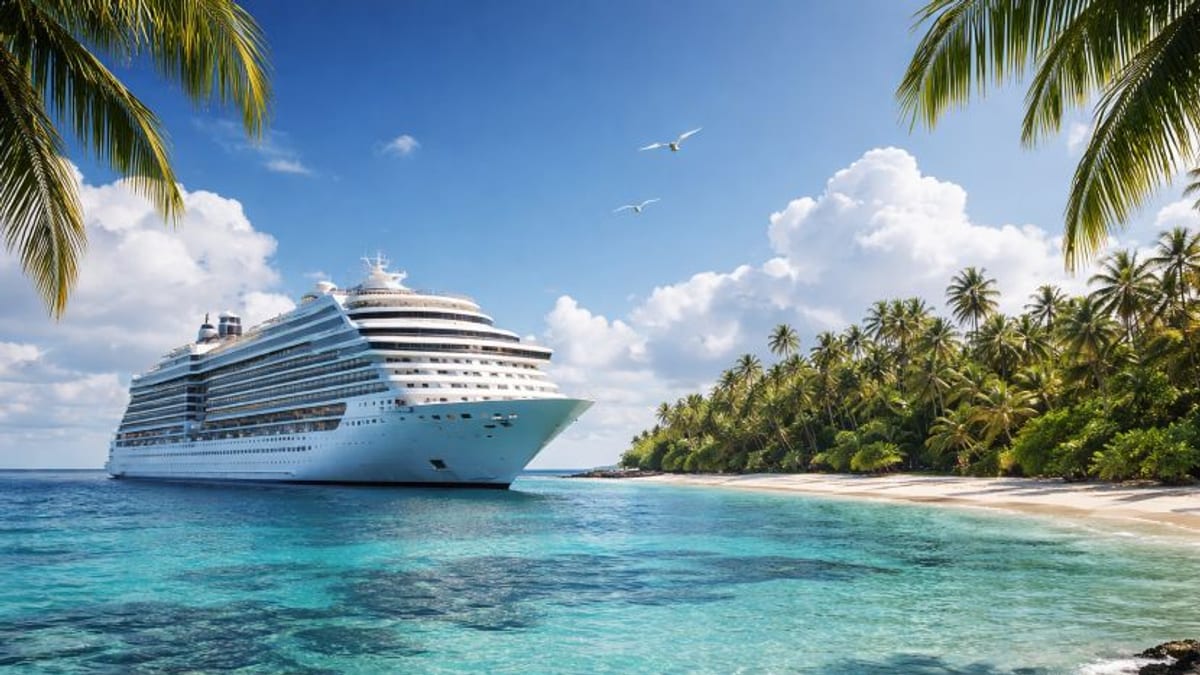
Image by Travel And Tour World
A Floating Community Recognized for Its Mission
The Villa Vie Odyssey, operated by Villa Vie Residences, is a refitted ocean vessel that serves as a full-time home for residents who live, work, and travel on board while the ship undertakes an extended world itinerary. Publicly available information shows that the ship was originally launched in the early 1990s and later converted to a residential concept, with apartments and long-term staterooms marketed to travelers seeking a slow, continuous journey across continents.
Reports on the program indicate that the current itinerary spans several years and is designed to call at hundreds of ports on multiple continents, including destinations known for their cultural heritage sites and complex histories. The UNESCO designation places particular emphasis on how the ship’s programming and routing are organized around themes of shared heritage, cultural diversity, and peaceful cooperation.
According to published coverage, the recognition aligns with broader efforts at UNESCO to support initiatives that use tourism as a tool for education and dialogue, rather than short-stay consumption. By acknowledging a residential cruise as part of this trend, the designation extends the conversation about responsible travel into the emerging niche of long-duration, community-style voyages.
The UNESCO decision positions Villa Vie Odyssey as a symbolic flagship for what is often described as “travel for peace,” in which itineraries, onboard content, and partnerships with local organizations are designed to foreground mutual understanding over spectacle.
Travel for Peace: How the Voyage Is Framed
Publicly available descriptions of Villa Vie Odyssey’s route highlight a deliberate focus on regions where cultural exchange and historical memory are central themes, from European port cities with layered histories to communities in Africa, the Americas, and the Pacific that are reshaping their tourism models. The UNESCO designation draws attention to these choices, framing the voyage as part of a broader movement to transform tourism into a sustained learning experience.
Instead of traditional back-to-back leisure cruises, the residential model allows residents to spend months or years aboard, creating what observers describe as a “floating neighborhood.” This continuity, proponents argue, makes it easier to develop long-term educational programming on topics such as world heritage protection, post-conflict recovery, climate resilience in coastal communities, and indigenous cultural preservation.
Reports indicate that shore days are increasingly oriented toward small-group experiences, community visits, and guided explorations of historic districts and landscapes, particularly in locations recognized on the UNESCO World Heritage list. While not all ports of call are associated with formal heritage status, the overall program is framed as a way to link different examples of shared human history and living culture.
By foregrounding peacebuilding themes in this way, Villa Vie Odyssey is positioned as a case study in how extended itineraries and repeat visits may support more respectful relationships between visitors and host communities, especially when combined with transparent guidelines on cultural sensitivity and local engagement.
UNESCO’s Growing Interest in Transformative Tourism
UNESCO’s decision to honor the Villa Vie Odyssey reflects a wider institutional interest in tourism projects that demonstrate clear educational aims and community benefits. In recent years, public documentation from the organization has increasingly highlighted the need for travel initiatives that reduce pressure on overcrowded destinations and distribute visitor spending more equitably.
Within this context, long-duration voyages and residential ships are seen as experimental models. They can adjust schedules to avoid peak periods, linger longer in smaller ports, and develop recurring relationships with local partners. The Villa Vie Odyssey designation draws attention to these possibilities, signaling that innovation in how people move around the world can be considered alongside more established heritage conservation efforts.
Analysts following tourism trends note that UNESCO’s engagement with such projects also reflects concerns about climate, overtourism, and social fragmentation. Programs that emphasize dialogue, shared learning, and respect for local governance are being scrutinized for their ability to mitigate these pressures. Villa Vie Odyssey’s recognition places it among a growing set of initiatives that are expected to demonstrate measurable contributions in these areas over the life of their itineraries.
The designation also functions as a communication tool, giving travelers a recognizable reference point when comparing different long-term travel options. By associating Villa Vie Odyssey with values of peace and intercultural understanding, UNESCO effectively signals to potential residents that the voyage’s ambitions extend beyond conventional cruise experiences.
Resident Experience on a Peace-Focused World Cruise
Coverage of the Villa Vie Odyssey project has emphasized how life on board differs from standard cruising. Because many residents treat the ship as a primary home, the onboard atmosphere is frequently described as community-oriented, with shared routines, recurring social networks, and long-term projects that continue from one ocean crossing to the next.
The UNESCO designation is expected to reinforce this community ethos by encouraging programming centered on dialogue and reflection. Public information on similar initiatives suggests that this can include lecture series on local histories, workshops on conflict-sensitive storytelling, film screenings highlighting host cultures, and collaborative art or research projects involving residents and local partners.
In practical terms, extended stays and repeated visits to certain regions give residents more time to understand the social and political contexts of the places they visit. Rather than a rushed checklist of destinations, the itinerary is framed as a cumulative journey, in which experiences in one port inform how residents interpret the next. This slower cadence is often cited by advocates of peace-focused travel as a way to reduce stereotypes and encourage more nuanced perspectives.
At the same time, expectations of residents are evolving. Reports indicate growing emphasis on responsible conduct ashore, from respectful photography and dress to support for local businesses and cultural institutions. The UNESCO recognition amplifies these expectations, positioning residents not only as travelers, but as informal ambassadors of the ship’s peace-focused mission.
Implications for the Future of Residential Cruising
The Villa Vie Odyssey designation arrives at a moment when residential cruising is attracting increased attention as a lifestyle choice and investment. New concepts and proposed ships, ranging from converted liners to purpose-built residential vessels, are entering planning or construction stages, each promising a distinct approach to long-term life at sea.
By highlighting peacebuilding and cultural understanding, UNESCO’s recognition introduces a new benchmark for this emerging sector. Prospective operators may see value in integrating stronger educational and community-engagement components into their offerings, not only as a response to traveler demand, but also as a way to align with global goals on sustainable development and cultural preservation.
Industry observers suggest that future residential ships could pursue similar endorsements if they can demonstrate credible frameworks for cooperation with host communities, transparent reporting on impacts, and robust internal governance on issues such as diversity and inclusion. The Villa Vie Odyssey designation offers a reference case against which these efforts may be measured.
For the broader travel industry, the development underscores how narratives of peace and mutual understanding are becoming more central to how complex itineraries are marketed and evaluated. Whether on land or at sea, projects that can connect travelers to global challenges and shared heritage in a sustained, reflective way are increasingly seen as part of a new chapter in international tourism.