

More news on this day
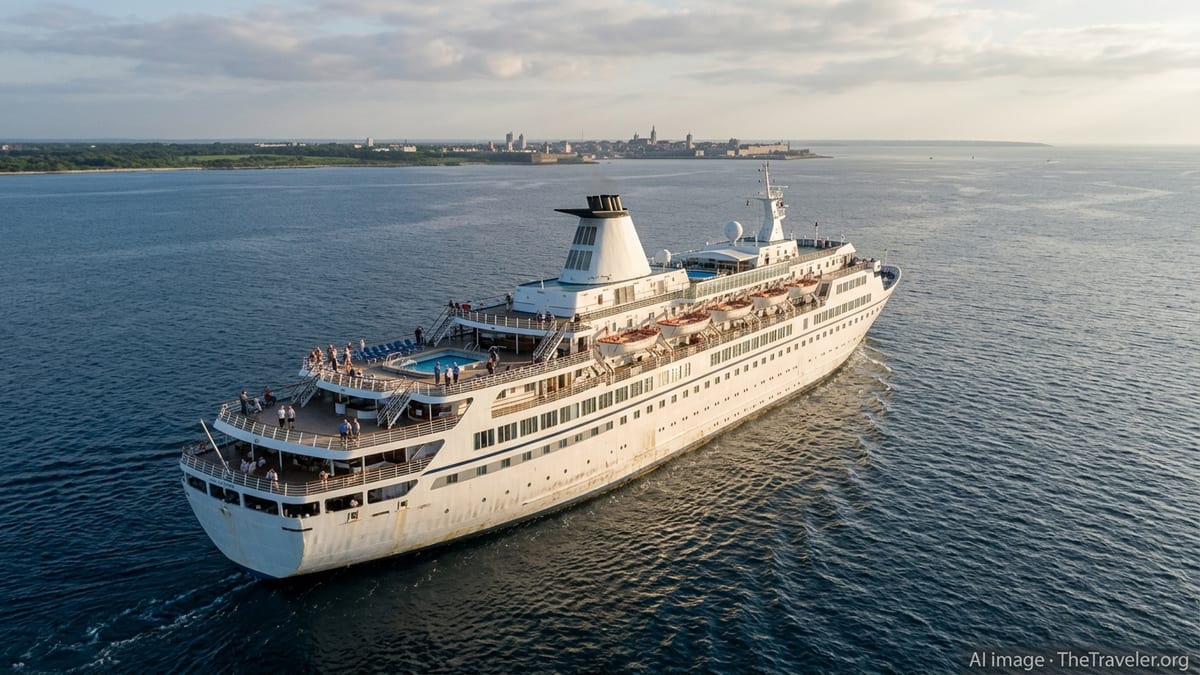
Residential cruise ship Villa Vie Odyssey has been named a UNESCO Global Flagship for Peace, a symbolic recognition that places the resident-owned vessel at the center of emerging efforts to link long-duration ocean travel with cultural dialogue, education and cross-border understanding.
Get the latest news straight to your inbox!
A Symbolic Milestone for Residential Cruising
The Global Flagship for Peace designation, part of UNESCO’s broader agenda to promote intercultural dialogue, highlights Villa Vie Odyssey as a platform where long-term residents and visiting communities can interact across cultures. Publicly available information indicates that the recognition focuses on the ship’s planned educational partnerships, cultural programming and slow-travel itineraries that prioritize extended time in diverse ports over rapid, checklist-style tourism.
Villa Vie Odyssey occupies a distinctive space in cruise travel as one of the few resident-owned ships currently in operation, sailing on multi-year continuous world itineraries. Reports on the residential cruise segment show that this model blends aspects of condominium living, retirement communities and expedition-style travel, with residents purchasing or leasing long-term accommodation on board while the ship circles the globe.
The UNESCO-linked peace designation is framed by industry observers as largely symbolic rather than regulatory, but it is still a notable endorsement at a time when cruise operators face growing scrutiny over environmental impact, port congestion and the social footprint of mass tourism. With this move, Villa Vie Odyssey is positioned not just as a floating neighborhood, but as a test case for whether a ship can function as a mobile, multi-national community aligned with cultural and educational values.
Analysts following the residential cruise sector suggest that such recognition may also help distinguish resident-focused products from mainstream ocean cruising. As more operators explore the concept of life at sea, third-party acknowledgments tied to peace, culture and learning could become a differentiator for travelers seeking meaning alongside comfort.
Life at Sea Reframed as Long-Term Cultural Exchange
Residential cruising has often been marketed in terms of lifestyle convenience and cost comparisons with land-based living, particularly for retirees and digital nomads. Villa Vie Odyssey’s new role as a Global Flagship for Peace reframes the message toward cultural immersion and people-to-people contact, emphasizing the ship’s multi-year routes that visit dozens of countries and hundreds of ports.
Coverage of Villa Vie’s operations indicates that the Odyssey follows extended world itineraries measured in years rather than weeks, giving residents repeated opportunities to experience regions in different seasons and to return to favorite destinations. This long horizon creates conditions for programming that goes beyond shore excursions, encompassing lectures, language learning, regional history sessions and volunteer opportunities coordinated with organizations on land.
The peace-focused framing places particular emphasis on how residents engage in destinations. Publicly available details point to an emphasis on small-group cultural encounters, local guides and port calls that highlight heritage sites, museums and community projects. While the specifics of each partnership vary by region, the overall approach aligns with UNESCO’s interest in preserving cultural heritage and supporting mutual understanding between visitors and host communities.
By linking residential life at sea with this type of programming, Villa Vie Odyssey is signaling a move away from the image of cruises as self-contained resorts disconnected from their surroundings. Instead, the ship is presented as a mobile base for slow travel, where residents can repeatedly step into local contexts and return with a deeper grasp of the social and historical forces shaping the places they visit.
Environmental and Social Scrutiny in a Growing Niche
The recognition comes as residential cruising navigates a period of rapid growth and heightened scrutiny. Reports on the market show that new brands and sister ships are being announced, with concepts ranging from mid-market communal living at sea to ultra-luxury floating neighborhoods. Villa Vie Odyssey is frequently cited as one of the pioneering examples of this model, having been repurposed from a traditional cruise vessel into a ship designed around long-term stays.
At the same time, cruise travel more broadly has attracted attention for its carbon emissions, waste management challenges and the pressure large vessels can place on fragile port cities. The peace flagship status does not address these concerns directly, and environmental advocates note that any credible effort to position a ship as a model for the future of travel must grapple with fuel consumption, emissions reduction technologies and responsible port operations.
Publicly available information on Villa Vie’s strategy indicates a combination of itinerary design, energy-efficiency upgrades and port agreements aimed at moderating impact. Analysts point out that residential cruises, by virtue of their slower pace and longer port calls, may have more flexibility to optimize routes, coordinate with local authorities on capacity and invest in shore power or other mitigation measures where available.
The UNESCO-linked peace narrative therefore intersects with a broader conversation about what “responsible cruising” should look like in the 2020s. Observers suggest that for the designation to resonate with increasingly climate-conscious travelers, operators will be expected to demonstrate not only cultural sensitivity but measurable progress on environmental performance and community benefit.
What the Designation Signals for Future Passengers
For prospective residents and long-stay guests, the Global Flagship for Peace naming is likely to influence both expectations and onboard culture. Marketing materials surrounding residential cruises already emphasize community, shared experiences and a sense of belonging among passengers who may live on board for months or years. Aligning with UNESCO’s peace and dialogue agenda adds an extra layer: the idea that residents are not only travelers but informal ambassadors during each port call.
Public descriptions of life aboard Villa Vie Odyssey highlight a mix of private living spaces and communal venues such as lounges, restaurants, a library and fitness areas, alongside spaces used for lectures and workshops. With the new recognition, there is an expectation that more of this shared programing will focus on intercultural themes, conflict-sensitive travel, heritage protection and contemporary global issues.
The peace focus may also appeal to travelers who are weighing different residential cruise options. Reports tracking the segment show that offerings now range from relatively accessible cabins to high-end apartments marketed to ultra-wealthy buyers. A ship that foregrounds cultural learning and dialogue may attract residents interested less in status and more in education, volunteerism or global citizenship, potentially shaping the demographic mix on board.
Industry commentators note that this could extend to partnerships with universities, cultural institutions and non-governmental organizations, which may use the ship as a platform for field courses, research projects or thematic voyages linked to peacebuilding, heritage conservation or migration studies. For Villa Vie Odyssey, the peace flagship status functions as a signal to these potential collaborators that the vessel is oriented toward more than leisure alone.
A New Era for Residential Cruise Competition
The designation of Villa Vie Odyssey as a UNESCO Global Flagship for Peace arrives at a time when the residential cruise segment is moving from novelty to competitive niche. Other resident-focused ships and projects have either launched or been announced, each seeking a distinct identity in a market that bridges real estate, hospitality and travel.
Recent coverage of the sector points to a growing diversification of products, from ultra-luxury concepts aimed at high-net-worth buyers to more affordable models designed for long-term travelers and retirees. In this context, third-party recognitions tied to peace, culture and education can help brands differentiate their offerings without relying solely on hardware, decor or price.
Villa Vie Odyssey’s new status could nudge competitors to seek similar validation, either by partnering with international organizations or by developing their own frameworks around sustainability, social impact or scientific research. For travelers, the result may be a residential cruise landscape where ships are defined not just by their amenities but by the values and missions they publicly embrace.
As the Odyssey continues its multi-year world voyage, industry observers will be watching to see how the peace designation translates into daily life on board and into interactions with the coastal communities the ship visits. Whether this marks the start of a broader shift in ocean travel or remains a singular experiment, it underscores how residential cruising is evolving from a lifestyle curiosity into a laboratory for new ideas about how people can live and move together across borders.