

More news on this day
As spring break travel reaches its peak in late March, videos of serpentine Transportation Security Administration lines snaking through U.S. terminals are flooding social media, capturing a season of unusually intense airport security backlogs.
Get the latest news straight to your inbox!
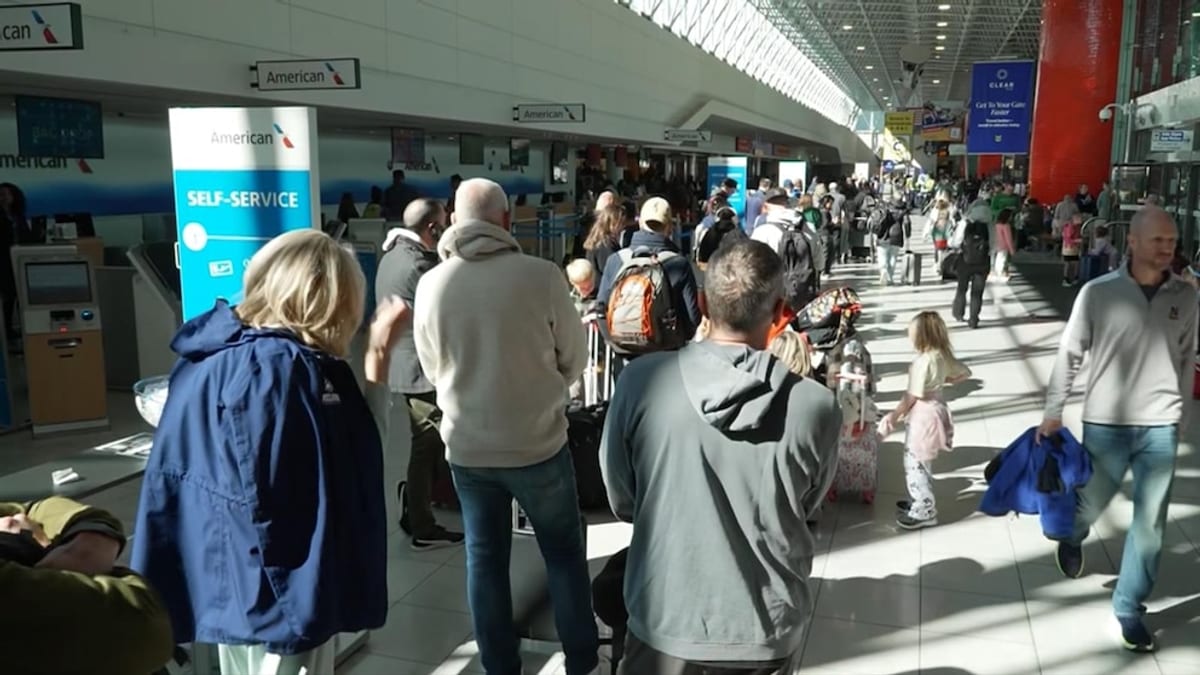
Image by abcnews.com
Viral clips put security gridlock in the spotlight
Across major hubs from New York to Houston, images and video clips shared online in recent days show security queues stretching far beyond the usual checkpoint stanchions, in some cases running the length of entire concourses. One widely shared video from New York’s LaGuardia Airport shows a line that appears to extend down Terminal B, with passengers inching forward past multiple turns.
In Houston, reports indicate that general screening times at George Bush Intercontinental Airport this week have reached several hours at peak periods, with expedited options such as TSA PreCheck and CLEAR temporarily unavailable at some checkpoints. Coverage from local outlets describes travelers waiting as long as four hours in standard lanes as airport staff work to triage the surge.
Other airports are experiencing more uneven conditions. Coverage from Charlotte Douglas International Airport, for example, notes that passengers there have largely avoided the worst of the congestion seen elsewhere, even as the terminal remains busy with spring holiday traffic. The patchwork picture has left many travelers unsure what to expect until they arrive at their departure airport.
Social posts from Denver, Minneapolis, Orlando and Austin also depict crowded early morning lines, particularly on Fridays and weekends when school districts begin spring recess. Some travelers report that once they reach the front, screening moves relatively quickly, underscoring that the bottleneck is often the sheer volume of people converging on checkpoints at the same time.
Shutdown fallout and staffing gaps deepen delays
The long lines are unfolding against the backdrop of a partial federal government shutdown that began in mid-February, leaving thousands of TSA officers working without pay. Publicly available figures cited in national coverage indicate that more than 450 officers have resigned since the shutdown began, while daily callout rates at some large airports have climbed to several times normal levels.
That attrition, combined with increased sick calls and low morale, has reduced staffing at checkpoints just as the travel calendar hits one of its busiest stretches of the year. In some major hubs, local reporting describes callout rates exceeding 30 percent among scheduled TSA workers, forcing airports to consolidate lanes and close some dedicated PreCheck or priority queues.
To help manage crowds, federal agencies have begun deploying personnel from other parts of the government to assist with non-specialized tasks at checkpoints, such as line management and document checks. Public briefings make clear that those reinforcements are not operating screening equipment, which requires specific TSA training, but their presence is visible in many of the viral videos now circulating online.
Despite these stopgap measures, several airport managers have publicly acknowledged that staffing remains tight and that early morning banked departures, when multiple flights leave within a short window, are particularly vulnerable to logjams. Travelers departing during those peak periods are being urged to build in additional time beyond standard pre-pandemic guidance.
Record spring break demand collides with a fragile system
The staffing strain is colliding with robust demand. Industry data updated this year show that overall TSA checkpoint volume in 2025 edged above 2024 levels, continuing a post-pandemic recovery that has brought U.S. air travel close to, and in some cases beyond, pre-2020 records. Trade group analysis of federal screening statistics indicates that average daily passenger throughput has been running in the millions, with limited slack in the system.
This March, that baseline traffic has been amplified by concentrated spring break travel, particularly to leisure destinations like Florida, the Mountain West and popular beach markets. Orlando International Airport, for example, projected mid-March to include its busiest single day of the year, with more than 200,000 travelers expected to pass through the facility, an increase from last year’s holiday peak.
Complicating matters further, a powerful mid-March storm system across parts of the Midwest and East Coast has disrupted flight schedules, creating rolling delays and cancellations. Each time flights are pushed back or rescheduled, passengers cluster in terminals longer than planned, further crowding checkpoints when operations resume and new departure waves begin.
Combined, these factors have left many airports operating with little margin. Even small disruptions, such as an equipment issue at a single checkpoint or a burst of late-arriving passengers from a delayed train or shuttle, can quickly cascade into hour-long waits when the system is already saturated.
Traveler experience varies sharply by airport and time of day
Despite the dramatic scenes circulating online, experiences on the ground remain highly variable. Some travelers at typically busy hubs report clearing security in under 20 minutes, especially mid-day or late evening, while others at the same airports encounter lines spilling into parking garages or ticketing halls during the early morning rush.
Local media in Alaska and other states describe instances of record-long waits during the pre-dawn hours, but more manageable flows later in the day once early bank departures have left. At other airports, such as Minneapolis–Saint Paul and Austin–Bergstrom, passengers posting on community forums this month have detailed both relatively smooth PreCheck experiences and far longer waits in standard lanes, even within the same morning.
Airports that serve as major connecting hubs appear particularly sensitive to these swings, given their concentration of banked departures and connections. Atlanta, Denver, Dallas–Fort Worth and Chicago have all featured in recent coverage of extended queues, even as some travelers report that the presence of additional staff and volunteers has helped keep lines moving once passengers enter the formal screening area.
Smaller regional airports, by contrast, may see less dramatic congestion but often have fewer lanes available, leaving them vulnerable when a handful of full flights depart in close succession. For travelers, the result is an increasingly unpredictable range of experiences that can depend heavily on departure time, terminal, and whether they hold access to expedited screening programs.
Airlines and tourism groups push early-arrival messages
In response to the mounting complaints and viral images, airlines and tourism organizations have intensified their messaging around early arrival and contingency planning. Major carriers have pushed alerts through mobile apps and email encouraging passengers to arrive at least two to three hours before domestic flights and even earlier for international departures, particularly on peak spring break weekends.
Regional tourism and motoring associations have issued their own warnings. In Alaska, for example, a recent advisory highlighted expectations of slower airport security during the spring break surge and urged travelers to allow extra time for check-in, baggage drop and screening. Similar advisories around the country stress that passengers should not rely solely on historical wait-time averages when planning airport arrivals.
Travel groups are also pointing to tools such as airline apps, airport social channels and federal wait-time dashboards as ways to gauge real-time conditions. While these resources can be imperfect or delayed, they may offer some guidance on whether conditions at a given airport are approaching the multihour waits depicted in recent videos or closer to normal seasonal levels.
For now, with the federal funding stalemate unresolved and spring travel demand still strong, analysts expect TSA lines to remain a flashpoint at many airports into early April. The viral clips capturing crowds wrapped through terminals have become a vivid symbol of how a strained aviation system reacts when high demand, staffing shortfalls and disruptive weather all converge at once.