

More news on this day
Commercial links between the United Arab Emirates and the United Kingdom are tentatively reopening as Virgin Atlantic and British Airways restore limited flights, offering a crucial lifeline to travelers after days of sweeping Middle East airspace closures triggered by the escalating conflict involving Iran, the United States and Israel.
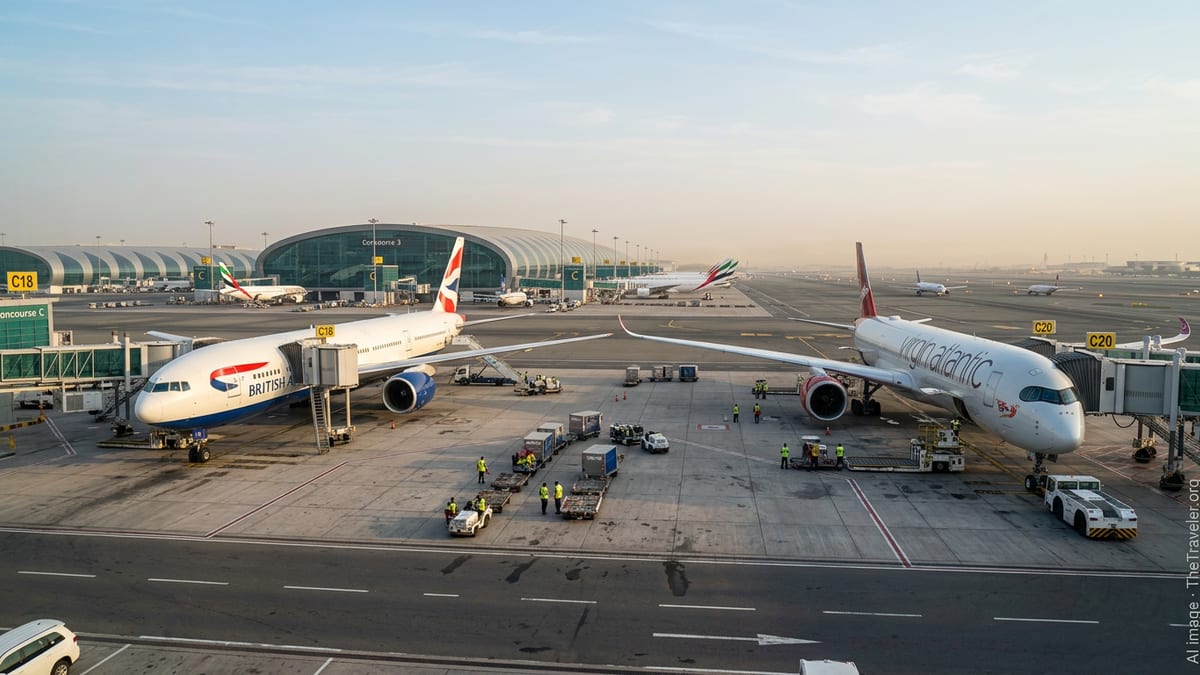
UK–UAE Routes Edge Back After Regional Shutdown
Air corridors between the Gulf and Europe were effectively severed from February 28 when missile and drone attacks, as well as retaliatory strikes, prompted multiple states to close or heavily restrict their airspace. Key hubs in Dubai, Abu Dhabi and Doha were hit by closures and damage, bringing one of the world’s busiest transit corridors to a sudden halt.
Virgin Atlantic moved first among UK long haul carriers to re-establish scheduled links, resuming its London Heathrow to Dubai and Riyadh services on March 3 after regulators reopened portions of regional airspace to tightly controlled traffic. The airline’s first post-shutdown departure from Dubai operated on March 4, marking the return of regular commercial service on the route, albeit with significant routing changes and extended flight times.
British Airways, which cancelled all services to Abu Dhabi, Dubai and Doha at the peak of the disruption, has now reintroduced a reduced schedule between London Heathrow and Dubai while maintaining a cautious stance on wider Middle East operations. The carrier continues to warn customers that flights are subject to short-notice changes as authorities adjust airspace permissions in response to evolving security conditions.
The partial restoration of UK–UAE flights comes as governments, including the UK Foreign, Commonwealth & Development Office, shift travel advice from urgent evacuation towards managed departures, noting that limited commercial options are once again available for those who can safely reach airports.
Virgin Atlantic Leads Return to Dubai and Riyadh
Virgin Atlantic’s decision to resume daily Heathrow services to Dubai and Riyadh underscores both the strategic importance of the Gulf for its network and the fragile nature of the recovery. The airline confirmed that it had restarted operations only after conducting detailed risk reviews and coordinating with UK and regional authorities on approved routings.
To avoid still-sensitive airspace, Virgin Atlantic is sending flights on longer paths that skirt Israel, Lebanon, Jordan, Iraq, Qatar, Kuwait, Bahrain, eastern Saudi Arabia and Iran. These detours add several hours to typical flight times and increase fuel burn, but are viewed as essential to ensure crew and passenger safety while maintaining a viable corridor between the UK and the Gulf.
Capacity remains constrained. The airline has warned that seats on early restored services are extremely limited, with priority given to customers stranded in the region and those travelling for essential reasons. Flexible rebooking policies and waivers are in place for ticket changes over the coming days, reflecting the expectation that schedules may need further adjustment.
Virgin Atlantic is also closely tracking UK government guidance, urging customers already in the UAE to register their presence with consular authorities and complete airline forms so they can be prioritised for repatriation if conditions deteriorate again.
British Airways Restores Dubai Link but Keeps Middle East Schedule Tight
British Airways has begun reinstating flights between London Heathrow and Dubai after several days of blanket cancellations to the UAE and wider Middle East. The move follows updated assessments by security agencies and aviation regulators that permit carefully controlled operations on selected routes.
The airline is operating a trimmed timetable, focusing on core London–Dubai frequencies while maintaining suspensions or severe reductions on other regional destinations. Passengers with bookings to Abu Dhabi, Doha, Amman, Bahrain or Tel Aviv in the coming days have been advised to change dates or accept refunds, and BA has extended fee-free rebooking options for affected itineraries.
Like Virgin Atlantic, BA is routing its flights around restricted airspace, which can result in longer journeys and complex flight planning as military and civil authorities adjust no-fly zones. The carrier is urging travellers not to head to the airport until their flight status is confirmed on the day of travel, highlighting the potential for last-minute cancellations or significant delays.
For now, the return of BA’s Dubai route restores an essential link for business travellers, expatriates and tourists moving between the UK and the Gulf, but airline executives and industry analysts caution that a return to pre-crisis schedules remains distant while the conflict and airspace restrictions persist.
Patchy Recovery Leaves Travelers Weighing Risk and Urgency
While UK–UAE flights are reappearing on departure boards, the broader picture across the Middle East remains one of patchy, uneven recovery. Data from flight-tracking platforms indicate that more than 12,000 flights were cancelled across major regional hubs between February 28 and March 3, and large parts of the airspace remain subject to dynamic closure notices that can change with little warning.
Emirates and Etihad have also begun operating limited services from Dubai and Abu Dhabi using alternative routing, but schedules are far from normal and many onward connections remain disrupted. Other European and Asian carriers continue to suspend services to the UAE, choosing to avoid the region entirely or operate only repatriation and cargo flights coordinated with governments.
For travellers weighing whether to fly, the resumption of Virgin Atlantic and British Airways services offers a clearer path home, particularly for UK nationals and residents. However, both airlines emphasise that safety remains paramount and that departures may be curtailed again if security conditions deteriorate or fresh airspace restrictions are announced.
Travel advisers are urging passengers to build in generous buffers for connections, hold flexible tickets where possible and remain prepared for changes even after check-in, as ground handlers, air traffic controllers and security agencies across the region continue to work through the operational backlog.
What Passengers Should Expect in the Days Ahead
Industry experts anticipate that UAE–UK capacity will gradually increase over the coming week if no further major incidents occur, with airlines adding additional frequencies or upgauging aircraft to clear backlogs of stranded travellers. Nevertheless, they caution that the crisis has moved from an acute shutdown into a prolonged period of instability, where disruptions may flare up with little notice.
Customers booked on Virgin Atlantic or British Airways flights between London and the UAE are being advised to monitor airline communications closely, use official channels to confirm departure times and consider contingency plans in case of delays. Flexible booking policies, including date changes and refund options, are expected to remain in place as carriers navigate the uncertain environment.
Airports in Dubai and Abu Dhabi, which suffered both direct physical damage and severe congestion during the peak of the crisis, are working to restore normal operations, but terminal changes, longer security queues and altered boarding procedures are likely to persist. Travellers should arrive early, carry essential medications and valuables in hand luggage, and be prepared for extended time on board and on the ground due to rerouting.
For now, the sight of Virgin Atlantic and British Airways aircraft once again taxiing at Dubai International and Abu Dhabi’s Zayed International offers a visible sign of progress for a region whose role as a global aviation crossroads was thrown into question. Whether these early steps back to normality can be sustained will depend largely on developments far beyond the runway.