

More news on this day
Virgin Atlantic is stretching its wings deeper into Southeast Asia with a new 14-hour nonstop service between London Heathrow and Phuket, a winter-sun route that will become the carrier’s longest flight and a key test of its post-pandemic long-haul strategy.
Get the latest news straight to your inbox!
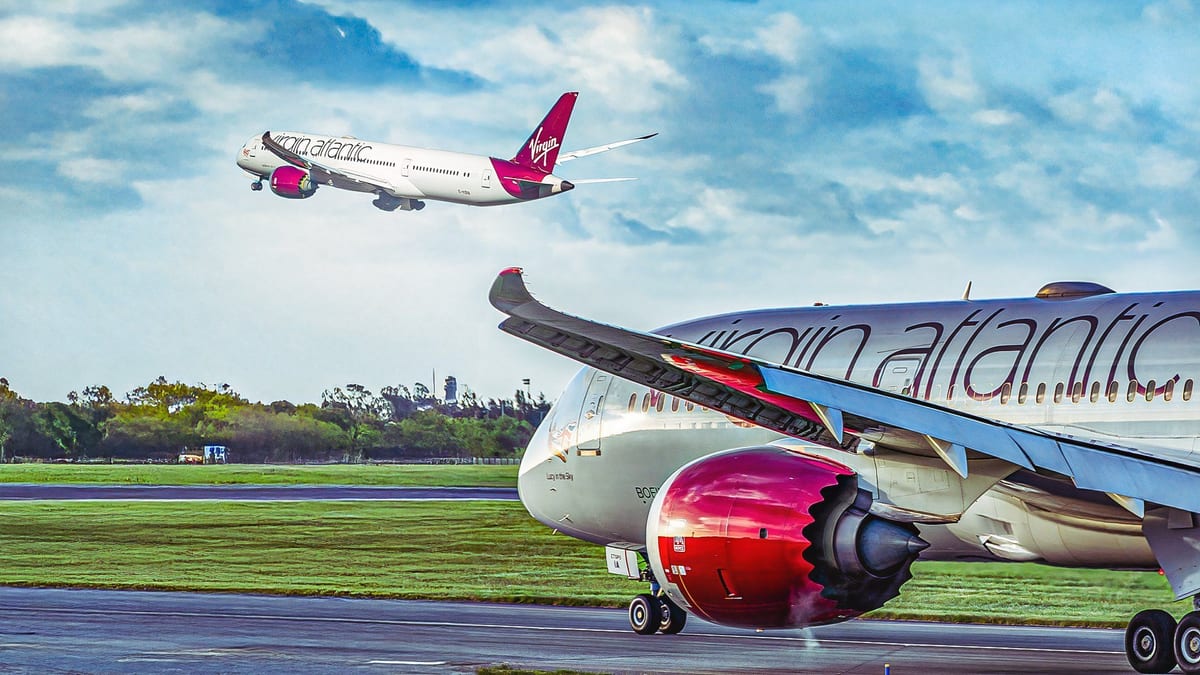
Image by Simple Flying
A New Longest Route for a Leisure-Focused Pivot
Publicly available schedule information indicates the London–Phuket service is due to launch for the winter 2026 season, operating from Virgin Atlantic’s main hub at Heathrow. Aviation and travel industry reports describe the new route as the airline’s longest to date, eclipsing previous services into East Asia that were shorter in flying time.
Reports suggest typical block times of around 14 hours for the westbound sector, depending on winds and routing, placing the Phuket flight firmly in the ultra long-haul category for the carrier. While that duration is far from a world record, it marks a significant step-up in range for an airline historically focused on North Atlantic services of seven to nine hours.
Coverage in specialist outlets characterizes the route as a clear bet on high-end leisure demand. Phuket is one of Asia’s most established resort islands, attracting travelers from Europe and North America in search of winter sun, beach breaks and access to Thailand’s broader tourism network via domestic connections.
The new service also follows a broader reshaping of Virgin Atlantic’s Asia footprint. Previous long-haul routes to cities such as Shanghai have been suspended, with analysts noting that the aircraft and crew capacity freed up by those decisions create room for longer, tourism-driven services like Phuket.
Aircraft, Cabins and the 14-Hour Onboard Experience
According to fleet data and route coverage, Virgin Atlantic plans to operate the London–Phuket flights with Boeing 787-9 aircraft configured in three cabins. The type already underpins many of the airline’s longer services, combining fuel-efficient range with a mix of economy, premium economy and Upper Class seating.
Industry summaries of the airline’s product indicate that economy passengers can expect personal seat-back entertainment, meals and snacks, and in many cases Wi-Fi access for purchase. Premium economy cabins add wider seats and enhanced dining, while Upper Class offers fully flat beds and access to lounges at Heathrow, elements that become more valuable as flight times push beyond the 12-hour mark.
Ultra long-haul sectors raise specific challenges for airlines and travelers alike, from crew scheduling and rest requirements to passenger comfort over extended periods in a confined space. For Virgin Atlantic, the Phuket route provides an opportunity to showcase its long-haul service at the upper edge of its current network capabilities, while testing how its customer base responds to a 14-hour leisure itinerary versus a shorter transatlantic hop.
Compared with the world’s very longest routes, often approaching or exceeding 18 hours, this new service sits in a mid-range ultra long-haul bracket. Analysts suggest that this may strike a balance between operational complexity and commercial viability, especially when paired with strong holiday demand.
Strategic Positioning in Southeast Asia
Travel-industry analysis frames the London–Phuket launch as part of a wider push by Virgin Atlantic to grow eastward after several years of retrenchment. The airline has been gradually rebuilding and reshaping its Asia-Pacific presence, with planned services such as London–Seoul highlighting a shift toward selective, partnership-friendly routes rather than a broad standalone network.
Phuket offers strong brand recognition among British and European holidaymakers, as well as relatively straightforward connectivity to other Thai destinations through local and regional carriers. Publicly available route commentary underscores that Virgin Atlantic aims to tap this existing demand rather than create an entirely new market from scratch.
The geography of the London–Phuket corridor, especially given ongoing restrictions on using Russian airspace for many European carriers, makes for extended flying times and more circuitous routings than pre-2022 norms. Industry observers note that these constraints have reshaped many Europe–Asia city pairs, with Phuket now joining the list of routes where detours add time but do not necessarily dampen demand.
By choosing a high-profile island destination for its new longest flight, Virgin Atlantic is positioning itself directly against European and Middle Eastern rivals that already market Thailand heavily during the northern winter. The carrier’s brand, schedule and connections through Heathrow will be key in determining how much of that traffic it can attract.
Connections, Competition and Market Impact
Travel trade reports highlight that the London–Phuket service is designed to link seamlessly with inbound flights from North America, particularly New York. Published schedules suggest that many itineraries will offer connection times under two hours at Heathrow, allowing travelers from the United States and Canada to reach Phuket with just one stop.
This connecting strategy mirrors how other long-haul carriers feed island and resort destinations, effectively turning Heathrow into a bridge between North America and Southeast Asia. For Virgin Atlantic, the route extends its network for U.S. and Canadian customers beyond traditional transatlantic city pairs into a full winter-holiday pipeline.
The new service enters a competitive landscape where European flag carriers and Gulf airlines already promote one-stop options from London and other UK cities to Phuket via their own hubs. Analysts point out that a nonstop from Heathrow reduces travel time and avoids an intermediate connection, factors that can be attractive to premium leisure travelers willing to pay for convenience.
At the same time, the longer sector length and leisure-focused traffic profile raise questions over yield. Some industry commentary describes the Phuket launch as a bold but potentially challenging move, given that ultra long-haul flights are typically more expensive to operate and depend heavily on consistent, year-round demand.
What Passengers Can Expect From a 14-Hour Nonstop
For travelers, the London–Phuket flight represents a substantial stretch in the air, often crossing the better part of a day in one sitting. Aviation health and travel advisories generally recommend regular movement around the cabin, hydration and light stretching on long flights, habits that become especially relevant on journeys approaching the 14-hour mark.
With departure from London scheduled to align with peak long-haul bank times at Heathrow, many passengers are likely to treat the flight as an overnight or red-eye segment. That dynamic makes seat selection, noise levels and the ability to sleep onboard particularly important considerations, especially for those traveling in economy.
Given Phuket’s status as a resort gateway, travelers may be inclined to combine the long-haul sector with onward domestic flights or ferry connections to other Thai islands. Travel planners suggest building in additional buffer time at either end of the journey to account for potential delays on such lengthy flights and to ease the transition across multiple time zones.
As Virgin Atlantic moves closer to launch, the 14-hour London–Phuket route is shaping up as both a headline-grabbing network milestone and a real-world test of how far the airline’s leisure strategy can stretch, in flight hours as well as in market reach.