

More news on this day
Virgin Atlantic has scrapped its London–Dubai flights for the rest of the winter season and temporarily paused its London–Riyadh service, as escalating regional tensions and rolling airspace closures across the Middle East continue to disrupt global aviation networks.
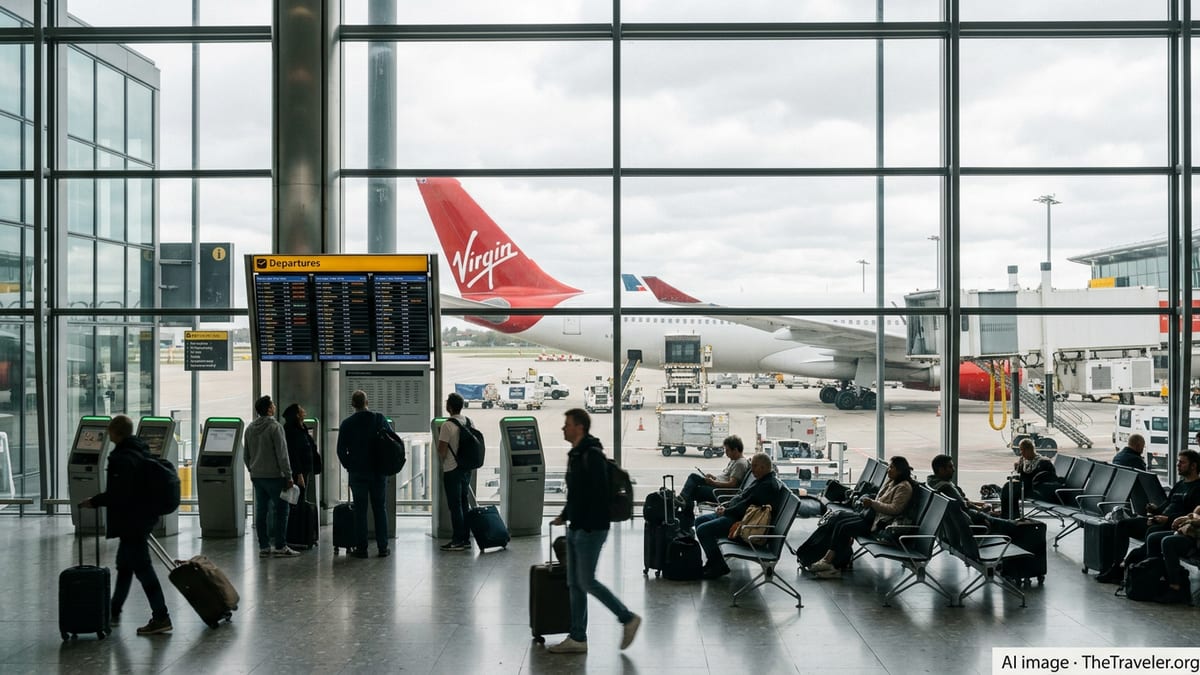
Safety Concerns Bring Forward Early End to Dubai Season
The British carrier confirmed that its seasonal London Heathrow–Dubai route, due to operate until 28 March, has been terminated early following a fresh wave of airspace restrictions and airport closures in the Gulf. The decision comes after a series of cancellations that left aircraft and passengers stranded and underscored the fragility of flight operations in the region.
Virgin Atlantic said it conducted extensive safety and operational assessments after Dubai International Airport and surrounding airspace were closed at short notice in early March. The airline concluded that its internal criteria for operating into Dubai could no longer be met consistently, prompting it to bring forward the end of the winter schedule for the route.
The move follows a widely reported “flight to nowhere” incident on service VS400 from London to Dubai, which spent hours in the air before turning back to Heathrow when airspace over Saudi Arabia was abruptly shut. That high profile disruption highlighted the risks of operating long haul services through a fast changing conflict zone and fed into the airline’s decision making.
Dubai had been a key seasonal leisure route for Virgin Atlantic, serving both holidaymakers and onward connecting traffic. Its early suspension removes one of the few non Gulf carrier options on the corridor and places further pressure on already constrained capacity between the United Kingdom and the United Arab Emirates.
Riyadh Service Paused for Two Weeks as Situation Evolves
Alongside the Dubai decision, Virgin Atlantic has paused its London Heathrow–Riyadh route for an initial period of 14 days. The airline described the suspension as a precautionary measure in response to the same set of regional security concerns and airspace uncertainties affecting the wider Middle East.
Operations to the Saudi capital had already been complicated by corridor closures and rerouting requirements, which lengthened flight times and created knock on scheduling challenges. With airspace authorities in multiple Gulf states imposing rolling restrictions, Virgin Atlantic said it could not guarantee the level of predictability it demands for regular commercial services.
The carrier has indicated that the Riyadh route will be reviewed on an ongoing basis, with any restart contingent on updated security assessments and guidance from national and international aviation authorities. Travellers booked to fly over the next two weeks are being rebooked, refunded or rerouted via partner airlines where options exist.
Riyadh has grown rapidly as a business and investment destination, and the Virgin Atlantic link from London was seen as a symbol of intensifying economic ties between the United Kingdom and Saudi Arabia. The pause therefore lands not only as an operational setback but also as a visible sign of how the conflict’s ripple effects are reaching beyond traditional hotspots.
Passengers Face Cancellations, Diversions and Lengthy Delays
For travellers, the twin suspension of Dubai and Riyadh services adds another layer of uncertainty to a week already marked by mass cancellations, diversions and extended layovers across the region. Passengers on affected Virgin Atlantic flights have reported overnight delays, last minute returns to origin airports and unplanned stops as crews navigated shifting airspace closures.
Virgin Atlantic has urged customers with upcoming bookings to monitor their flight status closely before heading to the airport and to ensure contact details are up to date in their reservations. The airline is offering rebooking onto alternative dates where services continue to operate, as well as refunds or rerouting via partner carriers when possible.
Travel agents say demand for remaining seats on other airlines out of London to Gulf hubs has surged as passengers scramble to salvage plans. Longer routings that avoid sensitive airspace are also pushing up journey times and, in some cases, forcing travellers to add unscheduled overnight breaks.
Consumer advocates are reminding affected passengers to review their rights under UK and EU air passenger regulations, while noting that some compensation rules may not apply if disruptions are directly attributed to war or security emergencies outside airline control. Nonetheless, carriers remain responsible for providing care, including meals and accommodation, during extended delays.
Regional Airlines Gradually Restart, But Network Remains Fragile
Virgin Atlantic’s move comes as Gulf based airlines attempt a phased return to service following an unprecedented shutdown triggered by the latest escalation in the Iran conflict. Major regional carriers including Emirates and Etihad have begun operating limited schedules to select destinations, with a focus on repatriation flights and key long haul routes, but overall capacity remains well below normal levels.
Airspace closures over parts of the Gulf and neighbouring countries have forced airlines to adopt longer, more circuitous routings, adding significant time and cost to many journeys. Aviation analysts warn that even as airports reopen, the risk of short notice restrictions and the need to dynamically adjust flight paths will keep operations vulnerable to disruption for weeks to come.
Industry data already point to thousands of cancellations since the crisis began, with knock on effects spreading far beyond the Middle East. European and Asian carriers have likewise curtailed services to the region, while also rerouting overflights between continents to avoid restricted zones, further complicating global scheduling.
For travellers, the picture is one of partial recovery rather than a swift return to normality. Seats on operating services are heavily booked, and many airlines are advising customers to avoid non essential travel to directly affected destinations until the situation stabilises.
What Travellers Should Do If Booked on Affected Routes
Passengers holding Virgin Atlantic tickets to Dubai or Riyadh in the coming weeks are being advised to wait for direct communication from the airline before making changes, where possible, to ensure they retain eligibility for rebooking and support. Those who booked through third party travel agencies should coordinate with their agent, who can access live inventory and rerouting options.
Experts recommend that travellers heading to or transiting through the Middle East factor in additional time, remain flexible with dates and routings, and consider alternative gateways where practical. They also stress the importance of comprehensive travel insurance that covers disruption linked to conflict, although travellers should read policy exclusions carefully.
With conditions evolving day by day, the most reliable guidance remains official airline channels and airport updates. For now, Virgin Atlantic’s early withdrawal from Dubai and temporary pause in Riyadh underline a broader reality: until regional skies are reliably open and secure, airlines and passengers alike will be navigating a far more unpredictable Middle East travel landscape.