

More news on this day
Virgin Atlantic is joining Emirates, Etihad, flydubai and other Gulf carriers in a tentative restart of Middle East flights this week, as governments partially reopen airspace after days of missile strikes and abrupt closures that left thousands of travelers stranded across the region.
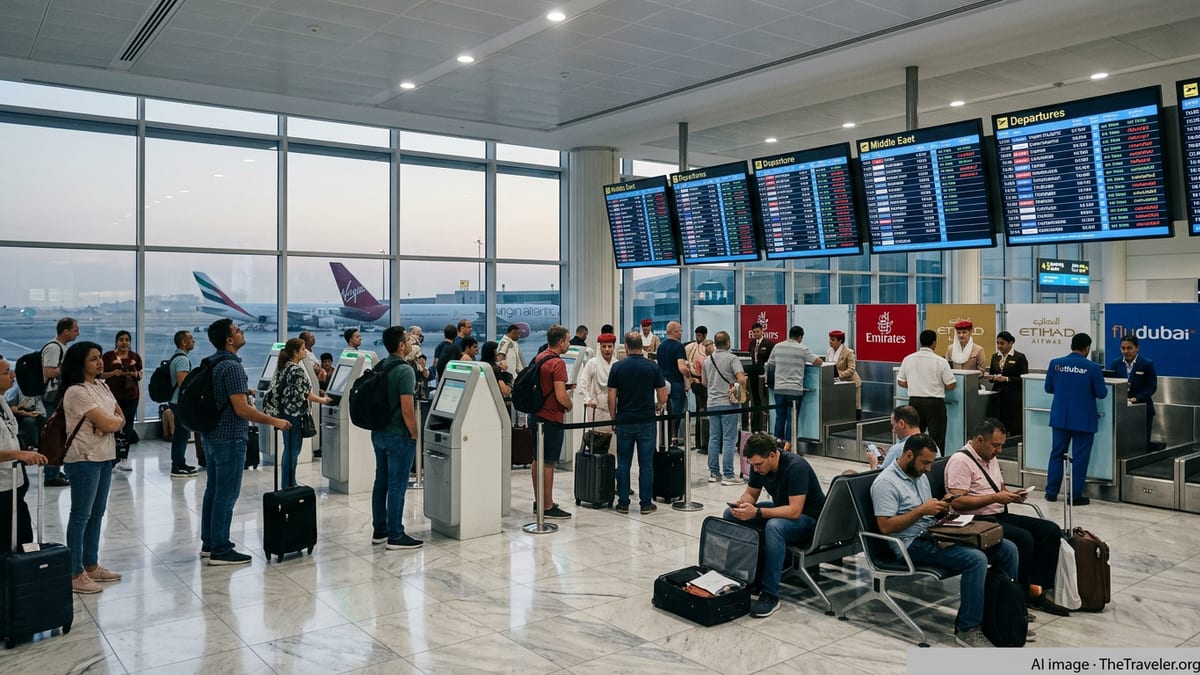
Virgin Atlantic Tiptoes Back Into Dubai Amid Volatile Airspace
Virgin Atlantic is moving ahead with a cautious resumption of services between London Heathrow and Dubai, positioning itself alongside regional heavyweights as they rebuild disrupted networks through one of the world’s most important aviation corridors. The UK carrier, which relaunched its Dubai route as a seasonal and then near year round operation, has become a key link for British travelers seeking alternatives while some other European and US airlines keep wider suspensions in place.
The airline has stressed that safety remains its primary consideration. In recent days it has temporarily cancelled select services, including flights VS400 and VS401 between London and Dubai and VS242 and VS243 to and from Riyadh, after security agencies advised carriers to avoid Iraqi and surrounding airspace. Virgin Atlantic says it is dynamically adjusting routings to skirt higher risk zones, which can add flying time but allows some schedules to operate.
Its network planners are now threading a narrow path between operational viability and passenger confidence. With British authorities warning that the situation can change at short notice, Virgin Atlantic is urging customers to monitor flight status up to departure and ensure contact details are current so the airline can rebook or reroute quickly if additional cancellations are required.
Capacity decisions are also being calibrated carefully. The carrier had already planned to shift its Dubai flights onto Airbus A330 aircraft for the current northern winter season, a move that offers flexibility on both passenger and cargo capacity. That allows Virgin Atlantic to respond more nimbly to sudden swings in demand driven by government travel advisories and shifting corporate travel policies.
Emirates, Etihad and Flydubai Lead a Patchwork Regional Restart
In the Gulf, homegrown giants Emirates, Etihad and flydubai have begun edging back toward regular operations after a series of blanket suspensions and rolling cancellations triggered by intensified strikes and missile launches across parts of the Middle East. On Monday and Tuesday, a limited number of flights departed from Dubai and Abu Dhabi, primarily to major European, Asian and Gulf capitals, as authorities carved out tightly controlled corridors for civilian traffic.
Etihad operated a small slate of services from Abu Dhabi, including departures to London, Paris, Amsterdam, Moscow and key Indian cities, while maintaining that its full commercial schedule remains on hold until at least later this week. Emirates and flydubai have similarly focused on high priority routes and repatriation flights, in some cases using widebody aircraft to move as many stranded travelers as possible on each approved sector.
At the same time, many destinations across Iran, Iraq, Israel, Syria, Lebanon and parts of the Caucasus remain suspended for most Gulf carriers. Airlines are continually updating their lists of affected cities as aviation authorities issue new risk assessments. Passengers connecting via Dubai or Abu Dhabi to the most volatile destinations are currently not being accepted for travel, even if they hold confirmed tickets, as airlines work to avoid having customers stranded mid-journey.
The result is a patchwork of resumptions that can be difficult for travelers to interpret. Flights to and from key Gulf hubs may appear to be operating normally on some days, only to be pulled hours before departure if fresh strikes or intelligence reports alter the safety calculus. Carriers are strongly advising passengers not to head to the airport unless they have received explicit confirmation that their flight is operating as scheduled.
Airspace Closures Funnel Traffic Through Narrow Corridors
The broader aviation backdrop to this cautious reboot is an unprecedented squeeze on usable airspace between Europe, the Middle East and Asia. Large portions of the skies above Iran, Iraq, Kuwait, Israel, Bahrain, Qatar and, at times, the United Arab Emirates have been fully or partially closed to commercial traffic in recent days, compounding existing bans on Russian airspace for many Western carriers.
With two major regions effectively off limits, airlines are being forced into narrow, highly congested corridors, particularly over parts of the Caucasus and eastern Mediterranean. Aviation analysts report that hundreds of additional flights per day have been funneled through these slivers of sky during recent closures, increasing the complexity of air traffic management and adding significant time and fuel burn to many journeys.
For passengers, this translates into longer flight times, an uptick in technical fuel stops on what were once non stop routes, and heightened risk of missed connections as knock on delays ripple through hub banks. Some carriers have introduced schedule buffers on routes touching the Middle East, while others are thinning frequencies to maintain reliability on a reduced network rather than attempting full schedules they may be unable to operate consistently.
The industry is also grappling with the operational and financial impact of these diversions. Airlines that had only just restored profitability after the pandemic are now confronting another wave of cost pressure, making it more likely that the higher operating expenses associated with circumnavigating conflict zones will ultimately be reflected in fares on certain long haul routes.
Travelers Face Rolling Cancellations, Higher Fares and Shifting Advisories
For travelers with planned itineraries through the Gulf or to nearby conflict affected countries in the coming weeks, the new phase of limited resumptions may offer options, but it does not yet resemble a return to normality. Government travel advisories in the United Kingdom, United States and across Europe continue to urge caution for non essential trips to several countries in the region, and warn that further airspace closures could occur with little or no notice.
Holidaymakers heading for winter sun in Dubai or Abu Dhabi are being encouraged to build additional flexibility into their plans. Travel agents report that many clients are opting for fully flexible or at least changeable tickets, and in some cases purchasing travel insurance products that specifically cover war related disruptions, which standard policies often exclude.
Business travelers are facing different calculations. While some multinational companies have temporarily frozen trips to the most sensitive destinations, many still view Gulf hubs as critical for regional operations. As a result, there is strong demand for any available premium cabin seats on flights that do operate, pushing up fares in business and premium economy cabins even as leisure demand softens in the near term.
On the ground, passengers are being warned to prepare for extended airport stays, frequent gate changes and, in some cases, sudden overnight delays if routes are pulled just before departure. Airlines and airports across the region have boosted staffing at customer service desks, but queues remain long following the mass cancellations of recent days.
What Travelers Should Do Before Flying Through the Region
Industry and government officials are aligned on one point: in such a fast moving environment, preparation is essential. Travelers are being urged to check flight status repeatedly in the 24 hours before departure, use airline apps to enable push notifications, and keep passports and essential medications in carry on luggage in case of unexpected diversions or overnight stays.
Passengers booked on Virgin Atlantic, Emirates, Etihad or flydubai are advised to ensure their booking profiles contain up to date mobile numbers and email addresses so that automatic rebooking offers or cancellation notices can be delivered quickly. Where possible, experts recommend booking through a single carrier or alliance rather than piecing together separate tickets, as through tickets generally offer more protection when one segment is cancelled.
Travelers connecting to or from destinations that remain under suspension or heavy restriction should consider re routing their journeys entirely until the security picture stabilizes. In some cases, airlines are waiving change fees or offering credit vouchers to encourage customers to postpone travel, particularly to countries directly affected by missile strikes or those adjacent to closed airspace.
For those who must travel, flexible planning and realistic expectations are key. With Virgin Atlantic now joining Emirates, Etihad and flydubai in cautiously rebuilding Middle East networks, more options are gradually returning to the market. Yet as airlines themselves continue to emphasize, every planned departure in the region remains subject to real time security assessments, keeping the outlook for Middle East air travel uncertain from one day to the next.