

More news on this day
Virgin Atlantic is pushing deeper into the era of ultra-long-haul flying, preparing a new 14-hour nonstop route that will become the longest flight in its network and a fresh benchmark for passenger comfort on journeys that span almost an entire day.
Get the latest news straight to your inbox!
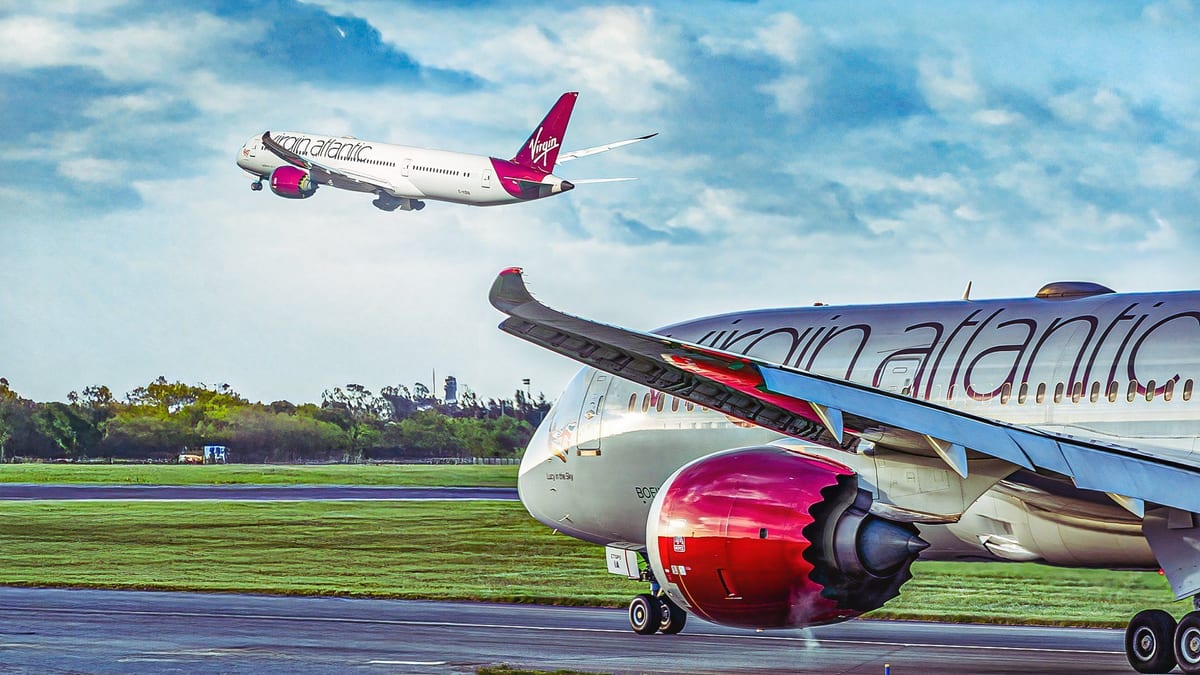
Image by Simple Flying - Aviation News
A New Flagship in Virgin Atlantic’s Long-Haul Network
The new 14-hour nonstop service will overtake Virgin Atlantic’s existing long sectors, such as flights to Los Angeles, San Francisco and Mumbai, which already rank among the airline’s lengthiest journeys. Publicly available fleet and network information indicates that the carrier is using its latest long-haul aircraft to sustain the extended flying time while maintaining competitive schedules at both ends of the route.
In the broader landscape of commercial aviation, 14 hours places the new service firmly in ultra-long-haul territory, though still short of record-breaking flights such as Singapore to New York, which can exceed 18 hours. For Virgin Atlantic, however, the new route is strategically significant, extending its reach into markets that require additional range and endurance while showcasing the capabilities of its newest jets.
According to current route data and schedule disclosures, the flight has been timed to capture both business and leisure demand, with departure and arrival windows designed to support onward connections while limiting the most disruptive overnight hours for travelers where possible.
Industry observers note that the move underscores how airlines like Virgin Atlantic are increasingly willing to stretch stage lengths as aircraft become more efficient and passenger expectations evolve, especially on premium-heavy routes where nonstop convenience commands a price premium.
Aircraft, Cabins and the Comfort Question
Virgin Atlantic’s long-haul expansion has centered on next-generation widebody aircraft, particularly the Airbus A350-1000 and the Airbus A330neo, both designed to pair lower fuel burn with improved onboard comfort. Recent coverage of the airline’s deployment strategy highlights the A350-1000 on some of its longest services, including routes to the United States West Coast and Mumbai, suggesting a similar approach for the new 14-hour nonstop flight.
Cabin layouts on these aircraft emphasize a spacious premium experience, with fully flat beds in Upper Class, premium economy seating with increased pitch, and refreshed cabins in economy featuring larger entertainment screens and improved lighting. For a 14-hour sector, these details are critical, as passengers spend a full waking and sleeping cycle onboard.
Virgin Atlantic has also been actively reshaping its soft product, introducing new food and beverage concepts and upgrading in-flight entertainment and connectivity on key routes. Reports on recent service enhancements describe signature cocktails, refined meal services and a focus on distinctive British touches that aim to differentiate the carrier in a crowded long-haul market.
On ultra-long sectors, these amenities serve not just as brand extras but as central components of the journey. Sleep-friendly cabin lighting, quieter cabins and thoughtful service timing can help mitigate fatigue, jet lag and the sense of confinement that can intensify over 14 hours in the air.
Why Airlines Are Chasing Longer Nonstop Routes
The launch of Virgin Atlantic’s new longest flight comes at a time when global carriers are increasingly targeting ultra-long-haul segments. Industry data on the world’s longest flights shows a steady increase in routes exceeding 15 hours, fueled by more capable aircraft and demand from travelers who prefer to avoid layovers, even on journeys that cross multiple continents.
For airlines, these routes can serve as high-profile flagships, reinforcing brand identity and providing a point of differentiation in competitive premium markets. They also allow carriers to link important financial centers, technology hubs and tourism destinations directly, opening new flows of business travel, cargo and high-spend leisure demand.
However, ultra-long-haul routes are operationally complex. They require careful fuel planning, strict crew duty-time management and detailed contingency procedures for diversions or extended overwater segments. Airlines must balance these operational constraints against the revenue potential and branding benefits of operating their longest flights.
Virgin Atlantic’s decision to add a 14-hour nonstop into its schedule signals confidence not only in sustained demand along the chosen city pair, but also in its ability to run long missions efficiently while maintaining the service standards that underpin its reputation.
Passenger Experience on a 14-Hour Virgin Atlantic Flight
For passengers, a 14-hour nonstop flight is a test of endurance as much as a logistical convenience. Travel advisories and frequent-flyer accounts consistently emphasize the importance of seat selection, hydration and movement around the cabin when tackling flights of this length.
Virgin Atlantic’s cabin product on its longest routes is built with these realities in mind. Fully flat beds in Upper Class cabins are aimed at providing near-home sleep quality, while premium economy seats offer additional space and support for travelers who want extra comfort without moving to the front of the plane. In economy, ergonomically designed seats and an extensive entertainment library seek to make the hours pass more comfortably.
Onboard routines such as staggered meal services, midflight snack offerings and thoughtfully timed lighting changes are typically calibrated to help passengers align their body clocks with their destination time zone. In-flight connectivity, now standard on much of the Virgin Atlantic long-haul fleet, allows travelers to stay in touch, work remotely or simply stream content to bridge the gap between takeoff and landing.
Health guidance for long flights also remains relevant. Passengers are frequently advised to walk the aisle when safe, perform simple stretching exercises at their seats and avoid excessive alcohol consumption in order to reduce discomfort and support circulation over the lengthy journey.
Strategic Implications for Virgin Atlantic’s Global Network
The addition of a new 14-hour nonstop route sits within a broader expansion pattern for Virgin Atlantic, which has recently added or announced services to destinations such as Riyadh, Toronto and Phuket. Publicly available network maps and partnership documents show the airline deepening its long-haul footprint while leveraging its joint venture ties with major carriers in Europe and North America.
By operating its longest flight yet, the airline is likely targeting a mix of high-yield business traffic and year-round leisure demand, supplemented by cargo carried in the belly of widebody aircraft. Longer sectors can be particularly attractive to freight customers moving high-value or time-sensitive goods, adding another revenue stream to support route viability.
The new service also reinforces London Heathrow’s role as a key hub in Virgin Atlantic’s strategy. With connections onward through partners to North America, Europe and beyond, the 14-hour route integrates into a web of itineraries that can funnel passengers from secondary cities onto flagship long-haul services.
As airlines continue to test the limits of nonstops, Virgin Atlantic’s latest ultra-long-haul move highlights how network planners are weighing aircraft capabilities, passenger expectations and competitive dynamics, using their longest flights as showcases for both operational skill and onboard innovation.