

More news on this day
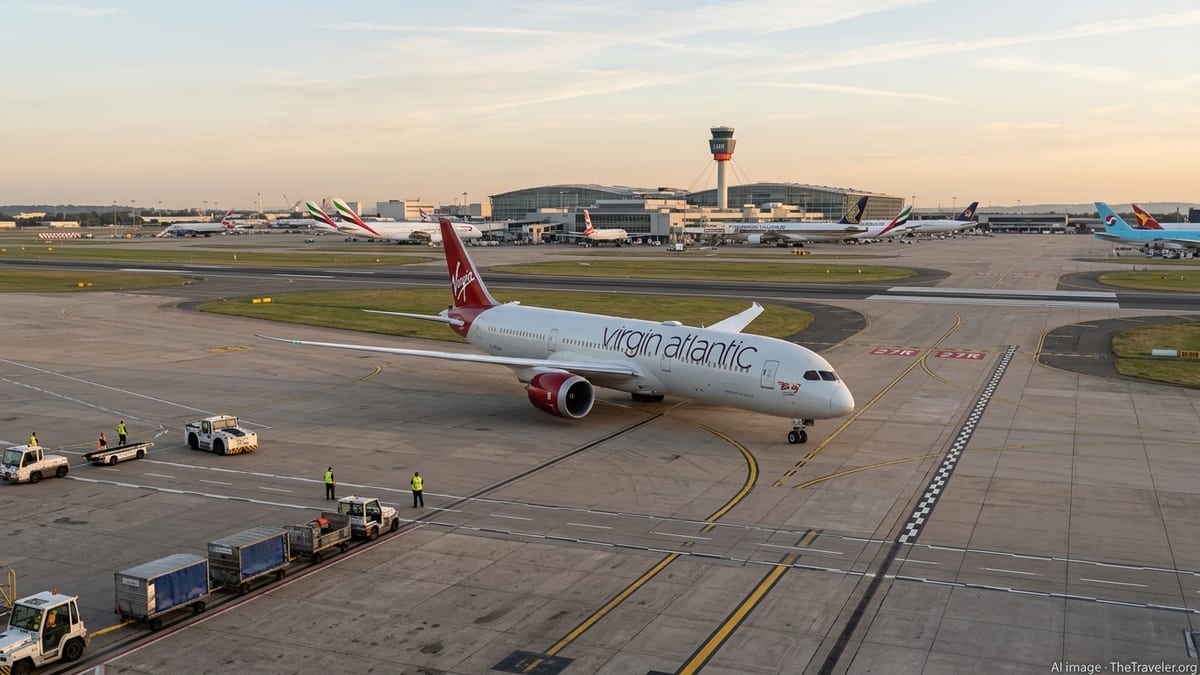
Virgin Atlantic is set to launch a new nonstop service between London Heathrow and Seoul Incheon using Boeing 787-9 aircraft, adding the UK’s busiest airport to the growing list of European hubs with direct links to South Korea and underscoring a sharp rise in travel demand between the two countries.
Get the latest news straight to your inbox!
London Heathrow Enters a Crowded European–Seoul Club
The planned Virgin Atlantic route will connect London Heathrow directly with Seoul Incheon, placing the UK capital alongside established European gateways such as Frankfurt, Munich, Paris Charles de Gaulle, Zurich, Vienna and Warsaw that already offer nonstop links to South Korea’s main international hub. Publicly available schedule data for these airports shows multiple European and Asian carriers operating regular Frankfurt–Seoul, Munich–Seoul, Paris–Seoul, Zurich–Seoul, Vienna–Seoul and Warsaw–Seoul services, forming a dense transcontinental network between Europe and Northeast Asia.
Regulatory documents related to the Korean Air and Asiana merger indicate that Korean Air proposed transferring weekly Heathrow–Incheon traffic rights to Virgin Atlantic as part of its competition remedies. These filings point to Virgin Atlantic using those slots to open a new route from London to Seoul, with Boeing 787-9 aircraft identified as the operating type.
The move brings Heathrow in line with other large European hubs that have long treated Seoul as a strategic Asian destination, particularly for business and high-yield leisure traffic. It also reinforces Heathrow’s position as a key transfer point for passengers from North America and Europe heading to South Korea, where onward domestic and regional connections are concentrated at Incheon.
For South Korean travelers, a branded Virgin Atlantic option from Heathrow expands itinerary choice beyond existing services via continental Europe or through rival Asian hubs. The airline’s decision to deploy the fuel-efficient 787-9 on the route positions the service within current industry trends that favor modern twin-engine long haul jets for intercontinental expansion.
Tourism and Trade Drive a New UK–Korea Travel Corridor
The new Heathrow–Seoul link is emerging against the backdrop of a pronounced tourism boom in South Korea. Recent international tourism analyses describe South Korea as one of the world’s fastest-growing destinations, with visitor numbers in 2024 and 2025 surpassing pre pandemic levels and growth rates outpacing many rival markets in Asia and Europe.
South Korean government and industry projections reported in local economic media point to an ambition to exceed 20 million foreign visitors annually by 2026, which would represent a historic high for the country. Rising arrival figures through Incheon reflect both intraregional demand and long haul markets from Europe and North America, amplified by the global appeal of Korean pop culture, cuisine and television.
On the UK side, VisitBritain data and market profiles show that South Korea has been an increasingly valuable inbound market, particularly before the pandemic, with high average per visitor spending and a strong interest in cultural, shopping and educational experiences. While official statisticians have urged caution in comparing some recent monthly datasets with earlier years, the broader trend indicates renewed appetite among Korean travelers for long haul trips to the UK.
Trade ties provide an additional rationale for expanded air connectivity. A continuity free trade agreement between the UK and South Korea entered into force in January 2021, maintaining many of the preferential conditions that previously applied under the EU–Korea accord. This framework supports two way flows of goods, services and investment, for which frequent, reliable air links are an important enabling factor.
How Virgin Atlantic’s 787-9 Fits the Heathrow–Seoul Market
Virgin Atlantic’s choice of the Boeing 787-9 for the Heathrow–Seoul route aligns with the aircraft’s role as the carrier’s workhorse on long haul services. Public fleet information lists the 787-9 as operating many of the airline’s North American and Asian routes, offering a balance of range, fuel efficiency and passenger capacity suitable for sectors of around 11 to 13 hours.
The 787-9’s composite structure and high bypass engines are designed to reduce fuel burn and noise compared with older widebodies, allowing airlines to open or sustain long, thin routes that might be challenging for larger four engine aircraft. For passengers, the cabin configuration typically includes a mix of business, premium economy and economy seating, with higher humidity and lower cabin altitude compared with previous generation jets, features that airlines highlight as comfort advantages on overnight flights.
On the Heathrow–Seoul pairing, these operational characteristics are expected to support year round viability while allowing Virgin Atlantic to compete on product and schedule with existing one stop itineraries via other European or Middle Eastern hubs. Timings that connect efficiently with transatlantic arrivals and departures at Heathrow would enable the airline to attract transfer traffic from the United States and Canada, feeding the new Asian route.
From a cargo perspective, belly hold capacity on the 787-9 adds freight uplift between the UK and South Korea for high value goods such as electronics, pharmaceuticals and e commerce shipments. Industry coverage of Virgin Atlantic’s other long haul launches in recent years shows that cargo has been a meaningful contributor to route economics on comparable city pairs.
European Hubs Compete for Korea’s High-Value Travelers
The addition of Virgin Atlantic’s Heathrow–Seoul service intensifies competition among European hubs that have invested heavily in links to South Korea. Frankfurt, Munich and Paris Charles de Gaulle each handle multiple weekly or daily flights to Seoul on a combination of European and Korean carriers, while Zurich, Vienna and Warsaw have carved out their own niches in connecting Central and Eastern European travelers to Northeast Asia.
Sector and schedule data for Frankfurt–Seoul and Munich–Seoul indicate that these German hubs function as major transfer points for travelers originating across continental Europe as well as in secondary markets. Paris Charles de Gaulle plays a similar role for France, parts of Southern Europe and North Africa. Zurich and Vienna, though smaller in scale, have leveraged hub airlines to maintain consistent services to Incheon, while Warsaw has emerged as a growing gateway for Central and Eastern Europe.
Heathrow’s arrival in this group via Virgin Atlantic’s new route strengthens the UK’s competitive position. The London hub already serves as one of Europe’s primary access points for North American travelers and a key origin for outbound British leisure and business passengers. By adding nonstop access to Seoul, Heathrow can better retain travelers who might previously have connected in Frankfurt, Paris or other continental hubs to reach South Korea.
For Korean travelers, the increased choice of European entry points translates into more flexibility on fares, timings and onward connections. It also provides additional resilience for the market in the event of disruptions or capacity constraints on particular carriers or hubs, supporting the sustained expansion of tourism and business travel between South Korea and Europe.
Cultural Links and the Korean Wave Sustain Demand
Underlying the aviation developments is a broader cultural and economic dynamic that has strengthened ties between the UK and South Korea. The global popularity of Korean music, television dramas, film and cuisine, often referred to as the Korean Wave, has fueled growing interest in travel to South Korea from audiences worldwide, including in Britain. International studies of tourism to South Korea highlight this cultural appeal as a key driver of visitor growth.
At the same time, British creative industries, education and tourism offerings attract a rising share of Korean outbound travelers. University enrollment, language study, and short term cultural programs in the UK contribute to steady demand for travel between the two countries, complemented by leisure itineraries that take in heritage sites, shopping and contemporary culture in cities such as London, Edinburgh and Manchester.
As both nations expand cooperation in technology, green energy and digital services under their trade relationship, corporate travel demand is expected to remain robust. Business delegations, conferences and industry events generate premium cabin traffic that is particularly important for the financial performance of long haul routes like Heathrow–Seoul.
Analysts following the aviation and tourism sectors note that this combination of cultural, educational, business and leisure drivers creates a diversified demand base less vulnerable to short term fluctuations in any single segment. Virgin Atlantic’s decision to launch a 787-9 route from Heathrow to Seoul can be seen as both a response to this multifaceted growth and a catalyst that may further accelerate the UK–South Korea travel boom in the coming years.