

More news on this day
Virgin Australia has started 2026 with a decisive operational win, leading Australia’s major airlines in both on-time performance and flight completion in January, as newly released data highlights the carrier’s focus on reliability during the country’s peak summer travel period.
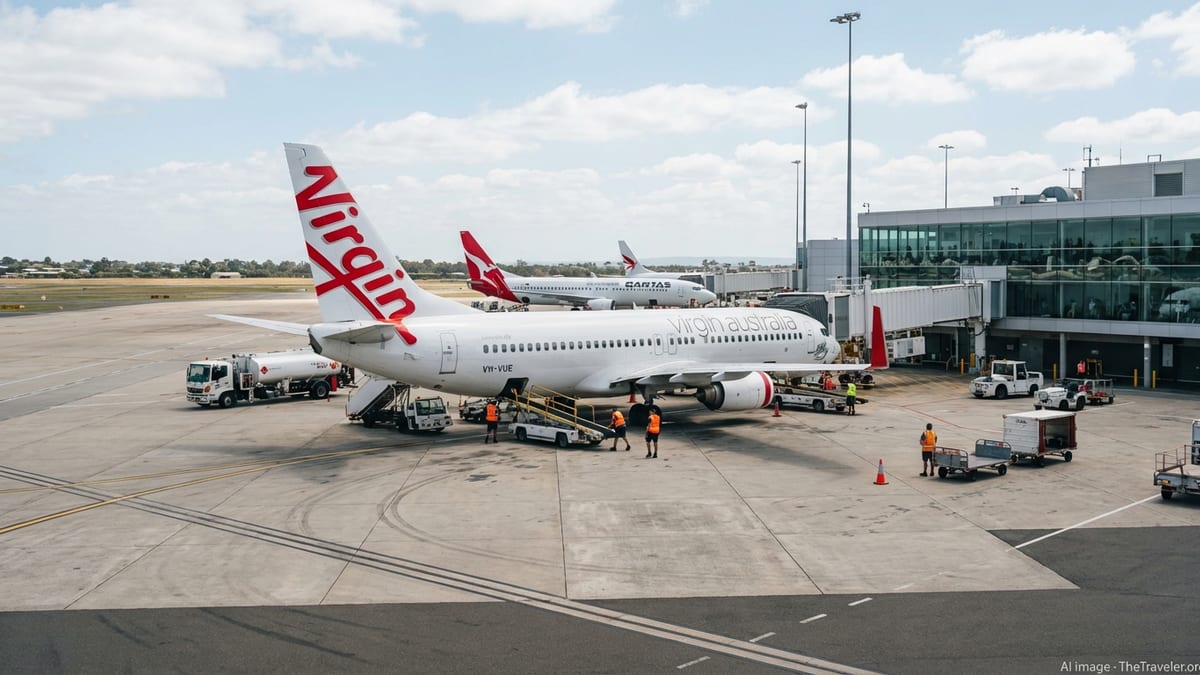
BITRE Data Confirms Virgin’s Strong Start to 2026
New figures from the Bureau of Infrastructure and Transport Research Economics for January 2026 show Virgin Australia at the top of the country’s major airline rankings on two critical measures: on-time departures and flight completion. The data, which covers scheduled domestic services across Australia, indicates that the carrier not only departed more flights on time than its main competitors but also cancelled fewer services in a month marked by intense seasonal demand.
Virgin Australia recorded an 82.7 percent on-time departure rate in January, an improvement of more than eight percentage points on its performance in December. At a time when airlines globally have been grappling with weather disruption, resource constraints and congested schedules, the uplift points to targeted operational planning and a renewed emphasis on punctuality across Virgin’s domestic network.
Equally significant was the airline’s completion rate. With 99.1 percent of scheduled domestic flights operated during the month, Virgin Australia registered the lowest proportion of cancellations among Australia’s major airlines. That figure meant fewer than one in 100 scheduled services were cancelled during one of the busiest travel periods of the year.
The results build on a broader trend over the previous 12 months. Between February 2025 and January 2026, Virgin Australia averaged a 77.6 percent on-time departure rate and a 98.3 percent completion rate across its domestic operations, underlining the January outcome as part of a sustained improvement rather than an isolated performance spike.
Summer Peak Pressures Put Reliability in the Spotlight
January is traditionally one of the most demanding months for Australian aviation, with school holidays, family reunions and leisure travel driving a sharp increase in passenger numbers. This year was no exception, with high load factors across trunk routes such as Sydney to Melbourne, Brisbane to Sydney and Melbourne to the Gold Coast, as well as stronger demand on regional and leisure-focused services.
For airlines, the seasonal peak amplifies the operational stakes. Any disruption, whether from stormy weather on the east coast, air traffic control constraints, or technical and staffing issues, can ripple quickly through tightly scheduled networks. In that context, Virgin Australia’s ability to maintain both a strong on-time departure rate and minimal cancellations in January has been framed by the airline as a test of its resilience under pressure.
Industry observers note that the performance is particularly notable given lingering challenges across global aviation, including supply chain delays for spare parts and ongoing tightness in skilled labor markets. While many carriers have been forced to trim schedules or increase buffers to safeguard reliability, Virgin Australia’s January data suggests that its current network design and contingency planning are holding up against peak-season stress.
For passengers, the benefits of this reliability are tangible. Fewer cancellations reduce the likelihood of last-minute reshuffling, overnight delays and missed connections, while improved punctuality helps maintain confidence among travelers who have become more discerning about performance metrics since the pandemic years.
Inside Virgin Australia’s Operational Playbook
Virgin Australia executives have credited the January 2026 results to a multi-year focus on operational discipline and internal performance culture. Initiatives aimed at improving aircraft turnaround times, refining crew scheduling and strengthening coordination between airport, engineering and flight operations teams have all contributed to tightening up departure punctuality.
The carrier has also highlighted its investment in data-driven planning tools that allow better forecasting of demand, weather and congestion, enabling more accurate roster planning and the ability to position aircraft and crew where they are most needed. According to the airline, these tools helped it anticipate pinch points in the January schedule and adjust resources in advance, reducing the likelihood of sustained knock-on delays.
Virgin Australia’s network planning has been another lever. By moderating capacity growth and pacing the introduction of new aircraft, the airline has sought to build resilience rather than simply chase volume. That philosophy echoes regional and global punctuality studies, which have pointed to tight, overextended schedules as a key driver of missed slots, late departures and higher cancellation rates.
Operational reliability has been positioned as a core brand promise rather than a back-office metric. Internal programs that link on-time performance to customer satisfaction and frontline recognition have helped embed punctuality as a shared objective across staff groups, from baggage handlers and gate agents to pilots and maintenance engineers.
How Virgin Stacked Up Against Domestic Rivals
BITRE’s on-time performance reports, which cover major Australian airlines including Virgin Australia, Qantas and Jetstar, have long served as the industry’s public scoreboard. While detailed January 2026 figures for each competitor will be scrutinised by analysts and frequent flyers alike, Virgin’s headline position as the top performer in both punctuality and completion places it in a strong competitive stance for the opening months of the year.
In 2025, the battle for the title of Australia’s most reliable airline was closely fought, with Qantas and Virgin Australia frequently trading places at the top of monthly punctuality rankings on a route-by-route basis. Budget carrier Jetstar, meanwhile, has spent the past year focusing on restoring operational performance after a period of disruption that drew criticism from regulators and consumers.
Virgin Australia’s 99.1 percent completion rate in January has particular resonance in a domestic market where flight cancellations remain a key source of traveler frustration. While a single month does not define a full-year trend, starting the calendar year with the lowest cancellation rate among major carriers positions Virgin as a reliability-focused alternative for passengers weighing up loyalty and schedule choice.
Market perception may prove just as important as raw statistics. Frequent flyer communities and travel trade partners follow BITRE updates closely, and headlines about Virgin’s January showing are likely to influence booking decisions for the remainder of the summer and the approaching Easter period.
Global Context: Reliability in a Volatile Aviation Market
Virgin Australia’s January performance comes against a global backdrop in which operational reliability has re-emerged as a major differentiator. International on-time performance analyses for January 2026 show no major carrier breaking the 90 percent threshold for punctuality, with weather disruptions and capacity constraints affecting airlines across North America, Europe and Asia.
In Asia-Pacific, several full-service and low-cost carriers have continued to post strong on-time results, reinforcing the region’s reputation for operational discipline. Australia’s position in these international rankings has been improving gradually, with local carriers rebuilding performance following the pandemic-era reset and subsequent surge in demand.
While global data sets often focus on arrival punctuality rather than departure performance, the themes are consistent: airlines that build flexibility into their rosters, invest in fleet modernisation and maintain realistic schedules tend to outperform on both OTP and cancellation metrics. Virgin Australia’s January numbers place it firmly among the operators seeking to be judged as much on reliability as on product and price.
Analysts point out that for a largely domestic-focused airline like Virgin Australia, on-time performance is not merely a prestige metric. It directly influences aircraft utilisation, crew efficiency and cost control, which in turn shape fares and profitability. A reliable operation can reduce compensation payouts, accommodation expenses and rebooking costs associated with delays and cancellations.
Passenger Experience and Trust in the Brand
For travelers, operational performance translates into lived experience at the airport and on board. Virgin Australia has been quick to frame its January results as a reflection of its commitment to getting guests where they need to be, on the day they intend to travel, with minimal disruption. With fewer than one percent of flights cancelled during the month, many passengers who might previously have braced for schedule changes over summer instead encountered a more predictable travel experience.
Reliable departures also affect the rhythm of the journey. Fewer last-minute gate changes, shorter delays on the tarmac and better management of connecting itineraries all contribute to reduced stress for passengers. For business travelers, in particular, on-time departures are closely tied to productivity, meeting schedules and the perceived value of corporate travel programs.
Trust is another critical factor. Australia’s aviation sector has faced scrutiny over delays, cancellations and complaint volumes in recent years, and many passengers have grown more vocal about poor experiences via social media and consumer advocacy channels. Strong monthly performance figures help airlines rebuild that trust, especially when they are sustained over multiple reporting periods.
Virgin Australia’s messaging around the January results has emphasised the efforts of frontline staff and operational teams, tapping into a narrative of teamwork and service ethos. Positive word-of-mouth from travelers experiencing smoother journeys is likely to play a role in reinforcing the brand’s reliability credentials throughout 2026.
Implications for Competition and Future Performance
Virgin Australia’s January 2026 performance is likely to sharpen competitive dynamics in the Australian domestic market. As airlines prepare schedules for public holidays, major events and the southern winter travel season, the latest BITRE data provides a benchmark against which network planners and revenue managers will measure their strategies.
Rivals will be under pressure to demonstrate improvements of their own. Qantas, which has historically promoted its record on punctuality, has already outlined investment in fleet renewal, maintenance capacity and staffing to bolster reliability. Jetstar, conscious of past disruptions, has signalled additional spare aircraft and operational buffers to shield its schedule from shocks, especially during high-demand travel windows.
For Virgin Australia, the challenge will be to sustain and, where possible, improve on January’s benchmarks as the year unfolds. Seasonal variations, weather events and one-off incidents can all impact monthly statistics, and the airline will need to maintain disciplined capacity management and contingency planning to keep cancellation rates low.
Travel agents and corporate travel managers are expected to incorporate the latest performance data into their recommendations and policy settings. In a market where fare differences between carriers on major routes can often be small, an airline’s track record for getting flights away on time and operating the advertised schedule is likely to be a deciding factor for many passengers.
What Travelers Should Watch in the Months Ahead
As 2026 progresses, travelers who prioritise reliability will be watching several indicators closely. Month-by-month BITRE reports will show whether Virgin Australia can maintain its lead on on-time departures and cancellations, and whether competitors can close the gap through operational improvements or schedule adjustments.
Passengers can also expect airlines to communicate more frequently about performance as they seek to differentiate their brands. Media statements highlighting monthly milestones, combined with independent analyses of global and regional punctuality, will give the traveling public more data with which to make choices, though it may also add complexity for those trying to interpret differing metrics and methodologies.
For now, Virgin Australia’s strong January 2026 results provide a clear message for domestic travelers planning trips in the months ahead. For those for whom punctuality and schedule certainty are paramount considerations, the latest figures suggest that the carrier has entered the new year with a sharpened focus on operational reliability and a determination to turn that performance edge into a competitive advantage.