

More news on this day
Air travellers across Australia, New Zealand and nearby regions are being warned to brace for higher ticket prices, as Virgin Australia and Qantas move to lift many domestic fares by about five percent in response to a sharp rise in jet fuel costs linked to renewed volatility in global oil markets.
Get the latest news straight to your inbox!
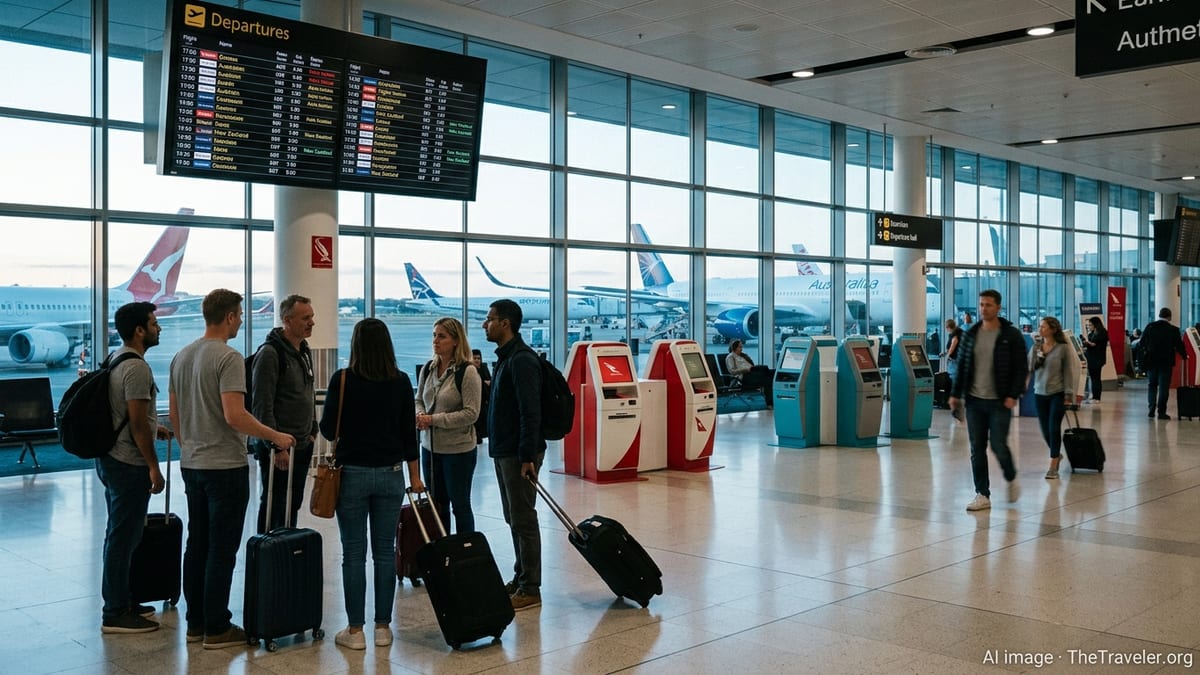
Fuel Price Shock Pushes Airlines to Raise Fares
Publicly available industry data shows jet fuel prices have climbed rapidly in recent weeks, driven in large part by conflict-related disruptions to oil supplies in the Middle East. Analysts report that jet fuel costs for some carriers have risen by well over 100 percent in a short period, placing fresh pressure on airline operating margins just as travel demand remains robust.
For full-service airlines such as Qantas and Virgin Australia, fuel is typically one of the largest single operating expenses, often accounting for around a quarter of total costs. With fuel hedging only able to cushion part of the spike, both groups are now adjusting base fares to recover at least some of the additional outlay.
According to recent Australian coverage of airline pricing, the broad guidance for the new round of changes is for an average increase of about five percent on many domestic tickets, though the exact impact will vary by route, fare class and booking date. Early indications suggest the biggest jumps will be felt on routes where aircraft are heavily booked or where there is limited competition.
These latest increases mark a shift from parts of 2025, when cheaper jet fuel and growing capacity had briefly pushed domestic economy fares lower. More recent monitoring by Australia’s competition regulator and independent aviation analysts, however, shows that higher input costs and strong demand are again exerting upward pressure on prices.
How Routes in Australia, New Zealand and the Region Are Affected
The immediate impact will be felt most clearly on Australia’s busiest domestic corridors, including the Sydney–Melbourne–Brisbane triangle, where both Qantas and Virgin Australia operate dense schedules targeting business and leisure travellers. Even a five percent increase can add a noticeable amount to the cost of frequent trips on these high-traffic routes.
Regional and resources-focused routes within Australia, where alternative transport options may be limited, are also vulnerable to higher average fares. Industry reports indicate that constrained seat capacity on some regional links has already been supporting elevated prices, and a fresh fuel-driven adjustment could further widen the gap between city and regional travel costs.
Across the Tasman, travellers shuttling between Australia and New Zealand may also feel the effects, especially where domestic sectors connect with international flights. While the headline increases are tied to domestic fare structures, analysts note that carriers can use revenue management tools to recover higher fuel costs across entire networks, including short-haul international services.
Beyond Australasia, the broader region is seeing a similar pattern. Coverage of global airline trends in recent days has highlighted that several carriers in Asia, Europe and North America are either flagging fare rises or introducing fuel surcharges, underscoring how closely linked ticket prices are to movements in oil and jet fuel markets.
What the Five Percent Rise Means for Travellers
For individual travellers, a five percent shift can translate into a range of outcomes depending on booking patterns. On a typical A$300 one-way domestic ticket, the increase might be around A$15, while on higher-yield business fares or flexible tickets, the dollar impact can be larger. Families and regular commuters who book multiple legs over the course of a year are likely to feel the cumulative effect most acutely.
Corporate travel managers and small businesses may also need to revisit budgets. Recent consulting and financial analyses of the Australian market have already pointed to higher average revenue per passenger for major airline groups, and another fuel-led adjustment is expected to flow through to corporate travel programs, particularly on short-notice and flexible bookings.
Some consumer advocates have questioned fare increases at a time when reported airline profits remain healthy and capacity is gradually returning. Monitoring by the Australian Competition and Consumer Commission has previously highlighted that limited competition on key domestic routes can allow airlines to protect yields even when fuel prices ease, raising concerns that price rises may not fully unwind if oil markets stabilise.
However, industry observers note that the present fuel spike is unusually sharp, and that carriers are under pressure to maintain fleet renewal plans, staff wages and operational resilience. The interplay between high demand, limited spare capacity and more expensive fuel is likely to keep average fares elevated in the near term.
Strategies to Keep Costs Down in a Higher-Fare Environment
With headline prices moving higher, travellers are being urged by consumer organisations and travel advisors to be more tactical about how and when they fly. Booking earlier, travelling outside peak days and times, and being flexible about departure airports within major metropolitan areas can help offset part of the five percent increase.
Publicly available guidance from travel comparison tools suggests that monitoring fare sales and setting alerts remains one of the most effective ways to secure lower prices, even in a rising market. Both Qantas and Virgin Australia continue to release promotional inventory on selected routes, although these offers may be more limited or sell out faster when base fares are trending upwards.
Frequent flyer schemes are another lever, but travellers should read current terms carefully. Recent changes in points earn rates and redemption costs across the region mean that the real value of loyalty programs can vary significantly between carriers and route types. In some cases, using points for last-minute or peak-period flights can deliver better value than chasing cash discounts.
Travel advisors also recommend considering multi-carrier itineraries and alternative airports where possible. On competitive routes served by low-cost carriers in addition to the two major full-service brands, price-sensitive travellers may still be able to find fares close to previous levels, albeit sometimes with fewer inclusions or more restrictive conditions.
What to Watch Next for Airfare Trends
The outlook for fares from here will depend largely on what happens to global oil and jet fuel prices over the coming months. Analysts tracking commodity markets note that further disruption in key producing regions could keep fuel costs elevated, while any signs of easing tensions or increased output might eventually allow some of the current increases to be pared back.
Regulatory scrutiny is also expected to remain intense. The Australian Competition and Consumer Commission’s regular domestic airline monitoring reports will continue to track trends in average fares, capacity and profitability for Qantas, Virgin Australia and their rivals, providing a public benchmark on how much of the fuel shock is being passed on to passengers.
For now, travellers planning trips within Australia, across the Tasman or around the wider region are being advised to factor higher baseline fares into their planning. While a five percent rise may seem modest in isolation, the combination of fuel-driven adjustments, strong demand and limited spare seats suggests that the era of unusually cheap post-pandemic airfares is, at least for the moment, receding into the past.