

More news on this day
Virgin Voyages will relocate all of its 2026 New York City sailings from Manhattan to the Brooklyn Cruise Terminal in Red Hook, a shift that tourism officials and local stakeholders say will strengthen New York’s cruise sector, shore up visitor spending and spotlight a rapidly changing stretch of the Brooklyn waterfront.
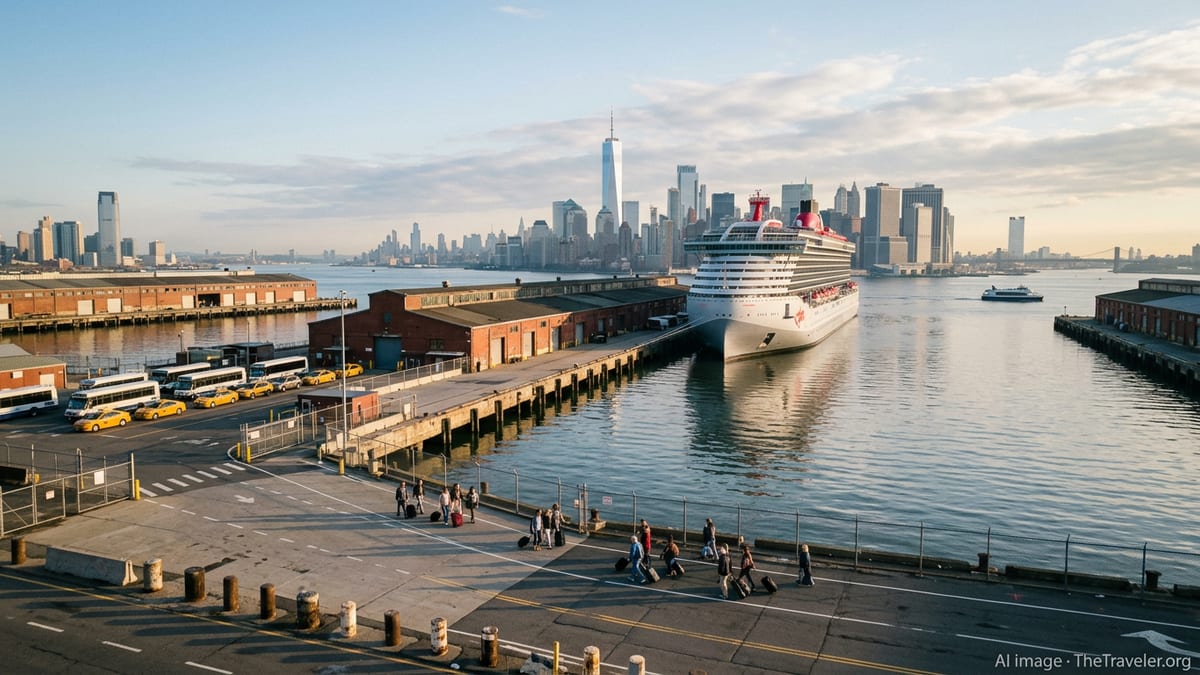
Virgin Voyages Sets Course for Red Hook in 2026
Virgin Voyages has confirmed that beginning April 6, 2026, its New York departures will operate from the Brooklyn Cruise Terminal rather than Pier 90 at the Manhattan Cruise Terminal. The change follows months of uncertainty around infrastructure constraints on Manhattan’s West Side, where maintenance and berth availability have complicated docking for large vessels.
The adults-only cruise line, which has been using Manhattan as a seasonal base for sailings to the Caribbean and Canada–New England, has told travel partners and booked guests that Brooklyn will be its dedicated New York home for the 2026 season. Company communications describe the terminal as better suited to deliver a smoother embarkation experience, with expanded check-in areas and more predictable pier access for its ships.
The move places Virgin Voyages alongside established players that already use Red Hook, including Cunard’s Queen Mary 2, and comes just as MSC Cruises prepares to wind down its year-round Brooklyn program in spring 2026. As one big-ship operator steps away, Virgin’s arrival helps maintain New York’s visibility in the competitive North American cruise market.
Travel advisors report a brief period of confusion as guests adjust hotel plans and transfers, but say interest in sailing from New York remains strong. For many cruisers, the novelty of sailing past the Statue of Liberty and under the Verrazzano-Narrows Bridge from a Brooklyn vantage point is becoming a selling point rather than a compromise.
Tourism Windfall for New York’s Cruise Economy
New York City’s cruise business has rebounded sharply, with the Manhattan and Brooklyn terminals together handling roughly 1.5 million passengers in 2024, according to recent port figures. Economic development officials estimate that cruise activity generates hundreds of millions of dollars in annual spending citywide and supports several thousand jobs in tourism-related sectors from hotels to restaurants and ground transportation.
Virgin Voyages’ relocation is expected to help sustain that momentum by keeping a contemporary, lifestyle-focused brand in the New York mix even as some lines redeploy ships elsewhere. Each call typically brings thousands of passengers who book pre- and post-cruise stays, visit attractions and dine throughout the five boroughs, with Brooklyn increasingly benefiting as a gateway rather than just a residential borough.
Local business groups in Brooklyn say the continuity of big-ship calls at Red Hook will be critical as other operators recalibrate. With MSC Meraviglia scheduled to leave New York in 2026 for European and Florida itineraries, Virgin’s presence softens the impact of that exit on restaurants, small retailers and tour operators that have grown used to ship days driving foot traffic.
City officials also view the Brooklyn terminal as part of a broader strategy to diversify tourist flows away from Midtown and Lower Manhattan. Encouraging more visitors to overnight in neighborhoods like Downtown Brooklyn, Williamsburg and Gowanus, then connect by ferry or rideshare to the pier, spreads spending more evenly while easing crowding in the city’s most saturated districts.
Red Hook Reimagined: Brooklyn Cruise Terminal’s Growing Role
Opened in 2006 after a major public investment, the Brooklyn Cruise Terminal occupies a historic maritime basin in Red Hook, long known for warehouses and working piers. In recent years, the surrounding area has begun to transform, with new public spaces, food destinations and a sweeping redevelopment plan for the nearby Brooklyn Marine Terminal that envisions a modern port, housing and waterfront parks.
For Red Hook, Virgin Voyages’ relocation underscores the neighborhood’s emergence as a front door for international visitors. On embarkation days, passengers get sweeping views of Lower Manhattan and the harbor, and many now linger at local cafes, distilleries and waterfront promenades either before boarding or after disembarkation.
City planning documents describe the cruise terminal as a cornerstone of the neighborhood’s economic future, alongside freight facilities and new public open space. Investments in terminal modernization, traffic management and security have been rolling out in phases to allow ships to keep sailing while upgrades advance in the background.
Community advocates, who have pressed for more thoughtful integration between the terminal and surrounding streets, say the next test will be how effectively the new wave of cruise traffic is managed. They want to ensure that increased visitor numbers translate into lasting benefits for small businesses and residents, not just congestion at peak times.
Access, Infrastructure and Passenger Experience
Compared with Midtown’s pier complex, the Brooklyn Cruise Terminal is more secluded, tucked behind industrial warehouses at the edge of Red Hook. To offset that relative isolation, the city and terminal operators have been highlighting transit links such as the NYC Ferry’s South Brooklyn route, which connects Lower Manhattan directly to a landing at Atlantic Basin adjacent to the cruise facility.
Most cruise passengers are still expected to rely on taxis, ride-hailing services and dedicated shuttles between Brooklyn, Manhattan and the region’s airports. Recent community traffic plans detail measures such as designated coach routes, staging areas and temporary cones along bike and pedestrian paths to keep port-day operations from overwhelming local streets.
From a passenger standpoint, Virgin Voyages is emphasizing streamlined embarkation, curb-to-ship transfers and shorter processing times as key advantages of the Brooklyn site. The single-ship terminal layout allows arriving guests to move quickly from check-in to boarding, without the overlapping crowds common at Manhattan’s multi-berth pier when several ships are in port.
The relocation also aligns with a broader push to modernize New York’s waterfront infrastructure after years of piecemeal repairs. As pier maintenance and shore-side facilities catch up with the growing demands of larger, more complex ships, cruise lines have become more vocal about requiring reliable, future-ready berths in order to commit vessels and itineraries to the region.
Sustainability and Shore Power Shape the Future
Environmental performance is increasingly central to decisions about where cruise ships dock in New York. City lawmakers have moved to require ships equipped for shore power to plug into the grid when berthed at city terminals, reducing exhaust from idling engines and cutting local air pollution in adjacent neighborhoods.
Brooklyn holds an advantage on this front. The Red Hook facility already has shore power capability, even if it has been underused in past seasons. As more cruise lines retrofit vessels to connect to shoreside electricity, officials expect a higher share of calls at the terminal to operate with significantly lower emissions while in port.
Virgin Voyages has marketed itself as a lower-impact line, with newer ships designed to be more energy-efficient than many legacy vessels. Its move to a terminal where shore power is available positions the brand to collaborate with city agencies on further climate and air-quality goals, especially as Red Hook residents have long raised concerns about ship exhaust.
For New York, the combination of a growing cruise market, new environmental rules and shifting deployment decisions by major lines is pushing port planners to think more holistically. Brooklyn’s expanding role, now reinforced by Virgin Voyages’ 2026 season, shows how terminal investments and sustainability commitments can dovetail with tourism growth rather than conflict with it.