

More news on this day
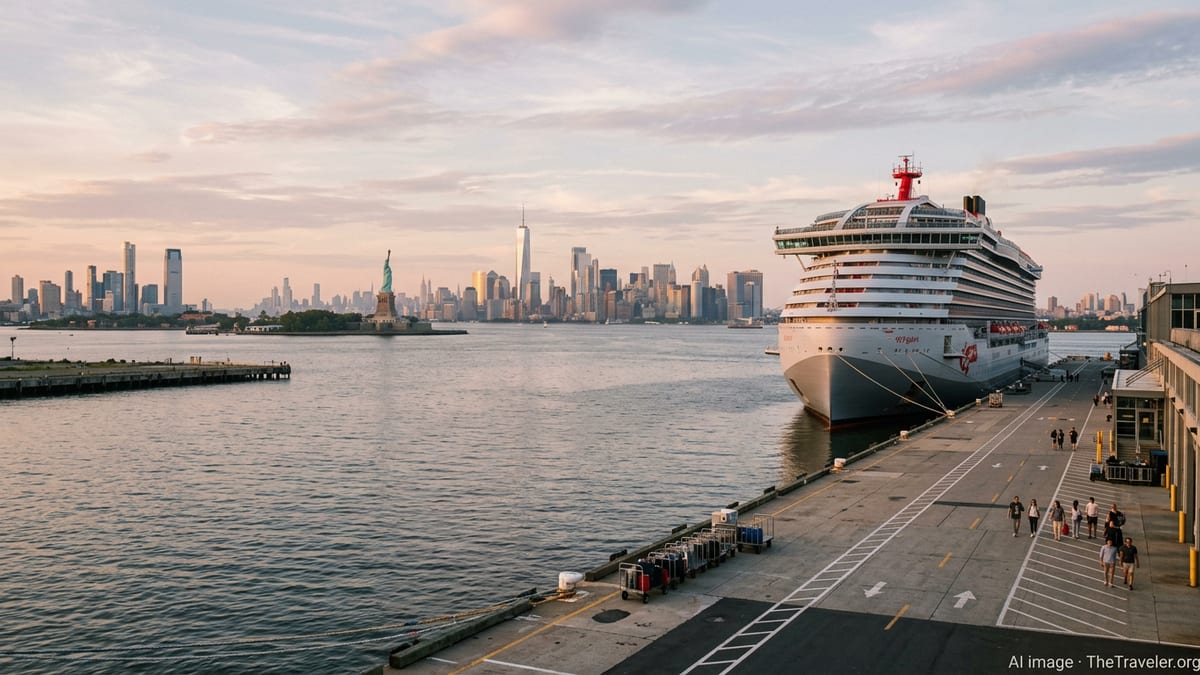
Virgin Voyages is relocating its New York homeport to Brooklyn Cruise Terminal from April 6, 2026, in a decision that reconfigures how cruise passengers will arrive in and depart from the city.
A Strategic Shift Across the Harbor
The adults-only cruise line confirmed that all 2026 New York sailings will operate from Brooklyn Cruise Terminal in Red Hook, replacing its previously announced use of Manhattan’s Pier 90. The move follows infrastructure constraints and capacity limitations at the Manhattan Cruise Terminal, which have forced several lines to rethink how they deploy ships in the region.
Virgin Voyages has told affected guests and travel advisors that Brooklyn will serve as its dedicated New York base for the 2026 season. The relocation applies to voyages operated by the line’s latest ship deployed in the Northeast, with April, September and October departures among those shifting across the East River.
While the decision is rooted in operational realities, it also signals a broader recalibration of how New York handles growing cruise traffic. With larger ships and fuller schedules now common along the North Atlantic, operators are increasingly looking to alternative berths that can offer more efficient turnarounds and improved shoreside services.
For Virgin Voyages, which has built its brand on design-forward spaces and a polished onboard experience, the choice of terminal is being framed as part of that promise, starting from the curb rather than the gangway.
Brooklyn Cruise Terminal Steps Into the Spotlight
Opened in 2006 on a converted freight pier, Brooklyn Cruise Terminal has evolved into one of New York Harbor’s primary gateways for large cruise ships. Located on a 13-acre waterfront site in Red Hook, it offers expansive apron space, on-site parking and sweeping views of Lower Manhattan and the Statue of Liberty that rival the vistas from the west side of Midtown.
In recent years, the facility has seen new investment, including upgrades to support shore power connections that allow compatible vessels to plug into the local grid while alongside. This has positioned Brooklyn as an increasingly attractive option for lines seeking to reduce emissions in port and align with tightening environmental expectations in major cities.
When ships are not alongside, the terminal doubles as a flexible event venue, a role that has driven further improvements to its interior spaces, circulation and security. Those enhancements now play into Virgin Voyages’ narrative that the Brooklyn setting can better match the brand’s emphasis on smooth, high-touch arrivals and departures.
The relocation also underscores Brooklyn’s growing stature in New York’s cruise mix, after years of sharing the spotlight with Manhattan and New Jersey’s Cape Liberty facility across the harbor.
What the Move Means for Travelers
For cruise passengers, the headline change is simple: starting in early April 2026, Virgin Voyages sailings marketed as departing from New York City will board and disembark in Brooklyn, not Midtown Manhattan. That shift will affect how travelers plan hotel stays, airport transfers and pre- or post-cruise sightseeing.
Instead of arriving at a terminal just off 12th Avenue in the heart of Manhattan, guests will now need to build in travel time to Red Hook, a waterfront neighborhood with more limited direct public transit but growing ferry and rideshare connections. The area is reachable by taxi or app-based car services from all three major regional airports, as well as by car from Manhattan, Brooklyn and Staten Island.
Travel planners expect the move to alter patterns for short pre-cruise stays. While many guests may still opt for classic Midtown or Times Square hotels, Brooklyn neighborhoods such as Downtown Brooklyn, Brooklyn Heights and Williamsburg could see increased demand from cruise passengers looking to be closer to their point of departure while still retaining easy access to Manhattan’s attractions.
Virgin Voyages has been advising guests to double-check transfer details, parking plans and timing for embarkation day, particularly for those who originally booked expecting a Manhattan terminal and may now be revising their logistics.
Red Hook’s Moment as a Tourism Gateway
The terminal’s Red Hook location introduces many cruise travelers to a part of New York that, until now, has been more associated with warehouses, small manufacturers and independent shops than with large-scale tourism. Over the past decade, the neighborhood has quietly developed a mix of restaurants, bars, artist studios and waterfront parks that could benefit from the added footfall.
From the pier, visitors are rewarded with some of the harbor’s most photogenic views, including unobstructed sightlines to the Statue of Liberty and Lower Manhattan’s skyline. Sail away scenes from Brooklyn are expected to become a new signature for Virgin Voyages’ New York itineraries, potentially rivaling the classic departure past Midtown’s skyscrapers.
Local stakeholders have been working on traffic and community management plans to balance increased cruise activity with neighborhood livability. These efforts include refined routing for vehicles, coordination with ferry services and continued investment in pedestrian access around the terminal.
For New York City, positioning Red Hook as a higher-profile cruise hub is part of a broader push to spread tourism benefits more evenly across boroughs, drawing visitors beyond traditional Manhattan hotspots and showcasing lesser-known waterfront districts.
Reshaping New York’s Cruise Landscape
Virgin Voyages’ move comes as New York’s cruise industry continues to recalibrate after a period of rapid fleet growth and changing traveler expectations. With larger ships, longer itineraries and heightened attention to environmental performance, port authorities and cruise lines are rethinking how best to use limited waterfront infrastructure.
Manhattan’s terminals, hemmed in by a dense urban grid and busy roadways, face both physical and logistical constraints when accommodating multiple mega-ships on peak days. Brooklyn, by contrast, offers more contiguous space and opportunities for continued investment in shore power, staging areas and passenger flows.
By shifting its 2026 season to Brooklyn, Virgin Voyages is betting that travelers will embrace a slightly less central but potentially smoother New York embarkation experience. If the transition proves successful, it could influence how other operators look at their own deployment decisions in the region in the years ahead.
For now, the change marks one of the most visible recent adjustments to how New York presents itself as a cruise gateway, with the Brooklyn waterfront poised to feature more prominently in the city’s global travel story from spring 2026 onward.