

More news on this day
Virginia is asking residents, businesses, and local stakeholders to help chart the next two decades of rail investment, as work ramps up on the Commonwealth’s 2026 Statewide Rail Plan that will guide how passenger and freight rail lines expand, modernize, and connect communities through the mid-2040s.
Get the latest news straight to your inbox!
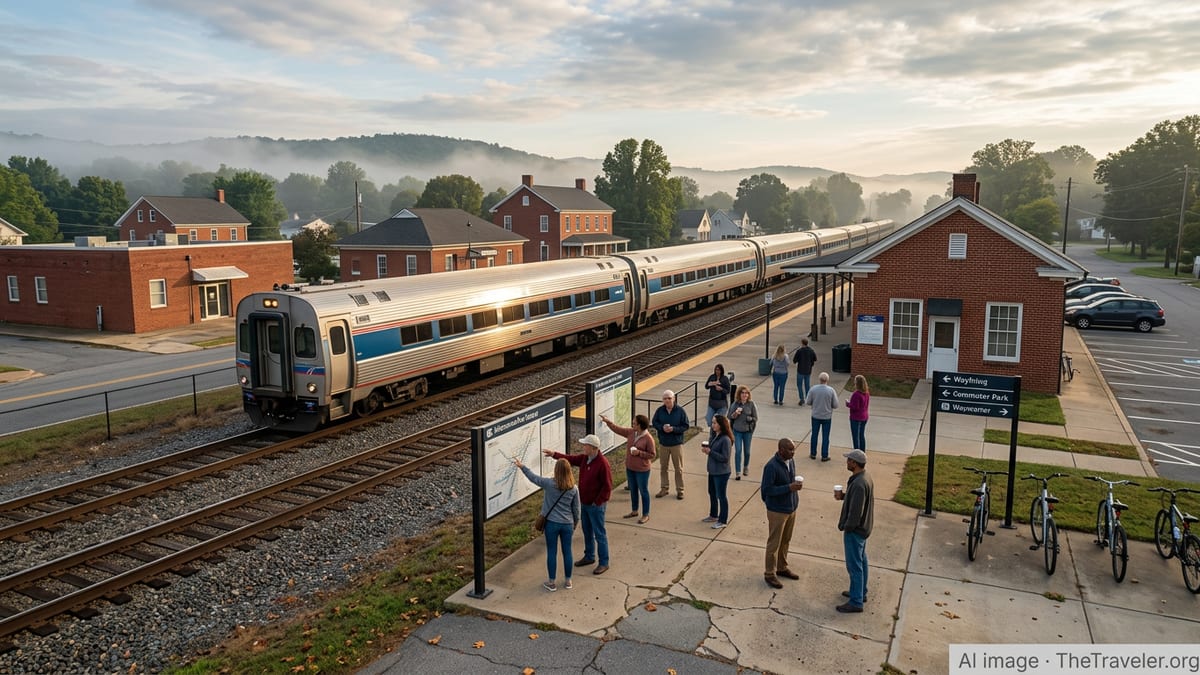
A 20-Year Blueprint For Trains, Transit, And Growth
The 2026 Statewide Rail Plan is being developed as Virginia continues to expand passenger rail corridors and modernize freight lines, building on multibillion-dollar commitments outlined in recent Six-Year Improvement Programs. Publicly available information shows that state rail funding has grown into the billions of dollars over a six-year window, with dedicated support for intercity trains, local and regional transit, and congestion management along key corridors.
The new plan will serve as Virginia’s long-range rail strategy through approximately 2046, aligning with federal requirements for statewide rail planning and positioning projects to compete for national grants. Reports indicate that the plan will tie together existing initiatives such as corridor improvement studies, commuter rail upgrades, and new station investments with emerging priorities like climate resilience and transit-oriented development around rail hubs.
Unlike annual budget documents, the Statewide Rail Plan is designed as a policy and investment roadmap. It describes the existing rail network, analyzes current and projected demand, and identifies the corridors and projects that can deliver the greatest benefits in reliability, safety, and access. The 2026 update is expected to refine these priorities based on shifting travel patterns, population growth, and lessons from recent rail expansions.
For travelers and communities, that long-range perspective means the decisions made during today’s planning process could determine where new trains run, how often they operate, and which small towns or suburban centers emerge as regional rail hubs over the next 20 years.
How The Public Will Help Shape The 2026 Rail Plan
According to planning documents and recent public engagement materials, Virginia’s rail planning process relies heavily on formal comment periods, open houses, and online input tools to capture feedback. The Department of Rail and Public Transportation maintains a statewide public participation framework that emphasizes early, continuous involvement and multiple ways for residents to weigh in.
For the 2026 Statewide Rail Plan, the public input effort is expected to mirror other recent transportation outreach campaigns in Virginia. Those efforts have combined in-person meetings around the state, virtual briefings, and online surveys that allow participants to identify problem spots, desired corridors, and station-area improvements. Published examples from corridor studies show that interactive maps and comment portals have been used to gather thousands of location-specific suggestions.
Residents can typically comment not only on proposed routes and service levels but also on broader themes such as equity, environmental impacts, and land use around stations. Planning guidance released in recent years highlights transit-oriented development as a growing focus, with state budget language calling for coordinated reviews of development opportunities near existing and proposed rail stops.
As the 2026 Rail Plan moves from early analysis to draft chapters, the state is expected to release technical summaries, maps, and proposed investment priorities for public review. Feedback gathered during that window will help determine how projects are ranked and which concepts advance into funding programs or future grant applications.
Key Corridors And Projects On The Horizon
Publicly available rail and transportation materials point to several corridors that are likely to feature prominently in Virginia’s 2026 rail strategy. Ongoing planning highlights east–west intercity connections across the state, improvements to heavily used interstate corridors such as I‑81, and continued growth in Northern Virginia’s commuter and regional rail network.
Earlier studies of an east–west “Commonwealth Corridor” have examined the potential for new passenger rail linking regions such as Hampton Roads, Richmond, and the Blue Ridge and Shenandoah Valley. Those concepts, along with incremental upgrades to existing north–south routes, are expected to be revisited as the state updates demand forecasts and cost estimates.
At the same time, coordination with highway corridor plans is shaping how freight and passenger rail can relieve pressure on congested interstates. The recently completed I‑81 Corridor Improvement Plan, for example, involved close collaboration between highway and rail agencies and relied on public mapping tools and surveys to pinpoint trouble spots. That approach is likely to inform how the 2026 Rail Plan considers rail’s role in reducing truck traffic, improving safety, and supporting economic development along major freight routes.
Local and regional efforts will also influence the statewide vision. Planning documents from Northern Virginia and Hampton Roads continue to explore higher-capacity transit and commuter rail options, while smaller metropolitan regions are studying station upgrades, park-and-ride access, and first‑mile/last‑mile links that can make rail a more viable choice for daily travel.
From Comment To Construction: Why This Input Matters
While a statewide plan can feel abstract, Virginia’s recent funding decisions illustrate how public input can translate into concrete projects and construction timelines. Draft Six-Year Improvement Programs outline billions of dollars for bus networks, commuter rail, and intercity trains, and those allocations often track closely with needs and priorities raised during earlier planning cycles.
Public comments, letters from local governments, and regional planning resolutions are frequently cited in summaries that accompany funding recommendations. Those documents show that corridors with clear, well-documented community support tend to be more competitive when state officials evaluate where to direct limited dollars and how to package applications for federal grants.
Participation in the 2026 Rail Plan therefore serves several purposes at once. It helps refine the technical analysis by highlighting real-world congestion and access issues, it shapes the narrative around which routes matter most to residents and employers, and it strengthens Virginia’s case when the state seeks federal support for major rail expansions or modernization projects.
Over the long term, early engagement can shorten the path from concept to groundbreaking. Projects that are clearly identified in a statewide plan, backed by robust public involvement records, and aligned with regional land-use goals are more likely to secure environmental approvals and funding.
What Riders, Communities, And Travelers Should Watch Next
As work on the 2026 Statewide Rail Plan progresses, observers can expect a series of milestones. These typically include release of baseline data on existing rail conditions, publication of scenario analyses showing different investment paths, and unveiling of a draft plan for public review ahead of final adoption.
Reports indicate that upcoming Six-Year Improvement Program cycles and related grant rounds will be timed to capture recommendations from the rail plan. That alignment means today’s public feedback can influence not only the long-term vision but also the mix of projects competing for funding in the late 2020s.
For travelers, the clearest indicators of change will come as specific corridors move from the planning pages into design and construction. Expanded train frequencies on key routes, new or modernized stations in growing communities, and better integration with local buses and trails are all recurring themes in current Virginia transportation planning materials.
For now, the state is signaling that it wants residents, businesses, and local leaders to play an active role in shaping how rail evolves. The 2026 Statewide Rail Plan is emerging as the central document that will knit together these ideas, and the feedback gathered over the coming months may help determine how Virginians experience trains and transit for the next 20 years.