

More news on this day
In a Mediterranean crowded by blockbuster destinations, Croatia’s Vis Island is emerging as a rare holdout: a slow-travel sanctuary that many seasoned visitors now urge others to see before it follows the path of better-known hotspots.
Get the latest news straight to your inbox!
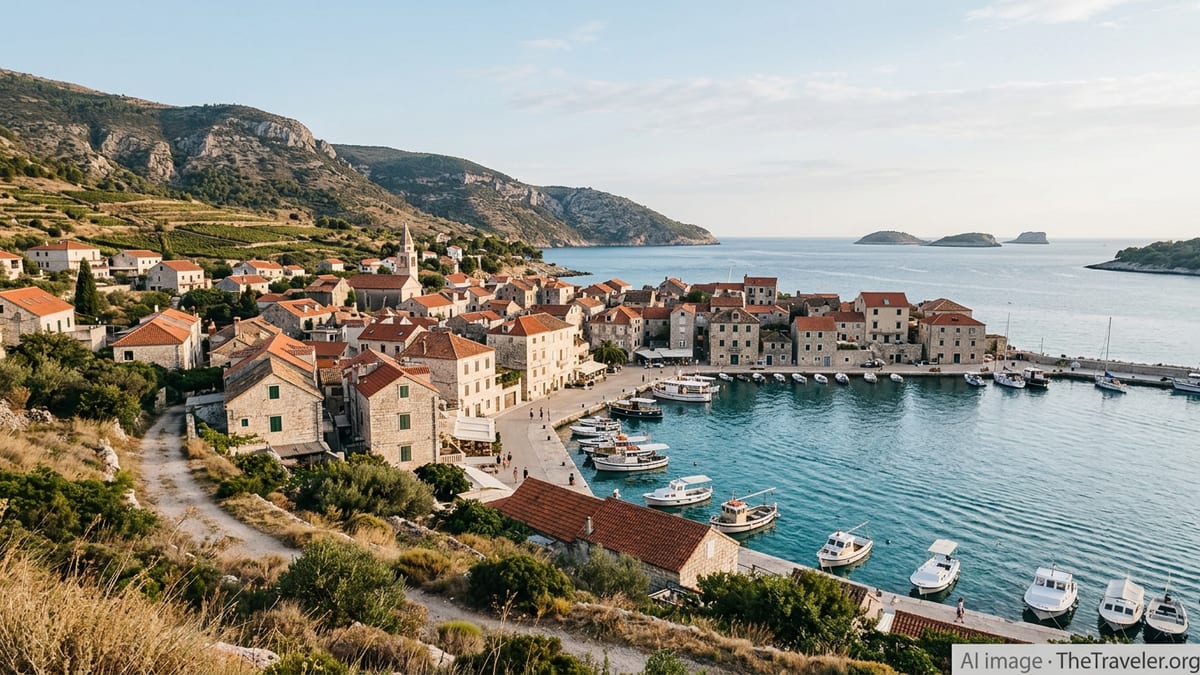
An Adriatic Outpost That Stayed Off the Map
Vis sits in the central Adriatic, several hours by ferry from Split, but for much of the 20th century it may as well have been a world away. The island served as a strategic military base and was closed to foreign visitors until the late 1980s, a long isolation that limited large-scale construction and holiday development. Publicly available information about Croatia’s tourism history indicates that this period of restricted access shaped Vis in ways that now set it apart from heavily promoted neighbors.
Today, that legacy is visible in the low-rise waterfronts, narrow stone alleys and agricultural terraces that still dominate the landscape. Instead of resort strips and mega-marinas, arriving passengers step into compact harbor towns that feel markedly quieter than Hvar or Brač in high season. Reports from recent travel coverage describe Vis as a “time capsule” of the Adriatic, with a pace of life that aligns more closely with fishing schedules and vineyard work than cruise ship timetables.
This slower evolution has also influenced how tourism is framed. Rather than mass arrivals for brief beach breaks, the island increasingly attracts visitors seeking longer, more immersive stays, a trend noted in recent European travel features that profile Vis as an antidote to the region’s overtourism debates.
Rising Attention, With a ‘Not Hot’ Warning
Despite its understated profile, Vis is no longer entirely secret. International travel media have been spotlighting the island with growing frequency, presenting it as an alternative to Croatia’s busiest coastal hubs. In 2025, multiple guides to Croatian islands highlighted Vis as a standout for its clear waters, uncrowded bays and relatively modest nightlife compared with Hvar, even at the height of summer.
Intrepid Travel’s 2026 “Not Hot List,” created in collaboration with the travel trends platform Globetrender, went a step further by formally naming Vis Island as a destination to choose in place of overburdened hotspots. Instead of flagging it as the next place to “blow up,” the list positions Vis as a model for more measured, sustainable growth, encouraging visitors to spread out beyond the country’s most pressured cities.
European outlets such as Euronews Travel have echoed that message, pointing to Vis as a slow-travel option for those weary of crowds in Dubrovnik and Split. Their coverage emphasizes hiking, snorkeling and wine-tasting over high-volume day trips, underscoring a broader shift in how the island is being promoted. For now, this combination of rising visibility and cautionary framing has helped keep visitor numbers in check compared with Croatia’s busiest islands, but the sense of “go now” urgency is becoming more pronounced.
Two Harbors, Fishing Villages and Vineyard Hills
Vis’s appeal is anchored in its two main settlements: Vis Town on the eastern side and Komiža on the west. Vis Town, built around a wide natural harbor, mixes remnants of ancient Issa, Venetian-era facades and 19th-century waterfront houses. Recent tourism materials from Croatian and regional publishers describe it as the island’s administrative and transport hub, with ferries, yacht moorings and a growing cluster of small hotels, konoba-style restaurants and wine bars.
Komiža, by contrast, retains the feel of a compact fishing village sheltered beneath the rocky slopes of Mount Hum. Travel guides and local tourism boards emphasize its jumble of stone houses around the harbor, its tradition of wooden falkuša fishing boats and its pebble beaches stretching north and south from the town center. Even as Komiža gains attention as a base for excursions to nearby islands, reports consistently underline its continued emphasis on small-scale, locally run accommodation.
Beyond these harbors, much of Vis remains agricultural. Pockets of vineyards and olive groves fill old military fields and terraced hills, and several wine producers now offer tastings focused on indigenous grape varieties. Recent visitor accounts highlight days spent cycling or driving between coves, vineyards and hilltop viewpoints rather than shuttling between major attractions, reinforcing the perception of Vis as a place best experienced at a slower, more exploratory rhythm.
Blue Caves, Hidden Coves and a Protected Archipelago
Offshore, the wider Vis archipelago adds to the island’s sense of remoteness. To the southwest lies Biševo, a small island known for its Blue Cave, a flooded sea grotto where sunlight refracts through an underwater opening to illuminate the interior in vivid blue. The cave and island, reachable by boat from Komiža, are now among the area’s most publicized natural sights, drawing day-trippers from across central Dalmatia.
Further west, volcanic islets such as Brusnik and the more distant Svetac contribute to what regional tourism bodies have promoted as a geopark and marine area of high ecological value. Access is limited and often weather-dependent, and publicly available information stresses both the fragility of these environments and the need for regulated visits. This controlled approach stands in contrast to some mainland attractions where heavy footfall has triggered restrictions only after visible strain.
On Vis itself, coves such as Stiniva, Srebrna and Stončica regularly appear in travel roundups for their clear water and dramatic cliffs. However, recent coverage in international publications has begun pairing these recommendations with practical guidance about timing, transport and crowd levels. Some articles now advise visiting popular bays early in the day or arriving by kayak or small boat, while using the rest of the island’s coastline for quieter swims and walks.
A Test Case for Croatia’s Sustainable Tourism Ambitions
Vis is also drawing attention as a barometer for Croatia’s broader tourism strategy. In recent years, national and regional tourism organizations have repeatedly highlighted sustainable and higher-quality travel as key priorities, a response to public debate about cruise congestion and seasonal price spikes in major cities. Vis, with its relatively small capacity and limited infrastructure, features in this discussion as a destination where growth can be shaped more deliberately.
Industry reports and trend forecasts suggest that travelers arriving in Vis today are more likely to stay several nights, seek out local food and wine, and engage in low-impact activities such as hiking, cycling and boat excursions to nearby islands. This profile aligns closely with what policy documents describe as “value over volume” tourism, in which overall visitor numbers matter less than length of stay and spending patterns that benefit local communities.
At the same time, there are early signs of the pressures that greater popularity can bring. Online travel forums and recent trip reports mention rising accommodation costs in peak season and more crowded departures to the Blue Cave on midsummer mornings. While these observations remain modest compared with accounts from Croatia’s busiest islands, they illustrate how quickly a place can shift from “unexplored” to “discovered” once it gains a foothold in international rankings and curated lists.
For now, Vis still offers what many travelers are seeking in the post-peak-tourism era: a coastal escape where quiet harbors, working fishing boats and vineyard-covered hillsides set the tone. The growing chorus of advice to “go before it changes” reflects both the island’s current allure and the uncertainty surrounding how it will adapt as more visitors follow the whispers to this once-secret Adriatic outpost.