

Hawaii may feel like a world apart, but for immigration and entry purposes it is firmly part of the United States. That means the rules that govern entry to the U.S. mainland also apply when you are heading to Honolulu, Maui, Kauai, the Island of Hawaii, or any of the other islands. Whether you are a U.S. citizen, a permanent resident, or an overseas visitor, knowing which visa or authorization you need and what to expect at the airport will make your journey smoother and help you avoid unpleasant surprises at the border.
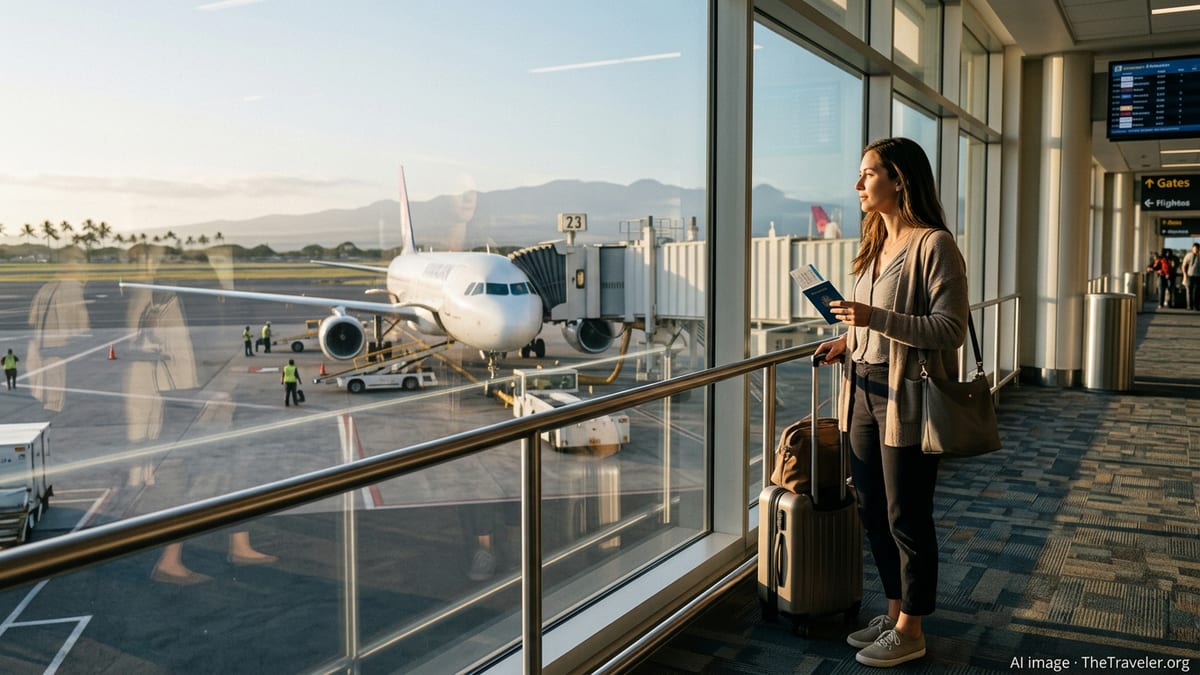
Understanding Hawaii’s Unique Status and Why It Matters
Hawaii is a U.S. state, not a separate country. For immigration purposes, flying to Hawaii from abroad is legally the same as entering any other port of entry in the United States. Foreign nationals are inspected by U.S. Customs and Border Protection, and the same federal visa rules that apply to New York, Los Angeles, or Miami also apply to Honolulu or Kahului. There are no special Hawaii-only visas. Instead, travelers must comply with U.S. national immigration law and any additional security measures in place at the time of travel.
For most visitors coming for tourism, the key question is whether they can enter without a traditional visa under the U.S. Visa Waiver Program or whether they need to apply for a B1/B2 visitor visa in advance. The rules for length of stay, permitted activities, and onward travel are determined at the federal level and enforced at the first U.S. airport where you clear immigration. If Hawaii is your first stop in the country, you will complete the full immigration and customs process there before collecting your bags and heading out to enjoy the islands.
If you are already inside the United States and traveling on a domestic flight to Hawaii, there is no second immigration checkpoint on arrival. Your visa or status must still be valid for your entire stay, but you will not go through another passport control just because you are entering Hawaii. Instead, what makes Hawaii different from most U.S. states is a strict system of agricultural inspection that aims to protect the islands’ fragile ecosystems from invasive pests and diseases.
Health-related entry rules have also shifted back to normal. Hawaii’s pandemic-era Safe Travels program and quarantine rules have ended, and as of early 2026 there are no special statewide Covid-related entry requirements for domestic or international passengers beyond any that might exist at the broader U.S. federal level. Requirements can change, so travelers should always check for updated guidance from U.S. authorities shortly before departure.
Who Needs a Visa, ESTA, or Other Permission to Enter Hawaii
Because Hawaii is part of the United States, foreign nationals must qualify for entry under one of the existing U.S. categories. Many short-term visitors arrive for tourism or business meetings, which typically means entering as a visitor under either the Visa Waiver Program with an approved ESTA or on a B1/B2 visitor visa. The correct option depends mainly on your nationality, your travel history, and how long you plan to stay.
Citizens of countries that participate in the U.S. Visa Waiver Program can normally visit for tourism or certain business activities without applying for a visa at a consulate. Instead, they complete an online Electronic System for Travel Authorization application before travel. An approved ESTA allows multiple entries over a two-year period, or until the traveler’s passport expires, whichever comes first. However, each visit is limited to a combined maximum of 90 days in the United States and certain nearby territories, and travelers must still satisfy border officers that they are genuine temporary visitors.
Travelers who are not eligible for the Visa Waiver Program, or who plan to stay longer than 90 days, must usually obtain a B1/B2 visitor visa or another appropriate visa type before flying to Hawaii. This involves completing the relevant application, paying a fee, and attending an interview at a U.S. embassy or consulate. A visa is essentially a pre-screening tool that allows you to travel to a U.S. airport and request entry. The final decision about admission and the length of your authorized stay is always made by a U.S. officer at the border.
Certain travelers who might otherwise qualify for the Visa Waiver Program can be excluded based on dual nationality, recent travel to particular countries of concern, or previous overstays and immigration violations. In those cases, even if your passport is from a Visa Waiver country, you may be required to use a full visitor visa instead of ESTA. When in doubt, it is safer to assume that you need a visa and check official U.S. government resources rather than relying only on general advice or airline staff.
Passports, ESTA, and Visa Waiver Program Basics
For eligible nationals, the Visa Waiver Program paired with ESTA is the simplest way to enter Hawaii for a short holiday. To use it, you must have a passport from a participating country that meets enhanced security standards, including a machine-readable zone and an electronic chip containing biometric information. The passport must be valid for the entire duration of your intended stay, and some travelers are advised to ensure it is valid for several months beyond their departure date to avoid practical issues with airlines or connecting countries.
An ESTA application is completed online and requires basic biographical details, passport information, details of your travel, and answers to security-related questions. A fee is charged for processing and travel promotion, and in recent years the total cost has risen to around forty U.S. dollars. Processing is often quick, sometimes within minutes, but travelers are strongly urged to apply at least several days in advance in case of delays or questions. Airlines will check your ESTA approval electronically before allowing you to board a flight bound for the United States.
It is important to understand what ESTA does and does not do. An approved ESTA is not a visa and does not guarantee admission. Instead, it confirms that you are eligible to travel under the Visa Waiver Program and board a plane or ship to a U.S. port. On arrival in Hawaii or another first U.S. point of entry, you will still be interviewed by a U.S. officer who decides whether to admit you and how long you may stay, up to a maximum of 90 days. That 90-day clock covers your entire time in the United States and certain nearby territories, not just days spent in Hawaii alone.
Border officers may also consider your travel history and future plans. Repeated back-to-back stays close to the 90-day limit can raise questions about whether you are effectively living in the United States on a tourist authorization. Short trips to neighboring countries such as Mexico or Canada usually do not reset the 90-day period if they are part of the same overall visit. Travelers who want to spend extended time in Hawaii or the mainland, study, or work will need to look into longer-term visa categories or immigration options rather than relying on ESTA.
Rules for U.S. Citizens, Green Card Holders, and Domestic Travelers
U.S. citizens enjoy the right to live and travel anywhere within the country, including Hawaii, without needing a visa. When flying between the mainland and the islands, the journey is treated as a domestic flight for immigration purposes. Travelers pass through the standard Transportation Security Administration security checks and airline boarding processes, but there is no passport control on arrival or departure within the country. That said, U.S. citizens returning to Hawaii from an overseas trip will still need a valid U.S. passport to enter the United States at their first port of entry, which might or might not be in Hawaii, depending on their routing.
U.S. permanent residents, often referred to as green card holders, must carry their valid permanent resident card when traveling and reentering the United States, including when returning to Hawaii from abroad. A foreign passport may still be required for air travel, but the key document for entry is the green card, which proves lawful permanent residence. Extended trips outside the country can raise questions about abandonment of residence, so permanent residents who plan to be away from the United States for many months should seek advice about maintaining their status, even if Hawaii is their eventual destination.
Domestic travelers flying to Hawaii from other U.S. states must meet the same identity requirements enforced at any mainland airport. The federal Real ID standards, which are being phased in across the country, mean that adults will eventually need either a compliant driver’s license or another acceptable form of identification, such as a U.S. passport or military ID, to clear TSA checkpoints. Children traveling with adults usually do not need ID for domestic flights, but airlines can apply their own rules, so families are wise to carry birth certificates or other documents for younger travelers.
Although moving between states does not involve formal immigration checks, non-U.S. nationals must still remain mindful of their underlying status. If you are in the country on a student, work, or visitor visa, your permitted activities and dates of stay do not change simply because you fly to Hawaii. Overstaying a visa or breaching its conditions can have serious consequences for future travel to the United States, regardless of whether the overstay happens in Honolulu or in another U.S. city.
Arrival in Hawaii: Immigration, Customs, and Agricultural Inspection
Travelers arriving in Hawaii on an international flight will normally complete U.S. immigration and customs at their first airport in the state. After disembarking, passengers proceed to U.S. passport control, where they present their travel documents, visas, or ESTA approval and answer standard questions about their stay. Biometric data such as fingerprints and a photograph are typically collected. If admitted, travelers receive an electronic record of admission, and those entering on ESTA or a visa waiver usually do not get a physical entry stamp in their passport, although this can vary by port and procedure.
After immigration, passengers collect their checked luggage and move through customs. Travelers must declare items such as large amounts of currency, certain foods, plants, and animal products, and goods exceeding their personal duty-free allowance. Even domestic passengers connecting onward within Hawaii are subject to American customs rules on arrival from abroad. Failure to declare restricted or prohibited items can lead to fines, confiscation, and delays, so it is better to be candid and ask officers if you are unsure about something you are carrying.
Hawaii imposes an additional layer of protection in the form of agricultural inspection. The islands’ isolation and rich biodiversity make them particularly vulnerable to invasive species. As a result, the state’s Department of Agriculture works alongside federal agencies to screen incoming passengers and cargo for plants, soil, certain fruits and vegetables, and other agricultural materials. Airlines typically distribute an agricultural declaration form to passengers during the flight to Hawaii, which must be completed honestly and handed over on arrival or at a designated checkpoint.
Inspections can involve x-ray screening of checked bags, visual inspection of hand luggage, and occasional manual searches. Items such as untreated fresh fruits, certain plants, and soil may be restricted or require permits, while many processed and packaged foods are allowed. Rules can be stricter when moving items from Hawaii to the mainland United States, with federal inspectors ensuring that potentially harmful pests are not carried out of the islands. Travelers who simply bring personal belongings and leave local plants and produce behind rarely experience more than a brief pause at the inspection area.
Current Health, Security, and Covid-Related Considerations
As of early 2026, travel to Hawaii has largely returned to pre-pandemic patterns. Hawaii’s specific Safe Travels system, which once required online registration, testing, and vaccination documentation, has been discontinued. There is no separate state-run quarantine program for arriving passengers, and domestic travelers from other U.S. states do not face additional health screening on arrival solely because they are visiting Hawaii. The U.S. federal government also lifted its pre-departure Covid testing requirement for international air passengers some time ago, and no federal vaccine requirement is currently in force for most ordinary tourists.
Nevertheless, health and security rules can evolve quickly. Public health emergencies, emerging variants, or global outbreaks of other diseases can lead to temporary requirements for testing, masks in certain spaces, or documentation of recovery. Travelers heading to Hawaii from overseas should therefore check both U.S. national entry policies and any airline-specific requirements close to their departure date. Airlines retain the right to enforce their own standards for mask use or proof of fitness to fly, particularly if a passenger appears visibly unwell.
Security screening in Hawaii follows the same federal standards found across U.S. airports. Passengers pass through TSA checkpoints where laptops and larger liquids must usually be screened separately, and body scanners or metal detectors are standard. Trusted traveler programs such as TSA PreCheck and Global Entry can speed up the process for eligible passengers, though these do not change immigration or visa requirements. Enhanced screening can apply to flights considered higher risk, so travelers should always leave ample time to clear airport formalities before boarding.
Beyond formal rules, travelers should also consider practical health precautions for Hawaii’s climate and outdoor environment. Sun protection, hydration, and respect for ocean conditions are essential throughout the islands. While these factors are not part of visa or immigration law, they significantly influence the overall safety and enjoyment of a visit. Travel insurance that covers medical care and trip disruption remains highly recommended for international visitors and can be wise for U.S. residents as well.
Staying in Hawaii: Duration Limits, Extensions, and Status Issues
Once admitted to the United States, visitors must abide by the conditions of their status for the entire duration of their stay, whether they spend all their time on the mainland, in Hawaii, or move between the two. For those using ESTA under the Visa Waiver Program, the key limit is the 90-day maximum stay. That limit usually cannot be extended or converted into a different type of status from within the United States. If travelers on ESTA wish to remain longer, they generally need to depart the country and, if eligible, reapply for a visa category that permits a longer stay. Attempting to use short trips to neighboring countries as a way to reset the 90-day clock can attract scrutiny and may result in refusal of entry if border officers believe a traveler is abusing the system.
Visitors entering with a B1/B2 visa are typically granted a period of stay marked on their admission record, often up to six months, though the exact length is at the discretion of the inspecting officer. In some situations, it is possible to apply for an extension of stay or a change of status from within the United States, for example, when shifting from visitor status to a student or work visa category, provided all legal requirements are met. These processes involve additional paperwork, fees, and potential waiting times, and approval is never guaranteed. Because processing can be lengthy, travelers should not assume that a pending application automatically justifies overstaying an original authorized period without understanding the rules.
During a visit, tourists may engage in typical leisure activities, attend conferences, or hold certain types of business meetings. They may not work in paid employment in the United States unless they hold an appropriate work-authorizing visa or immigration status. Volunteer work, work in exchange for accommodation, and informal jobs can all be viewed as unauthorized employment and jeopardize future entry to the country, even if they seem minor at the time. Travelers planning to enroll in formal educational programs in Hawaii should confirm whether a student visa is required instead of or in addition to visitor status.
If circumstances change during a stay in Hawaii, such as illness, natural disasters, or canceled flights, visitors should keep documentation of these events in case they need to explain a departure delay to immigration authorities in the future. It is always safer to depart or file for an extension before an authorized stay expires rather than waiting until after. Overstays, even unintentional ones, are recorded and can lead to difficulties or ineligibility for certain travel programs in the future.
The Takeaway
Traveling to Hawaii blends the magic of tropical islands with the realities of entering the United States. For international visitors, the key is to recognize that Hawaii follows the same federal visa and immigration rules as any other American destination. That means checking whether you qualify for the Visa Waiver Program and ESTA or need to apply for a B1/B2 visa, ensuring your passport is valid, and planning your itinerary so that you remain well within authorized time limits. An approved ESTA or visa is only part of the picture; the final decision on entry and length of stay is always made by U.S. officers at the border.
For U.S. citizens and permanent residents, travel between the mainland and the islands is domestic, but it still demands compliance with security screening and, uniquely in Hawaii’s case, rigorous agricultural inspection. Protecting Hawaii’s fragile environment from invasive species is a central priority, and visitors play a direct role by following declaration rules and respecting restrictions on plants and produce. Health and Covid-related rules have stabilized, yet they can evolve, making it wise to verify current requirements close to your departure date.
Ultimately, a successful trip to Hawaii combines careful attention to entry formalities with respect for local regulations and environments. By preparing your documents early, being honest and cooperative at immigration and agricultural checkpoints, and staying informed about any changing rules, you can focus on what really matters: exploring volcanic landscapes, swimming in warm Pacific waters, and immersing yourself in the culture and hospitality that make Hawaii one of the world’s most memorable destinations.
FAQ
Q1. Do I need a separate visa for Hawaii if I already have a U.S. visa?
In most cases you do not. A valid U.S. visa or ESTA that allows entry to the United States covers travel to Hawaii because the state is part of the U.S. immigration territory.
Q2. How long can I stay in Hawaii with ESTA under the Visa Waiver Program?
With an approved ESTA, you can usually stay up to 90 days in total in the United States, which includes time in Hawaii and on the mainland during the same trip.
Q3. Can I extend my 90-day ESTA stay while I am in Hawaii?
Generally you cannot. The Visa Waiver Program does not normally permit extensions or changes of status from within the United States, so you should plan to leave before the 90 days expire.
Q4. Are there any Covid-related entry rules for Hawaii in 2026?
As of early 2026 there are no Hawaii-specific Covid entry programs like the former Safe Travels system, but travelers should still confirm current U.S. federal and airline rules before departure.
Q5. Do domestic travelers from other U.S. states go through immigration on arrival in Hawaii?
No. Flights between Hawaii and other U.S. states are domestic for immigration purposes, so there is no passport control, although standard security and agricultural inspections still apply.
Q6. Why are there agricultural inspections when flying to or from Hawaii?
Hawaii’s ecosystems are highly vulnerable to invasive species. Agricultural inspections are designed to prevent pests and plant diseases from entering or leaving the islands in luggage and cargo.
Q7. Can I work in Hawaii on a tourist visa or ESTA?
No. Tourist status and travel under ESTA allow leisure and certain business activities, but they do not authorize paid employment or work in exchange for accommodation in Hawaii or elsewhere in the United States.
Q8. What documents do U.S. citizens need to fly to Hawaii?
For domestic flights U.S. citizens typically need a Real ID compliant driver’s license or another acceptable ID such as a passport to clear airport security, but no visa is required.
Q9. My international flight connects in another U.S. city before Hawaii. Where do I clear immigration?
You normally clear U.S. immigration and customs at your first point of entry, which may be on the mainland. After that, the onward flight to Hawaii is treated as a domestic connection.
Q10. Can I bring Hawaiian fruits or plants back to the mainland United States?
Some items are allowed after inspection, while others are restricted or banned. You must declare agricultural products and follow instructions from federal inspectors before departing Hawaii.