

More news on this day
Vision Aero is advancing two parallel aircraft development programs centered on emergency medical services, underscoring how focused airframe design and mission-specific interiors are reshaping rapid-response healthcare access for remote and regional communities.
Get the latest news straight to your inbox!
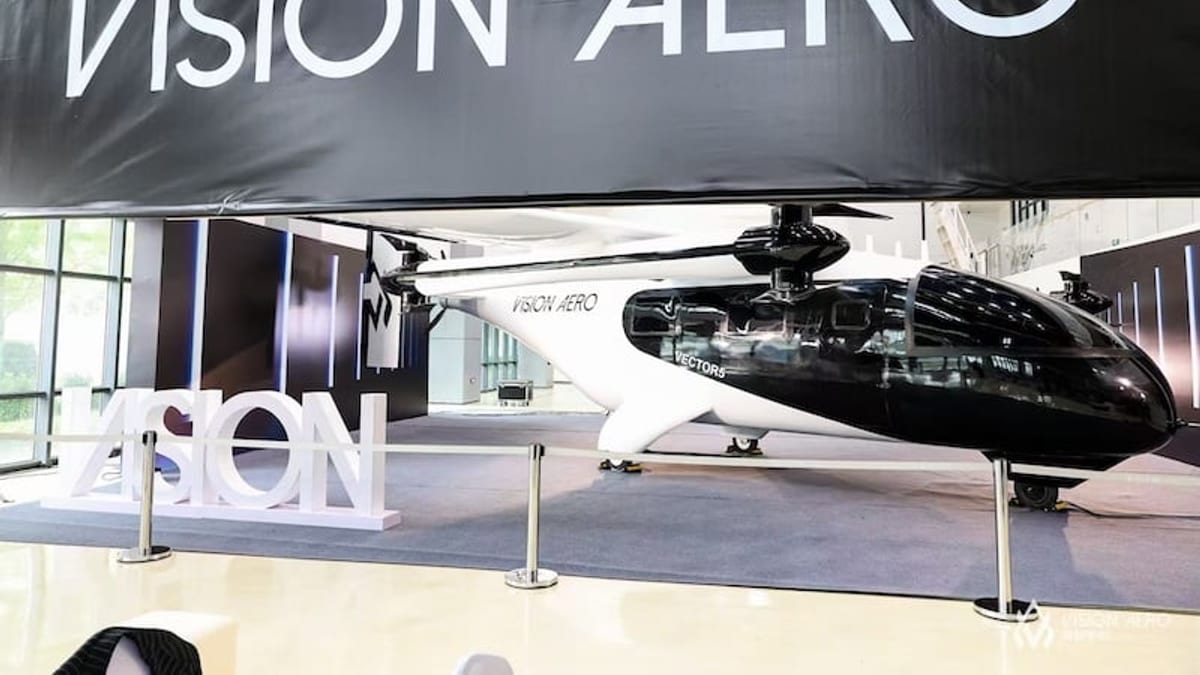
Image by AWN RSS by content source
Dual Programs Target Dedicated EMS and Flexible Mission Needs
Publicly available information indicates that Vision Aero is structuring its growth around two distinct aircraft initiatives, each tailored to different segments of the emergency medical services market. One program emphasizes a clean-sheet platform optimized from the outset for air ambulance and critical-care use, while the other focuses on converting and upgrading existing airframes to deliver EMS capabilities at lower acquisition cost.
The dedicated EMS platform is being positioned for operators that require purpose-built medical cabins, rapid patient loading systems, and high dispatch reliability. By integrating medical layout decisions early in the design process, Vision Aero aims to minimize compromises that often accompany retrofitted interiors, from restricted stretcher access to limited workspace for medical teams.
In parallel, the conversion-focused program appears to target regional operators and smaller health networks that already operate turboprops or light jets for charter or corporate missions. Through modular interiors, structural provisions, and upgraded systems, these aircraft are being configured to switch quickly between EMS, executive, and utility missions, widening revenue options for operators while maintaining medical capability when needed.
Together, the two tracks suggest a deliberate strategy to serve both high-utilization air ambulance fleets and mixed-mission operators that treat EMS as one part of a broader transport portfolio. For many regions, especially where budgets are constrained, that dual-path approach broadens the potential customer base for advanced medical aircraft.
Cabin Design Prioritizes Stretcher Access and Clinical Workflow
A central focus of Vision Aero’s EMS work is the cabin, where aircraft design directly influences patient outcomes. Industry examples across Europe and North America show that wide doors, unobstructed stretcher loading, and sufficient space for clinicians to work around the patient are increasingly viewed as core safety and performance features rather than optional comforts.
Reports indicate that Vision Aero’s dedicated EMS platform is being laid out around a full-length stretcher axis, wide rear or side access, and the ability for at least one medical professional to remain fully seated and belted beside the patient for all phases of flight. Overhead clearance, lighting, and power availability for medical equipment are being treated as primary design parameters rather than secondary cabin refinements.
The company’s conversion program appears to be applying similar principles within the constraints of existing fuselage dimensions. Modular cabinets, standardized equipment rails, and quick-release seating are being used to balance medical capability with the need to revert to passenger or cargo layouts. For rural hospitals and regional operators, this flexibility can be decisive, allowing a single airframe to generate revenue on non-medical flights while remaining ready for time-critical transport.
Across both programs, the consistent theme is that medical workflow sits at the center of the design brief. In practice, this means attention to details such as where oxygen bottles are mounted, how IV lines are routed, and whether clinicians can reach the patient’s head and torso without contorting around structural elements or seat bases.
Avionics, Safety Systems, and Night-Operations Capability
Beyond the cabin, Vision Aero’s EMS strategy is closely tied to avionics and safety technologies that support operations in poor weather, at night, and into smaller airfields. Sector-wide, enhanced vision systems, satellite-based navigation, and health-monitoring tools are becoming more common on air ambulance helicopters and fixed-wing aircraft as operators seek higher dispatch rates without sacrificing safety.
According to published coverage of comparable EMS platforms, many modern air ambulances now integrate infrared-based enhanced vision, synthetic terrain displays, and automated safety functions designed to reduce pilot workload on demanding low-level routes. Vision Aero’s dual-program approach appears aligned with this trend, emphasizing avionics suites that support instrument approaches into regional airports and provide clear situational awareness on dark or weather-affected missions.
Safety concepts such as redundant power for critical medical equipment, protected oxygen systems, and crashworthy seating are also factoring into the designs. For conversions, this often involves re-certifying interior layouts to EMS standards and ensuring that medical equipment remains secure during turbulence and off-runway landings. For the clean-sheet platform, these protections can be engineered into the structure, creating pathways for future upgrades as new avionics and medical technologies become available.
Night operations and long-range transfers are another key part of the equation. By pairing efficient powerplants with advanced flight-management systems, Vision Aero aims to give operators the range and speed needed for inter-facility transfers, while still being able to access shorter regional runways near smaller hospitals.
Expanding Access for Underserved and Remote Communities
The emphasis on EMS in Vision Aero’s aircraft programs reflects a broader shift in how air transport is being used to bridge healthcare gaps. In many regions, ground transport times to tertiary-care centers can exceed the recommended window for stroke, trauma, or cardiac interventions, making rapid airborne transfer a critical part of regional health planning.
By tailoring one program to high-intensity dedicated EMS operations and another to mixed-use fleets, Vision Aero is positioning its aircraft for a range of health systems, from large national ambulance networks to single-hospital operators serving remote communities. The ability to reach smaller airfields, combined with optimized loading and in-flight care, directly affects how quickly patients can be moved from incident scenes or local clinics to major hospitals.
Publicly available analyses of air ambulance utilization show that fixed-wing aircraft are particularly important for long-distance transfers between regional centers and metropolitan hospitals. Vision Aero’s focus on efficient, EMS-capable aircraft speaks to that need, especially in geographies where helicopter range is limited or where weather often restricts rotary operations.
For local governments and hospital groups, the potential to deploy a versatile aircraft that can support both routine transport and life-saving missions can be a compelling proposition. It allows them to justify investment in modern platforms while improving resilience during mass-casualty incidents, seasonal surges in demand, or natural disasters.
Competitive Landscape and Next Steps for Operators
Vision Aero’s dual-program advance comes at a time when the air ambulance and special-missions market is attracting renewed attention from aircraft manufacturers and completion centers. Established players offer a mix of dedicated EMS types and aftermarket conversions, and new entrants are exploring hybrid and electric propulsion for shorter-range medical missions.
Reports indicate that operators evaluating new EMS aircraft are weighing factors such as lifecycle cost, support footprint, cabin flexibility, and regulatory pathway as heavily as headline performance figures. Vision Aero’s approach of pairing a purpose-built EMS aircraft with a conversion-centered offering may allow it to compete on both total cost of ownership and mission adaptability.
For operators, the immediate next steps typically involve aligning fleet plans with regional medical demand, available infrastructure, and funding models. Aircraft that can be fielded quickly through conversion programs may suit organizations looking for near-term capability, while those planning long-term fleet renewal may be more interested in a dedicated EMS platform that can operate for decades.
As development of Vision Aero’s programs progresses, the company’s focus on EMS-specific features, avionics, and cabin design signals that competition in the air ambulance space is moving beyond simple speed and range comparisons. Instead, the emerging benchmark is how effectively an aircraft can function as a flying extension of the hospital, delivering critical care at altitude while reaching patients who would otherwise remain hours away from definitive treatment.