

Cape Town has a way of getting under your skin. Cradled between the Atlantic Ocean and the dramatic ridgeline of Table Mountain, it is a city of big scenery and complex history, of lively food markets and sobering museums, of surf breaks and townships.
For first-time visitors, it can feel both instantly welcoming and a little overwhelming.
This practical guide is designed to help you plan a smooth, safe and rewarding first trip, using the most up to date information on how the city works right now.
Understanding Cape Town Today
Cape Town is South Africa’s legislative capital and one of the country’s most visited destinations. Its population has grown rapidly in the past decade, pulling in South Africans from other provinces as well as remote workers and investors from abroad. That growth has added energy and diversity, but also pressure on housing, traffic and services. As a visitor, you will experience a city that feels modern, busy and increasingly cosmopolitan, yet still shaped by deep inequalities that remain visible in its layout and daily life.
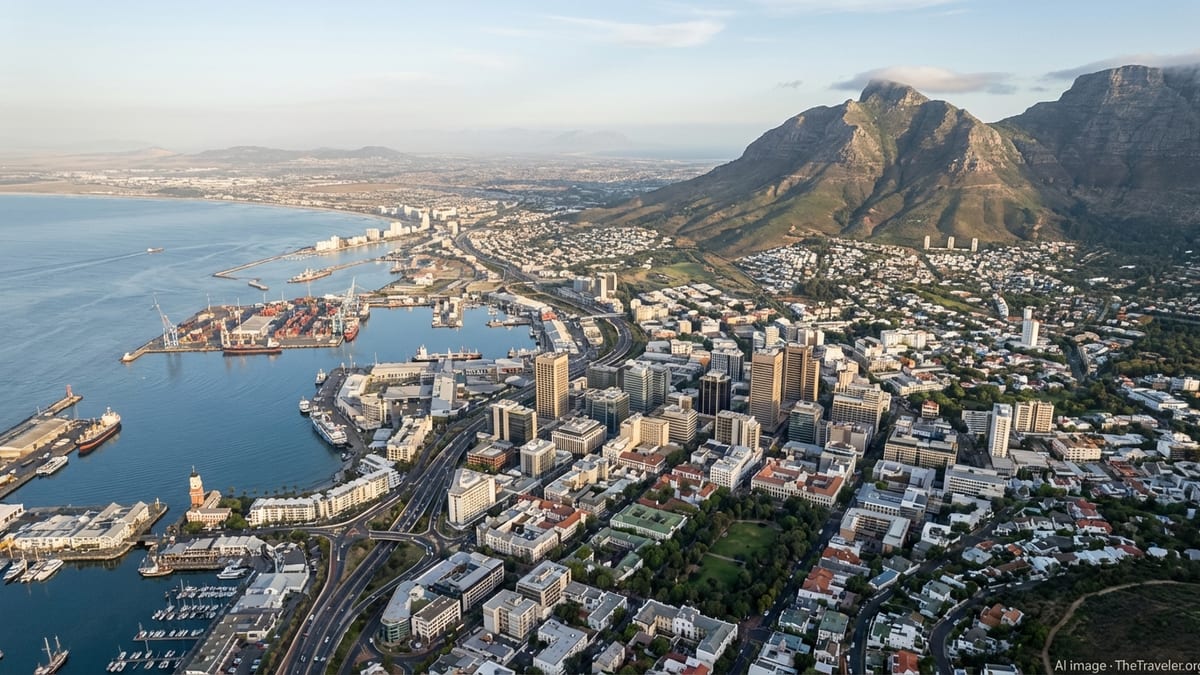
The geography is part of the magic. The historic City Bowl curls around Table Bay, backed by Table Mountain and its satellite peaks. To the south, the long spine of the peninsula runs toward Cape Point, flanked by stark Atlantic beaches on one side and the softer, vineyard-dotted landscapes of the Constantia Valley on the other. Eastward lie the Cape Flats and, beyond, the wine towns of Stellenbosch and Franschhoek. Distances look small on a map, but expect traffic at peak times and allow extra time when moving between the centre, suburbs and the peninsula.
Cape Town’s climate is Mediterranean, with warm, dry summers and mild, wetter winters. November to March is peak season, when days are long and beach weather reliable, but the city is crowded and prices climb. April, May, September and October can be ideal for first-time visitors, balancing reasonable weather, lower prices and fewer crowds. Winter from June to August brings more rain and wind, yet also clear days, fynbos in bloom and quieter attractions. Regardless of the month, the weather can change quickly; a day that starts in still sunshine can see cloud pour over Table Mountain by afternoon, shutting cableway operations and cooling temperatures sharply.
One concept you will encounter is load shedding: planned electricity cuts introduced nationally to manage strain on the power grid. Cape Town has invested heavily to shield residents as much as possible, and in early 2026 the city has been close to phasing out routine load shedding for many of its own customers. Still, cuts can occur at short notice, especially for areas supplied directly by the national utility. Many hotels, restaurants and shopping centres now have generators or battery backup, but it remains wise to carry a charged power bank and download offline maps in case a scheduled outage affects you.
Entry, Formalities and Practical Basics
Most visitors arrive via Cape Town International Airport, which handles long-haul and regional flights. It is a compact, modern airport with clear signage and efficient formalities by regional standards. Depending on your nationality, you may be visa exempt for short tourist stays or you may require a visa or, increasingly, an electronic travel authorisation. In late 2025 South Africa began rolling out an ETA system for selected countries, initially covering visitors from China, India, Indonesia and Mexico, with more nationalities expected to be added. Always check the official South African government or consular sources for the latest requirements before you book, as rules do change.
All visitors need a passport valid for at least 30 days beyond the date of planned departure, with sufficient blank pages. Families should be aware that South Africa revised its rules on travelling with minors in recent years, easing some documentation requirements but still expecting proof of parental consent in specific circumstances. Airlines often take a conservative view, so if you are travelling with children, carry full birth certificates and consent letters where relevant to avoid delays at check-in or immigration.
The local currency is the South African rand. Cards are widely accepted in hotels, restaurants, supermarkets, major attractions and even many markets. Contactless payments using phones and watches are common in the city. That said, it is useful to carry some cash for informal traders, small tips and parking marshals. ATMs are plentiful in malls and fuel stations; use machines attached to banks or inside busy shopping centres rather than isolated ones. Notify your bank of your travel plans beforehand and check whether your card charges foreign transaction fees.
South Africa operates on a 230V supply with Type M plugs as standard, and many properties now offer universal sockets or additional Type C outlets. A multi-country adapter is still advisable. Because of the country’s energy challenges, hotels and guesthouses are increasingly investing in solar panels, inverters and battery systems. When booking, you may want to ask whether the property has backup power for essentials like lighting, Wi-Fi and lifts during any outages. Mobile coverage in Cape Town is extensive, and local prepaid SIM cards or eSIM packages are widely available. Data is inexpensive by international standards and useful for ride-hailing apps and real-time navigation.
Where to Stay on Your First Visit
Choosing the right base can shape your experience of Cape Town. First-time visitors often look at three broad areas: the City Bowl and V&A Waterfront; the Atlantic Seaboard; and quieter, leafier suburbs further south. Each offers a different balance of convenience, atmosphere and cost. For most short stays, being within easy reach of the central city and Waterfront will simplify sightseeing, dining and day trips.
The City Bowl, which includes central neighbourhoods such as Gardens, Tamboerskloof and the historic core around St George’s Mall, offers a strong combination of character and practicality. Here you are close to museums, Company’s Garden, the cableway base station for Table Mountain and a wide spread of restaurants and bars. Boutique guesthouses on the lower slopes of the mountain combine city views with residential calm. The trade-off is that some streets can feel quiet after business hours, and you should use common sense with valuables, especially at night.
Down on the water, the V&A Waterfront area is a self-contained hub of hotels, shops, markets, restaurants and entertainment venues. It is heavily policed, well lit and busy until late, making it popular with families and visitors who prioritise convenience and a sense of security. From here, you have quick access to Robben Island tours, harbour cruises and organised excursions. Prices can be higher than in other parts of the city, and you will need to travel slightly further for beaches or some of the trendier dining districts, but for a first-time visitor it is an easy and reassuring base.
Along the Atlantic Seaboard, suburbs such as Sea Point, Green Point, Mouille Point, Camps Bay and Bantry Bay stretch along the coastline. Sea Point in particular has become a favourite for first-time visitors, with its seafront promenade, mix of hotels and apartments, bustling cafés and good public transport links. Camps Bay, further south, fronts a glamorous beach backed by the Twelve Apostles range and is popular for sundowner cocktails and sunsets; it is beautiful but pricier, with more of a resort feel. These neighbourhoods give you a strong holiday atmosphere while keeping you within a short drive of the city’s main sights.
Getting Around Safely and Efficiently
Cape Town is designed around private vehicles, and distances between areas can be greater than they appear. For many visitors, a hybrid approach works best: a mix of ride-hailing, organised tours and, for some, car rental. Local ride-hailing services using global apps operate widely and are generally reliable within the city and main tourist zones. Fares are affordable by international standards, but traffic at peak times can slow journeys significantly, particularly on routes into and out of the City Bowl and along the coastal roads.
Public transport has been improving, with two main options relevant to visitors. The MyCiTi bus system, Cape Town’s integrated rapid transit network, runs modern buses along key routes, including a dedicated airport shuttle into the city and connections from the Waterfront and City Bowl to suburbs such as Table View and Hout Bay. The system continues to expand, with a major new phase under construction to link more communities across the city. MyCiTi uses a cashless payment model with a dedicated card and, increasingly, mobile tap-to-pay solutions, so check current fare and payment details when you arrive. Traditional buses run by Golden Arrow also crisscross the city and have been adding electric buses to their fleet, but routes can be confusing for newcomers.
Walking is one of the pleasures of central Cape Town, particularly along Sea Point Promenade, around the V&A Waterfront and through parts of the City Bowl. Treat the city like any large urban centre: avoid walking alone along deserted streets after dark, keep your phone and camera discreet, and stay aware at traffic lights and busy intersections where opportunistic theft can occur. When hiking on Table Mountain or the surrounding peaks, stick to established routes, start early, check the weather and never underestimate how quickly conditions can change; incidents involving lost or injured hikers are not uncommon, and rescue services are stretched.
Car rental is an option if you are comfortable driving on the left and dealing with occasionally assertive local driving styles. It offers flexibility for exploring the Cape Peninsula, wine country and lesser-visited beaches. If you do rent, rely on secure hotel parking, avoid leaving any belongings visible in parked vehicles and be cautious at night in quiet areas. Fuel stations are widely available and many operate around the clock. Road quality on main routes is generally high, though some suburban and township roads may be potholed or under construction as the city upgrades infrastructure.
Safety, Health and Local Realities
Safety is often the first question first-time visitors ask about Cape Town. The honest answer is nuanced. South Africa has high crime statistics at a national level, and Cape Town is not immune, but the vast majority of visitors experience no serious problems if they stick to well-trodden areas, use common sense and seek local advice. Petty theft, bag snatches and car break-ins are the most relevant risks for tourists. Violent crime is typically concentrated in specific neighbourhoods on the urban periphery that most visitors have no reason to enter.
Basic precautions go a long way. Do not display expensive jewellery or large amounts of cash, keep camera gear zipped away when not in use and avoid using your phone while walking along busy streets. At night, use a reputable ride-hailing service or hotel-arranged taxi rather than walking long distances. If you are driving, keep doors locked and windows up at traffic lights, particularly in less busy areas, and do not engage with people trying to sell items through your window. If an ATM retains your card or behaves oddly, cancel the transaction immediately and use a machine inside a bank or mall.
On the health front, Cape Town itself is not a malaria area, and tap water in the central city and suburbs is treated and usually safe to drink, although some visitors prefer bottled or filtered water. The city went through a severe drought several years ago and still encourages water-wise habits, but current supplies are more stable thanks to new infrastructure and conservation measures. Standard travel medical insurance is recommended, and private clinics and hospitals in the city offer a good level of care should you need it. Routine vaccinations should be up to date, and if you are combining Cape Town with travel to parts of southern Africa where malaria is present, consult a travel clinic about prophylaxis.
One of the most important aspects of safety is understanding the city’s social and economic divides. Affluent suburbs can sit within a short drive of townships and informal settlements. Many visitors choose to join responsible township tours led by local guides who aim to provide context and benefit the communities they visit. If you do so, select operators that prioritise respect, small groups and community partnerships. Avoid unsanctioned visits without a guide, and remember that you are moving through people’s living spaces, not a spectacle. Respect, sensitivity and listening will make encounters more meaningful for everyone.
Top Experiences for First-Time Visitors
Most first-time itineraries in Cape Town orbit a cluster of classic experiences, and with good reason. On a clear morning, few things rival taking the cable car up Table Mountain or hiking one of its well-known trails such as Platteklip Gorge or the contour paths from Kirstenbosch. Remember that operations are suspended in high winds or low visibility, so build flexibility into your schedule. Booking your cable car ticket online in advance can save queue time, but always check live status before setting out. On the mountain, temperatures can be far lower than in the city, and edges are steep; stay away from unfenced drops and keep to marked paths.
Across the bay, Robben Island offers a powerful immersion into South Africa’s recent history. Ferries depart from the V&A Waterfront, and visits typically include a bus tour of the island and a guided walk through the former prison, often led by ex-political prisoners or long-serving guides. The experience can be emotionally heavy and is subject to rough seas at times, so if you are prone to motion sickness, prepare accordingly. Tickets regularly sell out in peak season, so book well ahead once your dates are fixed.
The Cape Peninsula itself is a day trip highlight. Driving or joining a tour along Chapman’s Peak Drive, one of the world’s great coastal roads, takes you past lookout points, surf breaks and small seaside communities. Further south, Cape Point Nature Reserve and the Cape of Good Hope combine rugged cliffs, sweeping views and walking trails that give a sense of standing at the edge of a continent. On the way, Boulders Beach near Simon’s Town is home to a colony of African penguins that can be viewed from raised boardwalks. In summer this area is extremely popular; going early in the morning or later in the afternoon can help you avoid the worst of the crowds and heat.
Within the city, do not neglect experiences that reveal its culture beyond the postcard views. The District Six Museum, Iziko Slave Lodge and Castle of Good Hope help frame the colonial and apartheid histories that shaped the cityscape. The colourful houses of Bo-Kaap, long home to Cape Muslim communities, are photogenic, but walking with a local guide or joining a cooking class will add layers beyond the Instagram shot. Evenings can be spent at jazz venues, food markets or theatre performances, giving you a sense of Cape Town’s contemporary creative life.
Food, Wine and Nightlife
Cape Town is one of the southern hemisphere’s great food cities, and eating well is often a highlight for visitors. The local dining scene is highly seasonal and constantly evolving, but a few trends stand out. Casual eateries and markets have proliferated, especially around the V&A Waterfront, Woodstock and Sea Point, offering everything from Cape Malay curries and braai (barbecue) to vegan street food. Fine-dining restaurants draw heavily on local produce, foraged ingredients and South Africa’s wine culture, with tasting menus that remain relatively good value compared with major European or North American cities.
Cape Malay cuisine, shaped largely by the descendants of enslaved people brought to the Cape centuries ago, is one of the region’s signature culinary traditions. Dishes such as bobotie, bredie and fragrant curries, often accompanied by sambals and rotis, appear on many menus. Along the coast, seafood is a natural highlight, from grilled line fish and calamari to hake and chips in paper. In recent years, there has also been a renewed interest in indigenous ingredients from the fynbos biome, such as buchu, rooibos and wild herbs, which you may encounter in both savoury dishes and cocktails.
The city is also the gateway to the Cape Winelands. Stellenbosch and Franschhoek, roughly an hour’s drive away, host dozens of wine estates where you can taste everything from crisp sauvignons to complex red blends and local favourites like pinotage and chenin blanc. Organised day tours, hop-on hop-off wine trams and private drivers make it possible to explore safely without driving after tastings. Many estates pair wine with picnics, small-plate lunches or full restaurant experiences, set among vineyards and mountains. Even if you are not a wine enthusiast, the landscapes alone make the trip worthwhile.
Nightlife in Cape Town is varied rather than overwhelming. The Waterfront offers a family-friendly mix of bars and restaurants that stay open late, while Sea Point, De Waterkant and the lower City Bowl offer denser clusters of bars, live music venues and late-night eateries. Weekends are busiest, and social life tends to start later in the evening. As in any city, keep an eye on your drink, stay aware of your surroundings when leaving venues, and use ride-hailing to get home. Noise regulations in residential areas are increasingly enforced, so rooftop bars and clubs often close earlier than you might expect in other global party cities.
Money, Connectivity and Coping With Load Shedding
Managing money in Cape Town is straightforward if you prepare a little. While many costs remain lower than in Western Europe or North America, high demand and pressure on infrastructure mean prices have risen in recent years, particularly for accommodation in sought-after areas. Booking early for peak summer travel can secure better rates. Tipping is customary, with 10 to 12 percent standard in restaurants for good service and 15 percent for excellent service. Hotel porters, tour guides and drivers also appreciate small gratuities, which make a meaningful difference in a country with high unemployment.
Connectivity is one of the city’s strengths. Most hotels, cafés and co-working spaces offer fast Wi-Fi, and fibre networks are expanding into more neighbourhoods. This, combined with a relatively affordable cost of living, has helped attract a growing community of digital nomads under South Africa’s remote working visa framework. If you plan to work while visiting, look for accommodation with explicit backup power and internet continuity during outages, and verify those claims via recent guest reviews. Downloading key documents and entertainment for offline use is still a wise precaution.
Load shedding remains an aspect of daily life that visitors should understand, even as Cape Town city authorities invest heavily in alternative power sources to shield residents and aim to become less dependent on the national grid. When load shedding is in effect, areas are switched off according to a published schedule that divides the city into numbered zones and implements cuts in stages, depending on how severe the national shortfall is. In practice, this means you may experience power cuts of a couple of hours at a time, sometimes more than once a day during high stages, though many central tourist areas are partially protected or have their own mitigation measures.
To cope smoothly, ask your hotel or host which load shedding area they fall into and whether they have backup systems. Many now use a mix of solar, batteries and generators to keep lights, Wi-Fi and basic plugs running, though energy-intensive appliances like ovens and air conditioning may still be affected. Carry a small flashlight or headlamp, especially if you will be walking at night, and keep phones and power banks charged whenever electricity is available. Traffic lights can go out during cuts, contributing to congestion, so allow extra transit time, and be patient with restaurants and cafés operating under reduced power. Locals have adapted to this rhythm, and most businesses have routines in place.
The Takeaway
Visiting Cape Town for the first time can feel like stepping into several cities at once: a waterfront playground framed by mountains, a working African port, a laboratory of post-apartheid democracy, and a creative hub grappling with rapid growth and old injustices. It is this complexity that makes the city so compelling. With a little planning around where you stay, how you move and how you manage practicalities such as power cuts and safety, you can focus on what makes Cape Town special: the light on Table Mountain at sunset, the sound of the ocean along the Atlantic seaboard, the flavours of Cape Malay cooking, the stories shared by guides and residents.
Approach the city with curiosity and respect, give yourself enough time to move beyond a checklist of sights, and you will find layers that reward return visits. Infrastructure is evolving, public transport is expanding, and local communities are increasingly engaged in shaping tourism that benefits them as well as visitors. For now, as a first-time traveller, you can arrive confident that Cape Town has the tools to welcome you, along with some quirks and challenges that are part of its present moment. Embrace both, and your trip is likely to be memorable for all the right reasons.
FAQ
Q1. Is Cape Town safe for first-time visitors?
Most first-time visitors experience Cape Town without serious incidents, especially if they stay in well-established areas such as the V&A Waterfront, Sea Point and central parts of the City Bowl. As in any large city, petty crime like pickpocketing and bag snatching can occur, so use common sense: keep valuables out of sight, avoid walking alone in quiet areas at night and use reputable ride-hailing services or hotel-arranged taxis after dark.
Q2. When is the best time of year to visit Cape Town?
The most popular months are November to March, when days are long, warm and mostly dry, ideal for beaches and outdoor activities. However, these months are also the busiest and most expensive. Shoulder seasons in April, May, September and October often offer a good balance of pleasant weather, fewer crowds and better value. Winter from June to August can be rainy and windy but also brings clear days, lower prices and a quieter city.
Q3. Do I need a visa to visit Cape Town?
Visa requirements depend on your nationality. Many travellers from Europe and some other regions can enter South Africa visa free for short tourist stays, while others must apply for a visa or, in growing cases, an electronic travel authorisation. Rules have been evolving, with new ETA schemes introduced for specific countries since late 2025, so always check the latest information from official South African government or consular sources before you travel.
Q4. How do I get from the airport to the city centre?
Cape Town International Airport lies about 20 kilometres from the city centre. Travellers typically choose between pre-booked transfers, ride-hailing services, metered taxis and the MyCiTi airport shuttle bus, which links the airport to the Civic Centre in the City Bowl and onward routes. If you prefer maximum convenience and have luggage, a pre-arranged transfer or ride-hailing service is often the simplest option, especially after dark.
Q5. What is load shedding and how will it affect my visit?
Load shedding is the term used for scheduled power cuts imposed to reduce pressure on South Africa’s electricity grid. Although Cape Town has made progress in shielding many areas, you may still experience outages of a couple of hours at a time in some neighbourhoods. Most hotels, guesthouses and major venues now have generators or battery systems to keep essential services running. Carry a power bank, keep devices charged and ask your accommodation how they handle load shedding so you can plan around it.
Q6. Is the tap water safe to drink?
In central Cape Town and most established suburbs, tap water is treated and generally considered safe to drink. Some visitors, particularly those with sensitive stomachs, prefer bottled or filtered water at first. If you are staying in more rural areas or informal accommodation, ask your host about local water quality. Regardless, it is important to stay hydrated, especially in summer months when temperatures and UV levels are high.
Q7. Which neighbourhoods are best for a first-time stay?
For a first visit, many travellers choose the V&A Waterfront, Sea Point, Green Point or parts of the City Bowl such as Gardens and Tamboerskloof. The Waterfront offers a secure, self-contained environment close to the harbour and attractions, while Sea Point and Green Point combine sea views with cafés and easy access to the centre. City Bowl neighbourhoods place you nearer to Table Mountain and cultural sites. Your choice should balance budget, desired atmosphere and how comfortable you feel being slightly removed from or immersed in everyday city life.
Q8. Can I rely on public transport, or do I need a car?
It is possible to explore much of central Cape Town using a combination of the MyCiTi bus system, ride-hailing services and organised tours. For many first-time visitors, this is enough, particularly if they prefer not to drive. Renting a car becomes more useful if you plan extensive day trips to the Cape Peninsula, Winelands and beaches beyond the main tourist corridors. If you do rent, remember that driving is on the left, and plan around peak-hour traffic and secure parking.
Q9. What should I pack for Cape Town’s weather?
Pack for variety. In summer, lightweight clothing, a hat, sunglasses and strong sun protection are essential, but you should also bring a light jacket or fleece for cooler evenings and windy days on Table Mountain or the coast. In winter and the shoulder seasons, add a waterproof layer and warmer clothes for wet or chilly spells. Comfortable walking shoes are important year-round, especially if you plan to hike or explore the city on foot.
Q10. Is Cape Town suitable for digital nomads or remote workers?
Cape Town has become increasingly popular with remote workers, thanks to its scenic setting, strong café culture and expanding fibre internet coverage. Many accommodations cater to long-stay guests with good desks, Wi-Fi and backup power solutions. South Africa has introduced frameworks to attract remote workers, though you must ensure you meet any visa requirements for stays beyond standard tourist allowances. If you plan to work, choose a place that guarantees reliable connectivity during load shedding and verify that with recent reviews before committing to a longer stay.