

Georgia does not unfold like a typical American vacation. The state stretches from Atlantic barrier islands to misty Appalachian ridgelines, from dense pine forests to glassy urban skylines. It holds some of the United States’ most visited attractions and also pockets of deep quiet. It is a place where a day at a world class aquarium sits beside a walk through civil rights history, and where a plate of hot fried chicken or boiled peanuts can become its own kind of memory. Traveling here feels less like checking off sights and more like entering a long, layered story that is still being written.
First Impressions: A State That Refuses to Be Just One Thing
Arriving in Georgia, the first surprise is scale. Tourism officials estimate that more than 170 million people now visit the state in a year, placing Georgia among the top destinations in the country. Yet even with those numbers, it rarely feels like a single, monolithic place. Instead, the state reveals itself in chapters. Atlanta pulses with the energy of a global city. A few hours away, the Blue Ridge Mountains trade skylines for switchbacks. South and east, the landscape flattens into pine woods, blackwater swamps, and finally the Atlantic coast. Travelers often say it feels like crossing several states in one trip.
The second surprise is how quickly the scenery changes once you leave the interstate. Within a short drive, polished suburbs give way to farm stands and clapboard churches, then to college towns with live music spilling onto the sidewalks. At times the state feels rooted in the deep rural South; at others, you could be in a tech corridor or an arts district in a much smaller, friendlier version of a global capital.
Underneath those shifts is a quieter difference: the sense that Georgia is comfortable holding complexity. The state’s story includes Indigenous homelands, plantations and railroads, civil rights marches and modern film studios, new immigrant communities and old-line Southern families. Rather than smoothing those layers away, many of its cities and towns are beginning to invite visitors to engage with them directly. That creates a travel experience that can be as reflective as it is relaxing.
For many travelers, that blend of beauty, contradiction, and candor is what makes a trip here feel different. You can come to Georgia for beaches or barbecue, for fall foliage or a baseball weekend. What lingers, though, is the way the place insists on being many things at once.
Atlanta: Big City Energy With a Personal Story
Atlanta is often the gateway, and it sets the tone for how Georgia surprises visitors. The city is known for traffic and an enormous airport, but on the ground it feels more intimate than many other major metros. Neighbourhoods like Inman Park, Grant Park, and the West End are stitched together by tree lined streets, parks, and the increasingly vibrant BeltLine trail, which has turned former rail corridors into car free pathways for walking and cycling.
What stands out most, though, is how visible history feels in everyday spaces. The birthplace of Martin Luther King Jr., the church where he preached, and key civil rights institutions stand within a short walk of modern coffee shops and art galleries. The experience of moving from a mural covered underpass to the quiet of a historic sanctuary can be disorienting in the best way, pulling the civil rights era out of textbooks and into the present day city.
Atlanta’s cultural institutions also do more than simply entertain. Major draws like the Georgia Aquarium, museums devoted to civil and human rights, and sports venues built for national audiences all tell versions of the city’s story: resilience after the Civil War, rapid growth in the late twentieth century, and a present identity rooted in Black culture, music, and entrepreneurship. A weekend here can feel like leafing through several eras of American life without ever leaving the metropolitan area.
Equally distinctive is the city’s hospitality. Atlanta has the infrastructure of a convention hub and film production center, yet conversations in bars and on streetcar platforms often feel relaxed and unscripted. Ride share drivers are quick to share opinions on everything from favorite barbecue to local politics. That willingness to engage gives the city a human scale that contrasts with the glass towers on its skyline.
Savannah and the Coast: Spanish Moss, Salt Marsh, and Slower Time
If Atlanta represents Georgia’s future-facing side, Savannah feels like a long inhale. Laid out in a grid of shady squares, the city invites walking at a human pace. Brick sidewalks pass under live oaks hung with Spanish moss, and restored row houses tilt toward the streets. Compared with many American cities, Savannah appears remarkably intact, a result of both early historic preservation and recent interest in heritage tourism.
Here, the difference for travelers is the nearly constant interplay between beauty and backstory. Architectural tours highlight elegant facades but also the labor and lives that built them. Along the waterfront, where visitors now line up for pralines and shrimp, interpretive signs and guided walks point to Savannah’s role as a port in the transatlantic slave trade and as a strategic site in the Civil War. The effect is a city that asks you to look closer, even as it offers some of the South’s most photogenic streets.
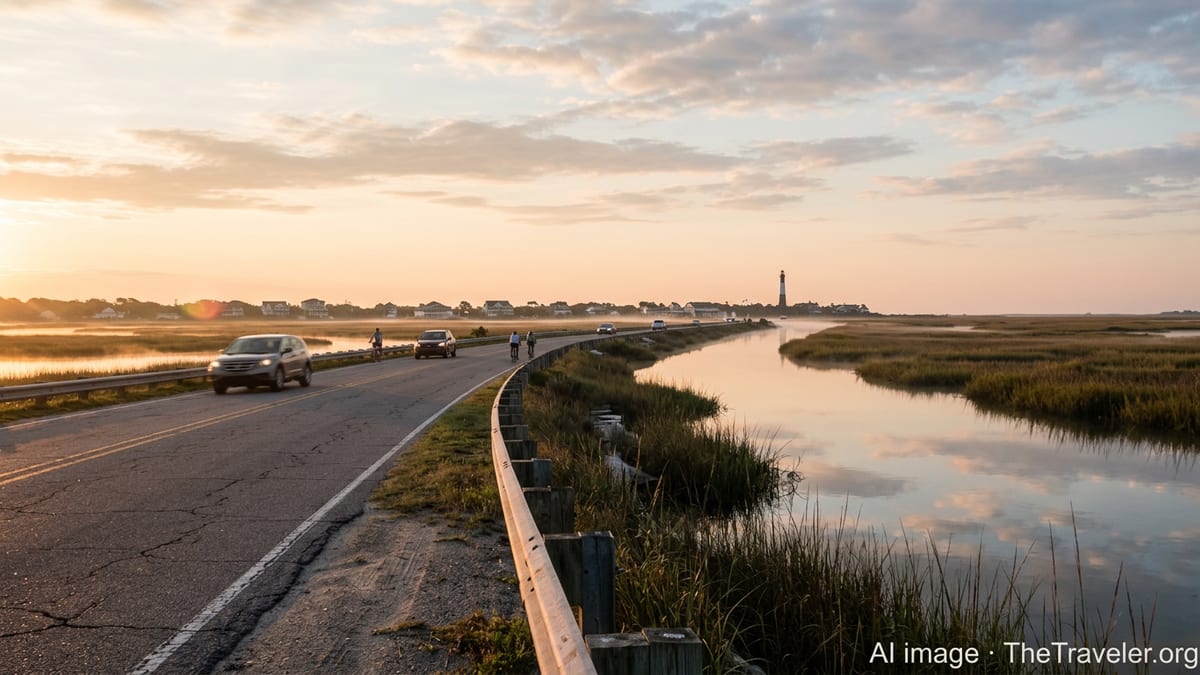
Just east, Tybee Island shifts the mood again. This small barrier island, linked to Savannah by a short drive through marshland, is a reminder that Georgia is also a coastal state. Broad beaches face the Atlantic, a historic lighthouse still watches over the surf, and clusters of pastel cottages line sandy lanes. Safety reviews consistently describe Tybee as a low risk destination, with local authorities and residents protective of the island’s laid back character. The main threats here tend to be natural: the hurricane season that runs through late autumn, and the ever present need to respect tidal currents and storms.
Beyond Tybee, travelers willing to explore farther can find other pieces of Georgia’s coast that feel worlds away from the mainland. Salt marshes shift color with the seasons, from winter’s muted gold to vivid summer greens. Even on busier weekends, there are moments when the only sounds are wind and birdsong. For visitors used to crowded shorelines, this quieter, more ecological version of the beach can feel like a revelation.
Into the Hills: North Georgia’s Mountain Towns and Trails
Drive north from Atlanta and the flat Piedmont horizon wrinkles into foothills. This is where Georgia’s portion of the Appalachian chain begins, and it is another reminder of how drastically the state’s character changes with geography. The air cools, roadside farm stands swap peaches for apples, and the soundtrack shifts from freeway hum to bike tires on gravel and rivers running over rock.
Towns such as Blue Ridge, Dahlonega, and Helen have grown into popular bases for outdoor recreation. Weekenders come to hike sections of the Appalachian Trail, mountain bike forest paths, and paddle lakes backed by steep, forested slopes. Yet these communities tend to feel more relaxed than ski resorts or heavily developed mountain hubs in other parts of the country. Independent outfitters, family run cabins, and small breweries dominate the scene, and it is still possible to find quiet trailheads within a short drive of a town square.
What makes this region feel distinct from other American mountain destinations is the layering of Southern culture over familiar alpine scenery. Old country stores share the roadside with new vineyards. Traditional bluegrass and gospel echo from community festivals. In autumn, the hills blaze with color while roadside barbecue pits send smoke drifting into the crisp air. Rather than being carved off as a separate playground, the mountains are closely woven into local daily life.
For visitors, that means outdoor days that easily expand into evenings of live music, small town parades, and conversations with locals whose families have lived in these valleys for generations. It is a quieter, more personal version of the outdoor vacation, and one that can make a short stay feel unexpectedly rooted.
Layered Histories: Civil Rights, Memory, and Reckoning
Georgia’s most profound difference from many other destinations lies in how its history is present at nearly every turn. This is a state that played central roles in the Confederacy and in the civil rights movement, and those legacies still shape landscapes and travel experiences. For visitors, engaging with this history can be both challenging and deeply meaningful.
In cities including Atlanta, Savannah, and Albany, museums and memorials confront the realities of slavery, segregation, and the long struggle for voting rights. Churches, schools, and homes once central to civil rights organizing now welcome visitors on tours that blend historical fact with personal testimony. Walking through these spaces, it becomes clear that Georgia is not simply preserving the past as a static exhibit. Instead, it is participating in an ongoing national conversation about whose stories are told and how.
Elsewhere, debates over monuments and memory are still unfolding. At Stone Mountain Park outside Atlanta, for instance, the nation’s largest Confederate carving dominates a granite face. In recent years, state officials and local advocates have pushed for new exhibits that add context on the site’s ties to slavery, segregation, and white supremacist groups. Lawsuits and public debate continue over how to interpret, or possibly reframe, such landmarks. Travelers who visit during this period of reassessment witness a state actively reexamining its symbols rather than quietly retiring them.
Beyond the most famous sites, smaller communities are developing their own ways of telling local Black history and civil rights stories. Grassroots tours in college towns and coastal communities connect visitors with the lives of educators, clergy, and activists whose names rarely appear in national textbooks. Participating in these experiences can turn a standard vacation into something closer to a living seminar on American democracy and resistance.
Food, People, and the Texture of Daily Life
None of this history would be as compelling if Georgia were not also a deeply enjoyable place to simply exist. Much of what sets a trip here apart plays out at eye level in everyday scenes: a line of customers at a gas station that also happens to serve some of the best fried chicken for miles; a family gathering under a pecan tree for a Sunday picnic; a food truck lot where a new wave of immigrant owned stalls shares space with classic Southern comfort dishes.
The food culture is wide ranging and constantly evolving. Alongside longstanding favorites like biscuits, peach cobbler, and Brunswick stew, cities have become testing grounds for modern Southern cuisine that blends local ingredients with global techniques. In Atlanta, the influence of communities from West Africa, Korea, Mexico, and the Caribbean is visible in grocery stores and restaurant districts. In smaller towns, meat and three diners and barbecue joints double as community meeting spots where travelers can quickly feel like part of the room.
Hospitality, too, has its own texture here. There is a famous idea of Southern friendliness, and visitors will certainly encounter warm welcomes and easy conversation. What feels different in Georgia is a growing willingness to pair that warmth with candor. Locals are often ready to talk frankly about how their hometowns are changing, what has improved, and what remains hard. Those conversations, whether on a front porch or a barstool, can leave a deeper impression than any single landmark.
The result is a kind of travel that is as much about relationships as it is about scenery. Many visitors end up returning not just because they loved a particular beach or mountain view, but because they found themselves wanting to check back in on a place and people they got to know, however briefly.
Practical Realities: Getting Around a Big, Varied State
Because Georgia is so diverse, a trip here benefits from a bit of planning. Atlanta’s airport is one of the world’s busiest, making it a common entry point. From there, travelers can connect by rental car, bus, and in some cases rail to other parts of the state. Distances can be deceiving on a map. Reaching the mountains or the coast from Atlanta generally takes several hours by road, and traffic around the metropolitan area can add time.
Weather is another factor that shapes the experience. Summers across much of Georgia are hot and humid, with frequent thunderstorms that can interrupt hiking or beach days but also produce dramatic sunsets. Shoulder seasons in spring and autumn are often more comfortable, with blooming azaleas and dogwoods in the former and crisp mountain air and changing leaves in the latter. On the coast, hurricane season from late summer into autumn brings its own risks, and visitors are wise to monitor forecasts and follow local guidance.
Safety concerns are similar to those in many other American destinations, with the usual advice about securing valuables, staying aware in crowded areas, and using licensed accommodations and transportation. Coastal towns such as Tybee Island tend to report relatively low rates of petty crime, though visitors should watch weather related advisories. Urban neighborhoods, like those in any major city, vary; asking locals or hotel staff about areas best enjoyed in daylight or with a group is part of smart travel.
Budget wise, Georgia offers a broad range. Atlanta’s hotel and dining prices can align with other large U.S. cities, while smaller interior towns and state parks provide more affordable options. Planning a route that mixes metropolitan and rural stays can make for both a richer and more economical trip.
The Takeaway
Visiting Georgia rarely feels like a boxed set of attractions. The state’s appeal lies in the way its landscapes, cities, and histories overlap and sometimes collide. A single day might begin on a mountain trail, pass through a civil rights museum, and end over seafood on a marsh front deck. The through lines are not always obvious, but they are there: resilience, reinvention, and a willingness to engage honestly with the past while making room for new voices.
For travelers used to vacations defined by a single theme, that variety can come as a surprise. It also creates space for a more personal kind of journey. Instead of simply collecting photos, visitors find themselves asking questions about how places change, who tells their stories, and what it means to feel at home somewhere you do not live. Georgia, with its mix of beauty and complexity, invites exactly those reflections.
Perhaps that is why so many people leave already planning to return. The state resists being summed up in a slogan or a single image. Each visit becomes one version of Georgia, tied to a particular route and set of conversations. There is always another version waiting down a side road, along a quieter stretch of coastline, or in a town square just off the highway.
In the end, what makes visiting Georgia feel different from other trips is not only what you see, but how the place asks you to see it. It encourages you to look beyond the surface, to sit with contradictions, and to recognize that even the most ordinary street corner might hold a story still unfolding.
FAQ
Q1. What is the best time of year to visit Georgia?
Spring and autumn are often the most comfortable, with milder temperatures, blooming gardens or fall color, and fewer extremes in humidity and storms.
Q2. Is Georgia safe for travelers?
Most visitors experience Georgia as safe, especially in well traveled areas. As in any state, awareness of surroundings and basic precautions are important.
Q3. Do I need a car to explore Georgia?
You can experience Atlanta without a car, but reaching the coast, mountains, and smaller towns is far easier with your own vehicle or a rental.
Q4. How many days should I plan for a first trip?
A long weekend works for one city or region. To combine Atlanta, the coast, and the mountains, many travelers find a week to ten days more realistic.
Q5. What makes Georgia’s coast different from other U.S. beaches?
Georgia’s shoreline includes barrier islands, wide salt marshes, and maritime forests, creating a quieter, more ecological feel than heavily built up resort strips.
Q6. Are there opportunities to learn about civil rights history while visiting?
Yes. Atlanta, Savannah, Albany, and several smaller communities offer museums, historic sites, and guided tours focused on civil rights and Black history.
Q7. What should I pack for a summer trip?
Light, breathable clothing, sun protection, comfortable walking shoes, and a rain layer for sudden storms are useful across much of the state in summer.
Q8. Can Georgia be a budget friendly destination?
It can. Combining time in major cities with stays in smaller towns, state parks, or locally owned accommodations often keeps costs manageable.
Q9. Is Georgia family friendly?
Yes. Attractions such as aquariums, beaches, mountain trails, and historic sites, plus many free parks and squares, make it easy to design family trips.
Q10. How is Georgia different from other Southern states for travelers?
Georgia combines a global city, quiet mountain towns, and relatively undeveloped coastal areas with a particularly visible civil rights history, creating a layered experience.