

Italy has lived in my imagination for years. I pictured pastel villages tumbling into the sea, empty piazzas at golden hour and plates of pasta that appeared the moment I sat down. When I finally arrived, Italy was both exactly what I had dreamed of and completely different. The country I met was louder, more complex, more crowded and far more human than any fantasy I had formed from films and guidebooks. The gap between expectation and reality turned out to be the most valuable part of the journey.
The Italy I Thought I Knew
Before I landed in Rome, Italy existed for me as a highlight reel. It was the Colosseum with no people in front of it, Venice canals bathed in soft evening light and a never-ending parade of gelato flavors, all enjoyed at a leisurely pace. Social media had taught me that if I woke up early enough, I could have entire monuments to myself. Travel articles promised seamless rail journeys, effortless day trips and locals who had endless time to share their favorite trattoria. I expected occasional crowds, but not the feeling that the entire world had shown up to see Italy at the same time I did.
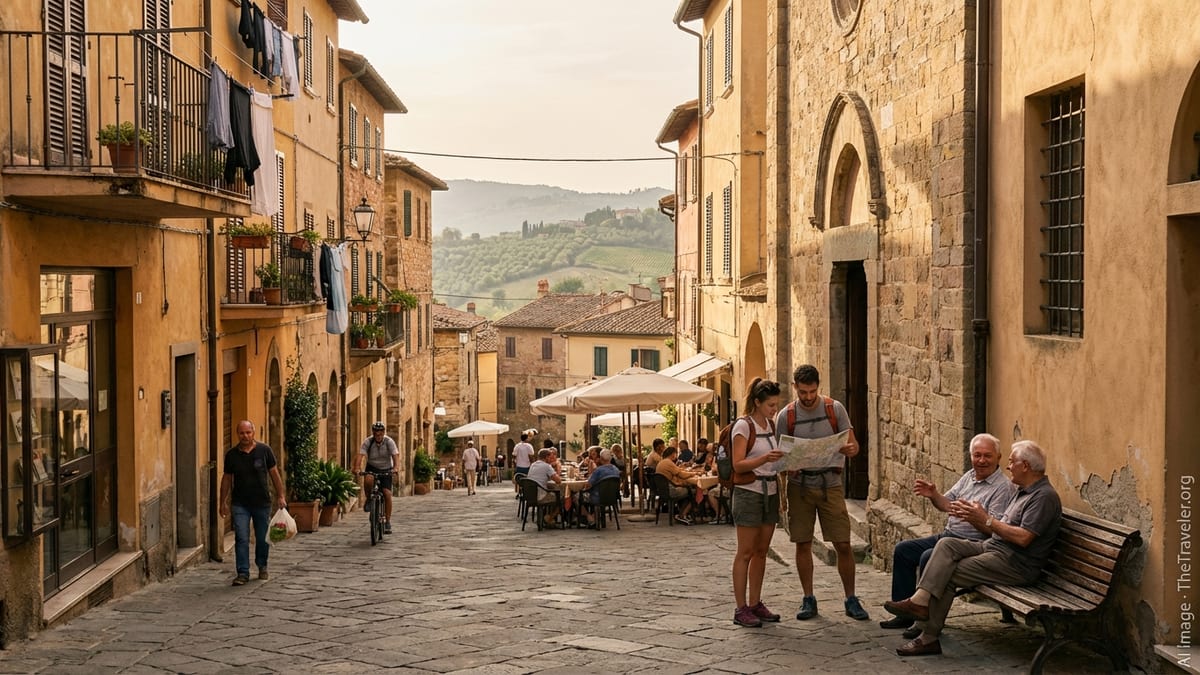
My assumptions were not entirely disconnected from reality. Italy really does have the power to overwhelm with beauty at nearly every turn. The first time I stepped into a small Tuscan hill town and heard nothing but church bells and footsteps on stone, it felt like walking directly into the photographs that had inspired my trip. Yet it soon became clear that those dreamlike moments existed alongside a very different Italy: one shaped by record visitor numbers, rising prices and a daily negotiation between residents and tourism.
Recent tourism figures show just how intense that pressure has become, with hundreds of millions of overnight stays in a single year and steady growth in both domestic and international travel. Cities like Rome, Florence and Venice sit at the center of that boom, absorbing flows of visitors drawn by famous sites and high-profile events. On the ground, that reality translates into long lines, packed streets and neighborhoods where daily life has had to adapt to the rhythms of global tourism. The Italy of my imagination had not left much space for this side of the story.
What surprised me most was not that my expectations were wrong, but that they were incomplete. I had prepared for beautiful views and good food. I had not prepared for the complexity of a country balancing heritage, economics and everyday life under the spotlight of worldwide attention. The real Italy turned out to be more interesting than anything I had anticipated precisely because it refused to conform to the tidy script of my pre-trip dreams.
Overtourism, Crowds and the Quiet Moments Between
One of the first shocks came in Venice. I had imagined quiet canals and empty bridges, perhaps a solitary gondola sliding past at dusk. Instead I arrived to find day-trippers spilling out of the station, rolling luggage over cobblestones and following tour guides’ umbrellas through alleys that once existed only in my mind as empty, atmospheric places. Policies such as the new entry fee for day visitors, introduced to curb overtourism on select peak days, underscore how intensely the city has been shaped by visitor numbers. On the busiest afternoons, crowds can swell to numbers far beyond the resident population, transforming the atmosphere from romantic to frenetic in a matter of minutes.
That experience repeated itself in other cities. In Florence, the graceful piazza outside the Duomo filled early each morning with groups queuing under a forest of selfie sticks. Rome’s Trevi Fountain, which I had pictured as a serene baroque masterpiece, was instead ringed by visitors contending for a small patch of space to toss in a coin and capture a photo. Even in smaller hotspots like the Amalfi Coast, the combination of narrow coastal roads and peak-season demand can turn a simple bus ride into a test of patience.
And yet, within that apparent chaos, there were still pockets of quiet that felt almost secret. The same Venice that felt overwhelmed at midday grew calm as evening fell, once the last day-trippers had boarded trains and cruise tenders. A wrong turn in Florence could still lead to a silent side street where laundry fluttered above my head and a single bar hosted a handful of locals debating football. These in-between moments rarely show up in promotional images, but they are where I felt closest to the Italy I had hoped to find.
What I had not anticipated was how much effort it sometimes takes to reach those quieter spaces. It meant early starts, late dinners and making peace with the fact that the most photographed landmarks would almost never be empty. At the same time, it only took a short walk or a detour to shift the experience completely. A fifteen-minute stroll from a major piazza could bring me to residential neighborhoods where menus were in Italian first, English second, and where daily life unfolded with little concern for visitors. Between the crowded headlines and the hidden corners, I began to understand that overtourism is only part of Italy’s story.
Beyond Rome, Florence and Venice: The Italy That Surprised Me
The more time I spent in Italy, the more I realized that the country being presented to the world in glossy campaigns is only one layer. While the famous art cities continue to draw the biggest numbers, there is a growing interest among travelers and tourism officials alike in smaller towns, rural areas and historic villages. Recent reports from national tourism agencies highlight increased demand for out-of-the-way destinations, where visitors can slow down and experience local culture without the pressure of packed itineraries.
My own turning point came when I left a major city for a lesser-known inland town suggested by a local. The train emptied after a few stops, and by the time I arrived, the station platform was quiet. Instead of souvenir stands, I found a weekly market where elderly residents swapped recipes over crates of seasonal produce. There were no ticketed attractions or timed entries, just a medieval center, a few churches and a rhythm of life that seemed largely untouched by global tourism. It felt like stepping into the margins of the modern travel map, a place overlooked simply because it lacked a world-famous monument.
Across the country, small communities are starting to seek more visibility, supported by regional initiatives that promote “minor” destinations and lesser-known routes. The idea is not just to spread visitors out, but to support local economies and preserve traditions that might otherwise fade. In these places, I found that casual encounters could be just as memorable as any museum: a café owner who insisted I try a house-made pastry, a winemaker proud to explain how his grandparents planted their first vines, a group of teenagers practicing dance routines in a small piazza at sunset.
The contrast with the major cities was striking. In Rome, I had queued for security checks at ancient sites alongside busloads of visitors, guided by audio tours and digital screens. In the small town, I wandered freely into an unheralded church and discovered frescoes no one was photographing. The Italy I encountered away from the main circuit was less polished, sometimes less convenient, but also more intimate. It revealed a national character that felt less like a museum and more like a living, evolving place.
Food, Service and the Myth of the Effortless Meal
Food was the part of the trip I felt most confident about before arriving. Italian cuisine has been exported so successfully that many visitors show up with a clear idea of what they want to eat and how it should taste. I expected every restaurant to offer exceptional pasta, flawless pizza and servers keen to recommend regional specialties. The reality was more nuanced. While I had some extraordinary meals, I also discovered tourist-menu traps, rushed service near major sights and the occasional disappointing dish served at a premium price simply because of the view.
What surprised me most was how strongly location determined the experience. In heavily visited neighborhoods, the speed of service and the need to turn over tables often outweighed any desire to linger. Reservation systems and digital payment tools, which have become more widely used across Italy’s hospitality sector, streamlined the process but also made some meals feel transactional. The most memorable dining moments came instead in places where the pace was slower and the connection more personal: a family-run trattoria down a side street, a café in a small town that doubled as the local meeting spot, a bar where the owner greeted regulars by name and newcomers with cautious curiosity that soon softened into conversation.
Statistics from recent tourism studies show that a significant share of visitors to Italy cite food as a primary motivation for travel, and domestic travelers are similarly drawn to local culinary traditions. That enthusiasm has helped to preserve regional dishes and ingredients, but it has also created a gap between expectation and reality in some high-traffic areas. Not every restaurant in a famous piazza is serving nonna’s recipe, and not every server has time for detailed explanations in multiple languages. Sometimes the quickest way to a more genuine meal is to accept a less glamorous setting or to follow the lunch crowd away from postcard-perfect views.
Over time, I learned to adjust my own behavior. Instead of relying solely on rating apps, I began to ask hotel staff and local shopkeepers where they would go for a simple dinner. I paid attention to menus written first in Italian, to blackboards listing seasonal specials and to the places that were full of people speaking the local language. When I accepted that not every meal would be life changing, I became more open to small surprises: a simple bowl of soup that tasted like home cooking, a glass of local wine poured generously and discussed with quiet pride, a barista who corrected my pronunciation and then coached me through ordering again with a smile.
Digital Tools, Expectations and the New Way of Traveling Italy
One of the most striking differences between the Italy of my imagination and the Italy I experienced was the role of technology. In my mind, travel in Italy was still slightly analog: paper train tickets, cash-only trattorias and spontaneous walks into museums. In reality, the country’s tourism sector has been undergoing rapid digital transformation. Electronic payments are widely used for accommodation, shopping and transportation, reflecting a broader shift in how visitors move through the country. Mobile ticketing, timed entries for major attractions and online reservation systems have become standard, especially in popular destinations.
This digital layer offers real benefits. Booking major sites in advance meant I could avoid some of the longest lines, and contactless payments simplified everything from metro rides to museum gift shops. Travel planning is increasingly influenced by artificial intelligence platforms and smart tourism tools that suggest itineraries, optimize routes and even recommend local experiences in real time. National and regional authorities have invested in digital hubs and promotional campaigns that use data to understand visitor flows and preferences, aiming to manage crowds more effectively while showcasing a broader range of destinations.
Yet technology also brought unexpected challenges. The spontaneity I had hoped for often collided with sold-out time slots, reservation-only venues and the need to juggle multiple apps. On busy days, it felt as if everyone around me was staring at their phones, trying to scan a code or confirm a booking. The Italy that had once existed in my mind as a place of leisurely wandering now required a level of pre-planning that resembled project management. Failing to reserve in advance could mean missing a museum, a popular restaurant or even a train seat during peak times.
Over the course of the trip, I learned to combine both approaches. I planned key experiences in advance, especially in major cities, and left unstructured time in smaller towns where there was less demand and more room to improvise. In the end, digital tools did not diminish the romance of Italy so much as reshape it. The country remains deeply tied to its traditions, but it is also part of a global travel ecosystem where data, apps and algorithms influence what visitors see and how they move. Recognizing that reality made it easier to embrace both the convenience and the limitations of traveling in today’s Italy.
Authenticity, Local Life and What “Real Italy” Really Means
Like many visitors, I arrived in Italy with a desire to experience the “real” country beyond the clichés. Travel trends in recent years show a similar shift, with growing interest in slow tourism, rural stays and community-led experiences. Surveys of Italian travelers themselves reveal a strong preference for learning about local culture, exploring on foot and engaging with traditions such as festivals, markets and regional cuisine. This desire for authenticity resonates across borders, yet it is not always easy to define or achieve.
Early in my trip, I realized that my idea of authenticity sometimes clashed with how Italians actually live today. I expected long afternoon breaks and streets filled with small family-owned shops. Instead, I found chain stores alongside historic boutiques, residents glued to their phones just like anywhere else and younger generations navigating modern jobs that had little to do with tourism. The “real Italy” turned out to include supermarkets, suburban shopping centers and commuter trains, none of which feature often in glossy travel stories but all of which are part of contemporary Italian life.
In conversations with locals, I heard a recurring theme: Italy is proud of its heritage, but it is also changing. Many residents welcome visitors who show genuine interest in local stories and customs, but they are also wary of being reduced to a backdrop for other people’s fantasies. In some smaller towns, community groups are actively involved in shaping how tourism develops, promoting events that highlight local identity while trying to avoid the pitfalls of mass tourism seen in larger cities. National programs that support storytelling and digital promotion for villages reflect a broader effort to give these communities a stronger voice in how they are perceived.
The most authentic experiences I had in Italy did not come from ticking off a checklist of “local” activities. They emerged instead from small, unscripted interactions: being invited to join a family at their table during a crowded festival, receiving directions that turned into a walking history lesson, watching a group of retirees claim the same bench in the piazza every evening at exactly the same time. These moments felt real not because they matched a preconceived image of Italy, but because they revealed a lived-in country that exists independently of tourism.
The Takeaway
By the time I left Italy, it was clear that the country I had visited was richer, messier and more layered than the one I had imagined. The postcard images were still there, but they were framed by crowds, shaped by digital systems and grounded in the routines of people who call these places home. Overtourism is a visible challenge in certain destinations, prompting new policies and debates about how best to protect fragile cities and landscapes. At the same time, there is a parallel Italy of small towns, inland regions and everyday spaces that offers a very different experience, one that many travelers are only beginning to discover.
If there was a single lesson from the trip, it was that expectations are best treated as a starting point rather than a script. Italy did not owe me the version of itself I had seen in films or on social media. Instead, it offered something more valuable: the chance to engage with a real country navigating the opportunities and strains of global tourism. That meant accepting that some attractions would be crowded, that not every meal would be flawless and that technology would shape my days more than I had expected.
For future visitors, the most rewarding approach may be to embrace both sides of Italy. See the icons, but give equal time to places that rarely trend online. Use digital tools to secure essential bookings, then deliberately put the phone away in a quiet village where the main attraction is daily life unfolding around you. Seek out conversations, not just views. In doing so, you may find that, like me, your idea of Italy expands beyond the dream into something more complex, more human and ultimately more meaningful.
FAQ
Q1. Is Italy still worth visiting despite the crowds in major cities?
Yes. While places like Rome, Florence and Venice can feel extremely busy, especially in peak months, Italy offers many quieter towns, villages and regions where the experience is more relaxed and personal.
Q2. How can I avoid the worst of overtourism in Italy?
Travel in shoulder or off-season periods, book major attractions in advance, stay in less central neighborhoods and include smaller cities or rural areas in your itinerary.
Q3. Are digital reservations really necessary for visiting top Italian sights?
In many popular destinations, yes. Timed-entry tickets and online reservations are now common for major museums, landmarks and some restaurants, particularly during busy periods.
Q4. Is it safe and easy to use digital payments across Italy?
Generally yes. Contactless cards and mobile payments are widely accepted in cities and tourist areas, though it is still wise to carry some cash for small purchases or remote locations.
Q5. How different is food in tourist areas compared with local neighborhoods?
In heavily visited zones, menus may be simplified, prices higher and service faster. In more local areas, you are more likely to find seasonal dishes, regional specialties and a slower, more personal dining experience.
Q6. What is the best way to discover less-visited parts of Italy?
Consider basing yourself in a smaller town, ask locals for suggestions, explore regional train lines and pay attention to local festivals, markets and community events.
Q7. Do Italians welcome tourists who want a more “authentic” experience?
Many do, especially when visitors are respectful, patient and genuinely curious. Learning a few phrases of Italian and showing interest in local customs goes a long way.
Q8. How much planning should I do before a trip to Italy now?
It helps to book accommodation, key attractions and essential transport ahead of time, then leave open space in your schedule for spontaneous discoveries and slower days.
Q9. Are small villages in Italy prepared for international visitors?
Experiences vary. Some have well-developed tourism services, while others are more modest. You may find fewer English speakers and less infrastructure, but also more direct contact with local life.
Q10. What mindset should I bring to Italy if it is different from what I imagined?
Arrive with flexible expectations, a willingness to adapt and an interest in how Italians actually live today. Accepting imperfection often leads to the most memorable experiences.