

On paper, Portugal looks much like its European neighbors: medieval cities, Atlantic beaches, wine regions, and record-breaking visitor numbers. Yet arriving here rarely feels like just another European getaway. From Lisbon’s tiled hillsides to the slow horizons of the Alentejo, the country moves to a softer rhythm. Even as Portugal welcomes well over 30 million visitors a year and contends with overtourism, many travelers leave with the same impression: this trip felt different.
A Country Surging With Tourists That Still Feels Intimate
Portugal today is one of Europe’s fastest-growing destinations. Tourism authorities reported that the country welcomed more than 30 million visitors in 2024 and roughly 31.8 million in 2025, a figure that is striking for a nation of around 10 million residents. Visitor numbers have comfortably surpassed pre-pandemic levels, placing Portugal among the continent’s leading tourism success stories. Yet for many travelers, even with crowded airport arrivals halls and busy summer beaches, the prevailing memory is not of scale but of intimacy.
Part of the difference lies in the compactness of the country. In a matter of hours, visitors can shift from a café-lined square in Lisbon to a fishing village on the Atlantic or an inland town whitewashed against cork oak hills. Distances are short enough that day trips rarely feel rushed, and it is still common to find yourself in a near-empty side street just a block away from a busy viewpoint. That proximity of quiet to commotion gives the impression that a more personal version of Portugal is always slightly offstage, waiting to be discovered.
Another factor is the type of traveler Portugal increasingly attracts. Recent tourism trends suggest a move toward longer stays, higher spending per visitor and growing interest in cultural, culinary and wine-focused experiences. Rather than arriving solely for a checklist of landmarks, many visitors come looking for atmosphere, neighborhood life and a slower cadence. That intent subtly changes how the country feels on the ground. Cafés linger a little longer over conversations, small museums draw patient audiences, and rural guesthouses host guests who stay long enough to learn first names.
This coexistence of booming numbers and lingering small-scale encounters sets Portugal apart from parts of Europe where mass tourism can feel more transactional. The country is not immune to those pressures, especially in hot spots like Lisbon, Porto and the Algarve. But away from a handful of saturated districts, the experience often remains human in scale, with local rhythms still legible beneath the visitor tide.
Lisbon and Porto: Familiar Postcards With Sharper Edges
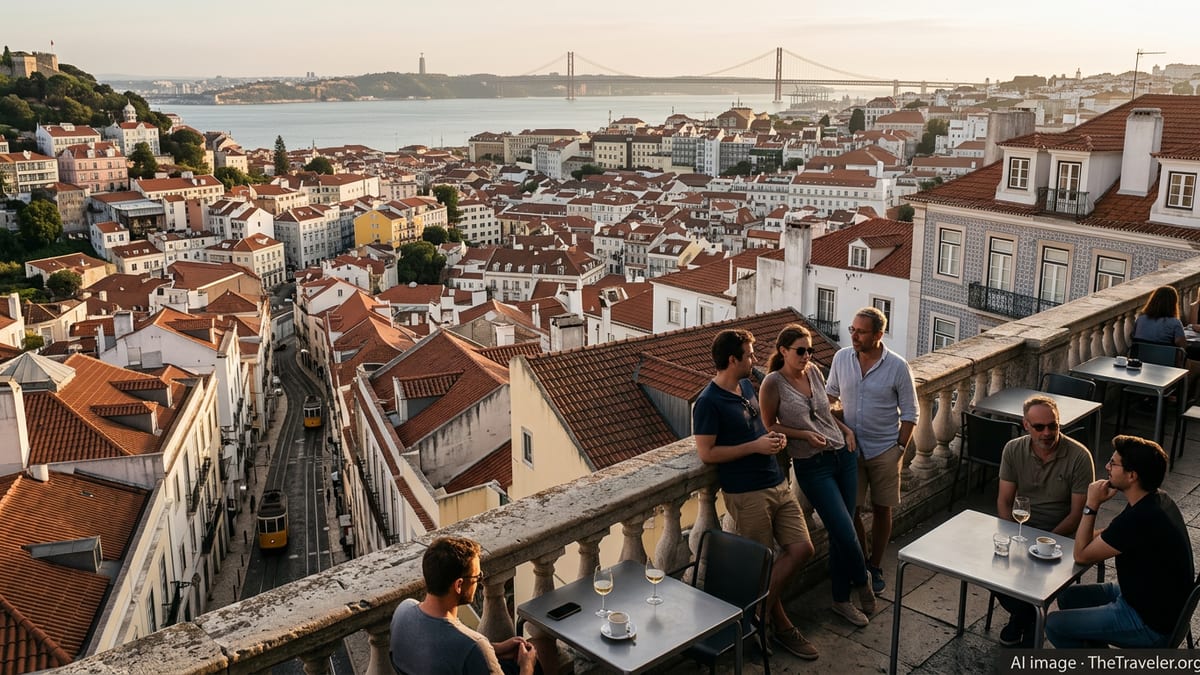
For many travelers, Lisbon is the first encounter with Portugal, and at a glance it resembles other European capitals. There are grand plazas, busy tram lines, miradouros with sweeping views and riverside promenades that fill at sunset. What feels different is the city’s roughness around the edges. The hills are steeper than they appear in photographs. The cobbles are uneven, the azulejo tiles are chipped, laundry hangs from windows, and the famous yellow trams squeal as they grind up impossibly tight streets. The beauty is rarely polished; it is textured, lived in and imperfect.
Porto, further north, offers a similarly layered impression. The terraced riverfront, port wine lodges and bridges arching over the Douro have all the drama of a classic European cityscape, but the atmosphere is more workaday than theatrical. Locals still shop at traditional markets, dockworkers move along the quays, and streets just a few minutes’ walk from the river remain firmly residential. Travelers often note that while both Lisbon and Porto are busy, they still feel like cities where ordinary life takes precedence and tourism orbits around it rather than entirely directing the script.
This is not to say the postcard scenes are untouched. Overtourism is a visible reality in specific neighborhoods. In Lisbon’s historic center, rising property values and the explosion of short-term rentals have made housing scarcer and more expensive, pushing many residents further out. Tram 28, once an everyday transport line, often runs packed with visitors, and local commuters sometimes struggle to board. In Porto, authorities have placed restrictions on new short-term rentals in some central districts after overnight stays rose sharply in recent years.
These tensions give Portugal’s cities a more complex feel than the purely romantic image found in brochures. Travelers who pay attention are likely to sense the undercurrent of debate about what kind of tourism future the country wants. That awareness can make a visit more reflective than a straightforward city break elsewhere in Europe, inviting visitors to consider their own impact and to engage with neighborhoods and businesses that do not sit on the most obvious tourist routes.
Beyond the Hotspots: Space, Silence and Slower Roads
One of the most distinctive aspects of traveling in Portugal is how quickly urban intensity can fall away. Within an hour or two of leaving Lisbon or Porto, fast roads narrow into two-lane highways, and then again into country lanes where traffic slows behind tractors and the main sound is wind in the trees. For travelers accustomed to crisscrossing larger European countries on long rail journeys, Portugal’s scale can feel like a relief. It makes spontaneity easy. A vague plan to head inland often becomes a day of improvised stops in towns whose names were unfamiliar that morning.
The Alentejo, stretching between the Tagus River and the Algarve, exemplifies this sense of expanded space. The region’s landscapes are wide and uncluttered, dotted with cork oaks, vineyards and whitewashed hill towns. Nights here can feel unusually dark and quiet for Western Europe, with low light pollution and starry skies. Visitors checking into converted farmhouses or rural guesthouses often comment on the depth of the silence, a marked contrast to the density of many Mediterranean coasts.
To the north, the Minho and Trás-os-Montes regions offer another version of rural Portugal. Green valleys, granite villages and terraced vineyards along the Douro River unfold in ways that feel distinctly Portuguese rather than generically European. Unlike some wine regions that have shifted almost wholly toward upscale tourism, many Douro estates still combine wine production with modest guest accommodation or simple tastings. Even where luxury river cruises glide past, it remains relatively easy to step away from major viewpoints and find small family-run wineries and villages where tourism is present but not dominant.
This ability to move from busy cities to lightly touristed countryside in the space of a morning is one reason Portugal often feels more approachable than larger countries. Travelers are less pressured to choose between an urban or rural itinerary. They can have lunch in a market hall one day and share a long, slow dinner at a village restaurant the next, with each day’s experiences enhancing rather than competing with the others.
The Everyday Rituals That Shape the Portuguese Pace
Another reason Portugal leaves a distinct impression is the way daily rituals still structure public life. Around mid-morning, even in business districts, cafés fill with office workers and retirees drinking small cups of strong coffee, often standing at the counter rather than lingering at a table. Bakeries stack trays with pastéis de nata and other pastries, and there is an unhurried acceptance of this pause in the day. For visitors coming from cities where coffee is grabbed in takeaway cups and consumed on the run, this brief but consistent slowing can feel quietly radical.
Meal times reinforce this unhurried approach. Lunch is generally treated as a proper break, with multicourse menus of the day still common at neighborhood restaurants and in smaller towns. Dinners, particularly in the interior, can stretch late into the evening, often anchored by simple dishes built from local fish, pork, beans and greens. Hospitality is typically warm but unflashy. Service may be slower than in some northern European destinations, but the trade-off is more time to observe the rhythms of a family-run dining room or a bar where everyone seems to know everyone else.
Public spaces also contribute to this sense of relaxed continuity. In many towns, older residents spend hours on benches or in garden squares, watching passersby and chatting in the shade. Children play around fountains and tiled bandstands. Even in high season, it is common to find locals using parks and promenades as extensions of their living rooms. For travelers, these scenes offer a reminder that they are entering a place with its own established habits rather than a stage set assembled for their visit.
This everyday choreography contrasts with more choreographed forms of tourism elsewhere in Europe, where districts feel almost entirely repurposed for visitors. Portugal certainly has areas that lean in that direction, particularly in parts of the Algarve coast, but the overall balance still favors ordinary life. Observing how locals queue for fresh bread, discuss football at the café counter or pause for an evening stroll along the river becomes as memorable as visiting any monument.
Affordability, Value and the Question of Sustainability
For years, one of Portugal’s strongest draws has been its relative affordability compared with other Western European destinations. While prices have risen notably in major cities and resort areas, the country still often feels more accessible than neighboring Spain or France for everyday expenses like coffee, local transport and casual meals, particularly outside peak summer and outside the most saturated districts. This perception of good value encourages longer stays and repeat visits, deepening travelers’ connections with particular neighborhoods or regions.
At the same time, Portugal’s economic dependence on tourism has grown. Recent data suggests that travel and tourism now account for a significant share of national income, with revenues surpassing 25 billion euros in 2025 and spending per visitor rising. Higher-spending travelers from North America and other long-haul markets are increasingly central to the industry’s strategy. This shift toward so-called value tourism, emphasizing quality over volume, aims to support jobs and businesses while mitigating some of the strain that sheer visitor numbers can place on infrastructure and housing.
On the ground, however, the balance is delicate. In Lisbon and Porto, residents have expressed concern about rising living costs, the conversion of long-term rentals into holiday apartments and the pressure on public transport. The Algarve grapples with seasonal peaks that push occupancy close to capacity in mid-summer, along with water and environmental pressures on coastal communities. These realities complicate the romantic narrative of Portugal as a carefree, budget-friendly escape and introduce a harder set of questions about who benefits from the boom.
For visitors, being mindful of these dynamics can shape more thoughtful itineraries. Choosing to stay in locally owned guesthouses, visiting lesser-known regions, traveling outside the most congested weeks and using public transport where practical are small decisions that collectively matter. They also tend to create more distinctive travel memories. A few days spent exploring inland towns or coastal stretches beyond the biggest resorts can capture the essence of Portugal in ways that large hotels and crowded central streets cannot.
Culture in Layers: From Fado Nights to Atlantic Light
Portugal’s culture is another area where the country feels subtly different from its neighbors. At the heart of many visitors’ experiences is fado, the mournful urban song tradition that emerged in 19th-century Lisbon and later in Coimbra. In the most touristy venues, fado can be packaged as a dinner show, but in smaller bars and neighborhood associations it retains a raw, intimate quality. Listeners sit in near-silence as singers deliver songs of longing, loss and everyday struggle, accompanied by the bright tones of the Portuguese guitar.
Beyond fado, cultural life is woven into the fabric of the streets. Azulejo tiles narrate religious stories, maritime history and everyday motifs on building facades, train stations and churches. Local festivals combine processions, fireworks, music and food stalls, often reflecting a mix of Catholic traditions and local customs. In Porto and the north, visiting during a festival can mean sharing grilled sardines or caldo verde with strangers at long communal tables. These events rarely feel designed solely for tourists; visitors are welcomed into celebrations that would unfold regardless of their presence.
The physical environment amplifies these impressions. Portugal’s Atlantic light has a clarity that painters and photographers have long tried to capture. In Lisbon, light bounces off the Tagus River and pale stone buildings, creating luminous mornings and long, golden late afternoons. Along the west coast, weather can change quickly, with fog rolling in, waves crashing against fortifications and then sudden clear skies. This variability gives the landscape a restless quality distinct from the often calmer, lake-like Mediterranean.
For travelers used to Europe’s inland capitals or mountain regions, this constant presence of the ocean is defining. Even when not on the shore, Portugal feels oriented toward the sea. Locals talk about the state of the waves, seafood features prominently on menus, and maritime history is visible in towers, monuments and museums. That orientation, combined with the country’s history of exploration and emigration, infuses its culture with a sense of outwardness that resonates long after a trip ends.
The Takeaway
Every European country has its distinct character, but Portugal’s difference is particularly easy to feel and harder to describe. It lies in the way record-breaking tourism numbers coexist with corner cafés where staff still recognize regulars by their usual orders, and in the ability to step from crowded viewpoints into quiet backstreets in a matter of minutes. It is present in the contrast between gleaming new hotels and the chipped tiles of century-old apartment blocks, and in the sight of older residents claiming their space on park benches while visitors zigzag around them with cameras.
What sets Portugal apart for many travelers is not a single headline attraction but a combination of scale, pace and attitude. The country is compact yet varied, with coastlines, cities and countryside all within easy reach. Its people often come across as reserved at first but quickly warm in conversation, especially when visitors show curiosity about local life beyond the obvious questions. Meals run long, coffee breaks are non-negotiable, and time feels slightly less tethered to the clock.
None of this means that visiting Portugal is uncomplicated. The very qualities that draw travelers have contributed to housing pressures, environmental concerns and debates about the direction of economic development. To experience the country meaningfully now is to acknowledge those tensions, listen to local perspectives and travel with a certain humility. In doing so, visitors often find that their trip becomes less about collecting images and more about inhabiting, however briefly, the rhythms of a place in transition.
In the end, what many people remember is a series of small, unremarkable moments: a conversation with a shop owner about the neighborhood’s changes, a quiet tram ride at dusk, the taste of grilled fish by the ocean, or the echo of a fado verse in a narrow alley. Those details linger long after the plane home has landed, and they are what make visiting Portugal feel different from so many other European journeys.
FAQ
Q1. Is Portugal still more affordable than other popular European destinations?
Portugal is no longer the bargain it once was in major cities and resorts, but everyday costs like coffee, local transport and casual meals often remain lower than in parts of France, Italy or northern Europe, especially outside peak summer and outside the most tourist-saturated neighborhoods.
Q2. When is the best time of year to visit Portugal to avoid crowds?
The shoulder seasons of April to early June and late September to November usually offer a good balance of mild weather, fewer crowds and more moderate prices, though specific dates can vary around major holidays and events.
Q3. How many tourists visit Portugal each year now?
Recent figures indicate that Portugal welcomed around 29 million international visitors in 2024 and approximately 31.8 million overnight tourists in 2025, cementing its status as one of Europe’s busiest destinations relative to population.
Q4. Does overtourism affect the experience in Lisbon and Porto?
Yes, in certain central neighborhoods visitors are likely to encounter crowded streets, busy trams and higher prices, especially in peak season, but stepping a few blocks away or exploring less central districts often reveals quieter, more local atmospheres.
Q5. Is it easy to explore Portugal beyond Lisbon and Porto without a car?
Main routes between larger cities and regional hubs are well served by trains and buses, but reaching smaller villages, rural guesthouses and remote beaches is usually easier with a rental car, especially if you want a flexible itinerary.
Q6. How does Portugal’s culture differ from other parts of Europe?
Portugal blends Atlantic maritime heritage, a strong café and food culture, and traditions like fado and local festivals into an atmosphere that tends to feel more intimate, understated and emotionally expressive than some neighboring countries.
Q7. Is Portugal a good choice for first-time visitors to Europe?
Portugal is often a gentle introduction to Europe, with relatively straightforward transport, a wide use of English in tourist areas, welcoming hospitality and a manageable size that makes it easy to combine cities, coast and countryside in a single trip.
Q8. Are there quieter alternatives to the Algarve’s busiest beach resorts?
Yes, travelers seeking a calmer coastal experience often look to less developed stretches of the west coast, smaller towns within the Algarve away from major resort clusters, or the beaches of the Alentejo, where tourism is present but generally lower key.
Q9. How concerned should visitors be about their impact on local communities?
While individual trips are only part of a larger picture, visitors can reduce negative impacts by traveling outside peak dates, supporting locally owned businesses, respecting residential areas and learning about current debates around housing and tourism.
Q10. What makes visiting Portugal feel different from other European trips?
Many travelers point to Portugal’s mix of human scale, slower daily rhythms, strong local character and the ease of moving between cities, coast and countryside, all of which create a travel experience that feels both accessible and quietly distinctive.