

More news on this day
Visitor fee rules in Bali’s Kintamani highlands are being clarified and digitized as the island records strong tourism growth and renewed interest in its cooler mountain landscapes.
Get the latest news straight to your inbox!
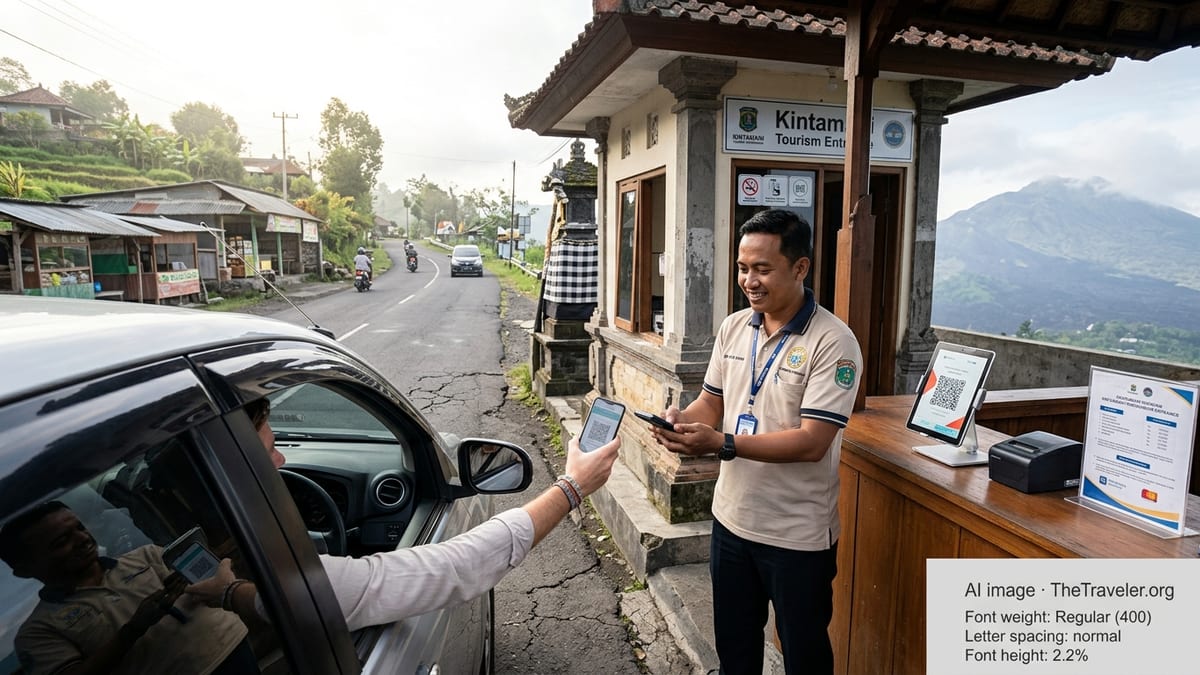
Electronic Tickets Aim to End Confusion in Kintamani
The Kintamani plateau in Bangli Regency has long charged an entrance fee for visitors heading toward viewpoints over Mount Batur and Lake Batur, but many travelers have reported uncertainty about when and how much they are required to pay. In response, local administrators have introduced electronic ticketing intended to make the levy more transparent and easier to monitor.
Publicly available information describes an official entrance ticket that is checked at designated posts on key access roads into the Kintamani tourism area. The fee is promoted as a contribution to tourism management and basic infrastructure, including road maintenance, cleanliness programs and public facilities around viewpoints and village areas.
The shift to electronic tickets is designed to standardize payment through QR codes and digital receipts, replacing ad hoc cash collection that has caused confusion among visitors. Reports indicate that the new system also allows authorities to track visitor numbers more accurately, creating a clearer link between tourism data and local budget planning.
Some travel advisories and local media coverage suggest that tourists are being encouraged to look for official signage and standardized ticket booths when entering Kintamani. Clearer branding and ticket designs are expected to help distinguish authorized collection points from informal requests for money along the route.
Clarifying Fees After Complaints About Roadside Charges
Discussions about Kintamani’s visitor fees intensified after complaints surfaced on travel forums and social media about individuals requesting cash from tourists on public roads without clear explanations. Some visitors described being stopped and asked to pay a “village” or “area” fee even when they were only driving through, leading to perceptions of overlapping or duplicate charges.
Coverage in local outlets and online travel communities has highlighted the difference between the officially sanctioned entrance ticket for the Kintamani tourism zone and informal requests that may not be connected to the regency’s tourism budget. In practice, the coexistence of village contributions, parking charges and the formal tourism levy has complicated the experience for visitors trying to follow the rules.
Clarification efforts focus on communicating that the official entrance fee should be charged at specific checkpoints and accompanied by a printed or digital ticket. Guidance shared by tourism stakeholders urges travelers to request a receipt and to be cautious about paying individuals who are not operating from a marked post or using standardized ticketing tools.
Local discussions also reference coordination between regency and village-level administrations to better align how fees are collected and advertised. The goal, as presented in public-facing information, is to reduce friction for tourists while preserving revenue streams that support community projects and environmental protection in the highland area.
Bali Tourism Registers Strong Growth Through 2024 and 2025
The push to clarify Kintamani’s fees comes at a time when Bali is reporting robust growth in international tourism. Statistics from Indonesia’s national statistics agency and Bali’s provincial data show that the island attracted more than 6.3 million foreign visitors in 2024, overtaking pre-pandemic levels and accounting for nearly half of all international arrivals to Indonesia.
By late 2025, preliminary figures cited in regional tourism analyses indicate that foreign arrivals to Bali climbed again, with growth of around 10 to 11 percent compared with the previous year. Cumulative data up to the third quarter of 2025 pointed to more than 5 million international visitors, with Australia and India among the leading source markets, supported by frequent direct flights and competitive airfares.
Reports from tourism research groups and local business associations describe Bali as having firmly reestablished itself as Indonesia’s primary international gateway. Growth has been supported by diversified demand across beach destinations, cultural hubs such as Ubud and inland attractions like Kintamani, as travelers look to combine coastal stays with cooler mountain excursions.
This broad-based recovery places additional attention on how localities manage visitor numbers and associated fees. In highland and village destinations, authorities have increasingly turned to structured entrance tickets as a tool to channel tourism-derived income back into environmental management, heritage preservation and small-scale infrastructure.
What Travelers Can Expect to Pay in Kintamani
Current information from regional tourism channels suggests that Kintamani’s official entrance fee is levied per person and remains modest compared with overall trip costs, typically amounting to only a small fraction of a day’s budget for most international visitors. The exact tariff can vary for domestic and foreign tourists, and periodic adjustments are reported as local budgets and maintenance needs evolve.
Visitors driving into the area can expect to encounter a main checkpoint where the official ticket is issued, often before reaching the famous viewpoints over Mount Batur. Additional charges may apply for specific attractions, such as hot springs, lakeside temples, trekking routes or parking near popular sunrise spots, which are usually managed separately by local communities or private operators.
Travel advisories encourage visitors to carry cash for small community fees and parking but to rely on official posts for the primary Kintamani entrance levy. With electronic ticketing being rolled out, more locations are reportedly accepting digital payment options, which could reduce the need for larger amounts of cash and offer greater clarity on recorded transactions.
Given the evolving nature of tourism regulations in Bali, travelers are advised to check the latest guidance from reputable travel organizations, accommodation partners or updated destination briefings before visiting Kintamani. These sources regularly summarize applicable fees and recommend routes that pass through official checkpoints, minimizing unexpected requests along the way.
Balancing Revenue, Community Needs and Visitor Experience
Clarifying visitor fees in Kintamani reflects a broader trend in Bali toward more structured tourism management as the island adjusts to sustained high visitor numbers. Policy discussions in recent years have included a province-wide tourism levy, limits on new accommodation in saturated areas and stronger enforcement around protected sites, all aimed at ensuring that growth does not overwhelm local communities.
Publicly available economic analyses emphasize that entrance fees and local levies, when transparently collected and reinvested, can help fund essential services in tourism-dependent regions. In places like Kintamani, where road maintenance, waste management and land-use pressures are tied closely to visitor traffic, predictable revenue streams are viewed as important to long-term sustainability.
However, observers also note that poorly communicated or inconsistently applied fees can damage visitor satisfaction and fuel perceptions of overcharging. The move toward electronic ticketing, standardized checkpoints and clearer branding in Kintamani is therefore being watched as a test case for how Bali’s inland destinations can balance community income with a streamlined visitor experience.
As Bali looks ahead to another busy holiday season and potential further increases in international arrivals, the experience of Kintamani highlights the importance of clear information around costs. For travelers, understanding where fees go and how they are administered may become an increasingly important part of planning trips that support both memorable experiences and the communities that host them.