

More news on this day
Miami Beach is spotlighting a new wave of cultural, culinary and ocean-centered experiences that invite visitors to look past the postcard views and discover the deeper spirit of the barrier island city.
Get the latest news straight to your inbox!
Art, Design and Festivals Shape a Year-Round Creative Pulse
Recent programming underscores how Miami Beach increasingly presents itself as a global crossroads for contemporary art and design. Reports indicate that Art Basel Miami Beach will again anchor Miami Art Week in December 2025, bringing hundreds of galleries and collectors to the Miami Beach Convention Center and activating satellite fairs across South Beach. Alongside it, events such as Design Miami and SCOPE Art Show highlight cutting-edge furniture, objects and emerging artists, turning the city into a week-long open-air gallery.
Published coverage of Art Week planning for 2025 points to city-backed cultural initiatives spread from the convention center district to the beachfront. Publicly available information describes expanded exhibitions, outdoor installations and media experiences that aim to make high-end art more visible to casual visitors, whether they hold fair tickets or are simply strolling Collins Avenue and Ocean Drive.
Outside the marquee week in December, cultural tourism materials emphasize a steady calendar of events. The American Black Film Festival, Miami Jewish Film Festival and Miami Beach Pride, among others, bring recurring waves of visitors drawn by film, LGBTQ+ culture and live performance. Together they reinforce Miami Beach’s image as a place where art forms and communities intersect in highly visible public spaces.
Institutions such as the Miami Beach Botanical Garden and neighborhood cultural programs further extend this creative identity. The garden’s exhibitions, artist talks and environmental education experiences give visitors quieter ways to connect with the city’s subtropical landscape, complementing the more high-profile festivals that define the international image of Miami Beach.
Culinary and Nightlife Experiences Reflect a Distinct Local Flavor
Food and drink remain central to how Miami Beach welcomes visitors. Tourism listings highlight the South Beach Wine and Food Festival, a four-day gathering that typically takes place each February and draws celebrity chefs, television personalities and food enthusiasts to beachfront tasting tents and hotel venues. The festival helps position Miami Beach as a serious culinary destination where Latin American influences meet global fine dining.
Beyond major festivals, recent destination marketing focuses on neighborhood experiences that mix gastronomy with street life. Lincoln Road’s open-air dining, food markets and rotating culinary pop-ups are presented as opportunities to experience local flavors in a casual, pedestrian-friendly setting. Visitors encounter everything from upscale seafood restaurants to cafés and dessert counters that stay active late into the evening, reflecting the city’s night-owl culture.
Reports covering new hotel openings and renovations in South Beach describe a wave of properties that pair design-forward interiors with high-profile dining concepts. Beachfront resorts increasingly integrate coastal cuisine, rooftop cocktail bars and lobby lounges that double as social hubs, inviting both guests and non-guests to experience Miami Beach’s dining and nightlife under one roof.
Music remains a key thread running through these experiences. From electronic music events clustered around Miami Music Week to live bands at the Miami Beach Bandshell and smaller venues, visitors find a soundtrack that ranges from DJ-driven dance floors to Latin rhythms and jazz. The result is a nightlife scene that conveys much of what travelers associate with the “spirit of Miami Beach” long after sunset.
Oceanfront Culture Meets Environmental Innovation
New developments along the shoreline are reframing Miami Beach as a place where enjoyment of the ocean coexists with environmental awareness. Recent coverage of the REEFLINE initiative and associated underwater sculpture projects off South Beach describes how art installations are being used to support artificial reef structures. These projects are designed to attract marine life, strengthen coastal resilience and create new snorkeling and diving experiences for visitors.
Tourism organizations increasingly highlight guided excursions that introduce travelers to Biscayne Bay and the Atlantic coastline through kayaking, stand-up paddleboarding and wildlife observation. These activities invite visitors to experience the marine environment at a slower pace than traditional beachgoing, while drawing attention to issues such as coral health, sea level rise and coastal conservation.
Public information on city planning points to broader resilience efforts, including sea level rise assessments and infrastructure upgrades, which form a less visible but critical backdrop to the beachfront experience. While these measures are primarily technical, they contribute to a narrative of Miami Beach as a forward-looking destination confronting climate challenges while still inviting millions of leisure travelers each year.
Educational elements are increasingly woven into these ocean-centric offerings. Community programs, museum exhibitions and interpretive signage on the beachfront help explain local ecosystems, from seagrass beds to dune vegetation, giving visitors a richer sense of place as they enjoy the sand and surf.
Wellness, Open Spaces and Neighborhood Discoveries
Wellness-focused travel has become another lens through which Miami Beach promotes its spirit. Destination content for early 2025 highlights yoga sessions on the sand, beachfront running paths and hotel spa programs that emphasize restorative treatments inspired by the sea. Many properties incorporate sunrise fitness classes, meditation offerings and wellness retreats, encouraging visitors to treat the beach as a space for rejuvenation rather than only nightlife.
Public parks and promenades also play a growing role in visitor itineraries. The Ocean Drive promenade, Lummus Park, the beachfront boardwalk and bayfront green spaces give travelers room to walk, cycle or simply sit and watch the city’s constant movement. Programming such as open-air concerts and cultural performances in these areas allows visitors to experience local talent in an informal setting.
At the neighborhood level, Miami Beach tourism messaging increasingly encourages exploration beyond the most photographed blocks of South Beach. North Beach, Mid-Beach and nearby communities like Surfside and Bal Harbour host additional cultural venues, quieter stretches of sand and smaller-scale events that appeal to travelers seeking a more relaxed experience.
These layers of wellness, open space and neighborhood discovery help round out an image of Miami Beach as more than a party destination. Visitors are invited to experience the city at different speeds, whether they are waking up for sunrise over the Atlantic or wandering side streets lined with historic architecture.
Architecture, History and the Enduring Beachfront Allure
Miami Beach’s built environment remains one of its most distinctive calling cards. The Art Deco Historic District, with its pastel facades, neon accents and porthole windows, continues to draw architecture enthusiasts who join guided walks or self-guided strolls through South Beach. Design coverage of events such as Design Miami often underscores how new creative installations interact with these 1920s and 1930s landmarks, reinforcing the sense that history and contemporary culture share the same stage.
Alongside the famous Art Deco hotels, more recent developments and restorations showcase how Miami Beach architecture is evolving. Modern towers rise behind preserved façades, while revitalized boutique hotels blend mid-century details with current design trends. For visitors, this layered streetscape tells a story of reinvention that mirrors the city’s broader reinvention as a multifaceted cultural hub.
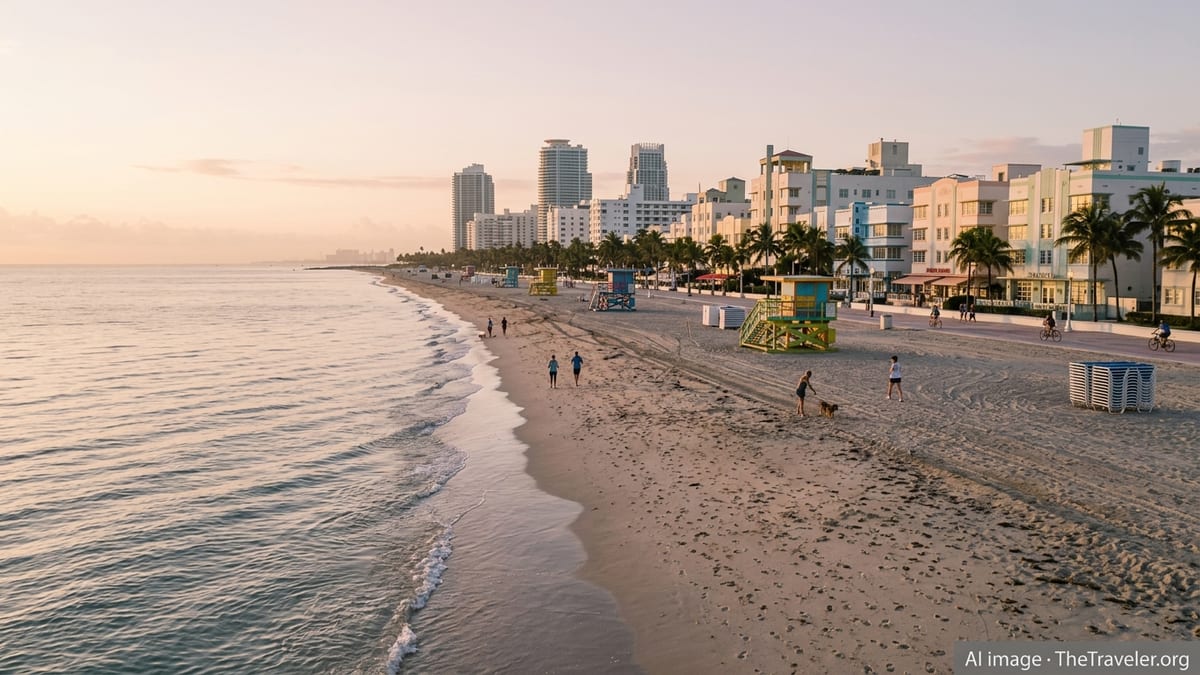
Yet the core attraction remains the city’s broad, sandy shoreline and warm climate. Travel guides for 2025 continue to rank Miami Beach among the region’s standout destinations for swimming, sunbathing and watersports, supported by extensive hotel infrastructure and a walkable beachfront. Lifeguard towers painted in bold colors, the rhythm of waves and the constant flow of joggers, cyclists and families all contribute to an atmosphere that many visitors associate with freedom and play.
Taken together, these elements of art, food, nightlife, environmental innovation, wellness and architectural heritage shape what current tourism campaigns describe as the spirit of Miami Beach. Travelers arriving for a festival or a weekend away are increasingly encouraged to seek out the layers behind the views and discover how the city’s character continues to evolve along the edge of the Atlantic.