

More news on this day
Miami Beach is unveiling a new season of culture, design and outdoor experiences that invite visitors to immerse themselves in the city’s distinctive spirit, from its Art Deco heritage and public art to evolving waterfront and pedestrian-friendly districts.
Get the latest news straight to your inbox!
Art Deco Heritage Anchors a New Cultural Season
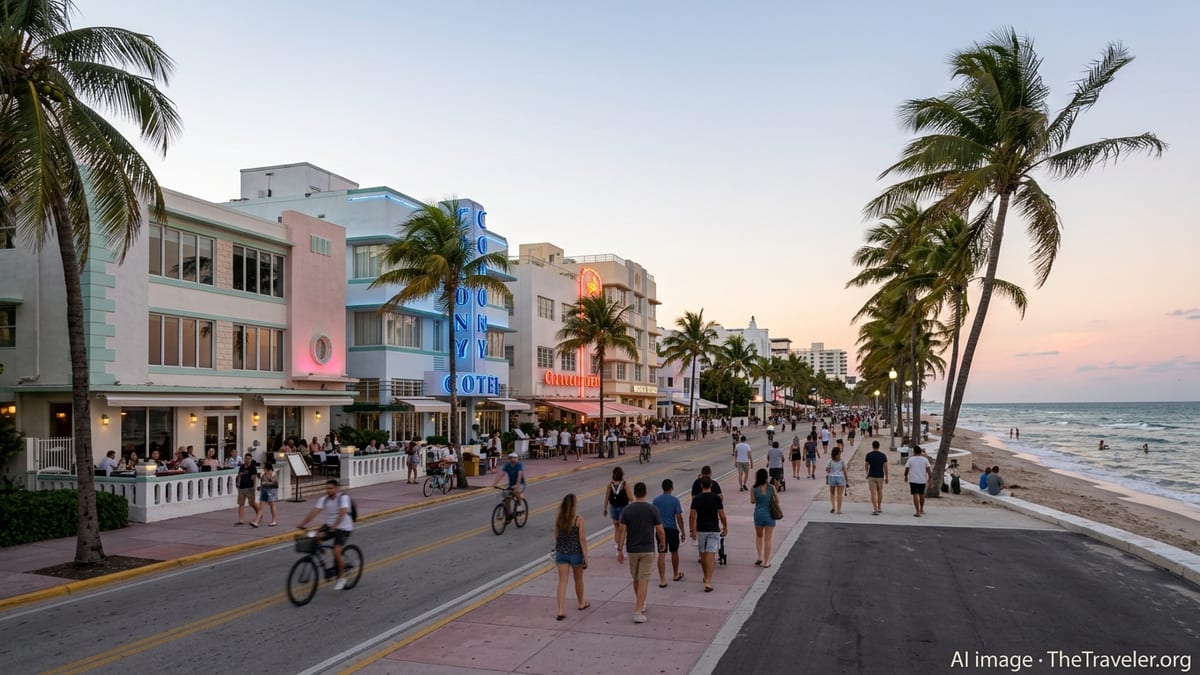
Miami Beach is centering its latest visitor messaging on the city’s Art Deco legacy, using the historic oceanfront district as a gateway to a broader lineup of cultural programming. Publicly available information from the Miami Beach Visitor and Convention Authority shows that the Centennial Art Deco Weekend in early January 2026 will mark 100 years of the architectural style that helped define the city’s skyline. The long-running festival is scheduled to return to Ocean Drive with guided architecture tours, design-focused talks, open-air markets and live performances across the Art Deco Historic District.
Recent coverage from regional travel and culture outlets indicates that Art Deco Weekend continues to transform stretches of Ocean Drive and Lummus Park into a pedestrian-focused celebration of design and community. Visitors can expect classic car displays, era-inspired fashion and music, as well as themed walking tours that explore Jewish heritage, neon signage and iconic hotels. Organizers have promoted the event as an accessible way for first-time and repeat visitors to read the city’s history directly from its facades and streetscapes.
Beyond the marquee weekend, destination marketing materials highlight year-round opportunities to experience the architecture that underpins Miami Beach’s visual identity. Self-guided walks along Ocean Drive, Collins Avenue and Washington Avenue bring visitors past pastel-colored hotels, porthole windows and geometric reliefs that characterize the district. City documents and tourism reports point to these preserved streets as a key reason Miami Beach remains a recognizable brand within the global travel market.
Lincoln Road Evolves as an Open-Air Cultural Corridor
The city’s effort to invite visitors into its everyday rhythm is also visible on Lincoln Road, the open-air promenade that links shopping, dining and cultural institutions. According to city project updates, a multiyear, nearly $30 million upgrade is underway to enhance the pedestrian experience on connecting streets such as Drexel and Meridian avenues. Plans emphasize extended pedestrian zones, new outdoor seating and improved connections to nearby venues including the Miami Beach Convention Center and New World Center.
Reports from local business and civic sources describe Lincoln Road as entering a new era that prioritizes walkability and public art. The Lincoln Road Business Improvement District has outlined a growing program of temporary installations and sculptures through initiatives such as Art on Lincoln, inviting artist proposals for works that interact with the promenade’s plazas and landscaping. Recent media coverage has spotlighted large-scale animal-themed bronze sculptures and other contemporary pieces positioned along the corridor, giving visitors unexpected encounters with art between shops and cafes.
Tourism and hospitality analyses note that thousands of hotel rooms sit within a short walk of Lincoln Road, making the promenade a natural anchor for visitors who want a car-free base. With additional programming during Miami Art Week and other major events, the street is being framed as an open-air cultural venue as much as a retail destination, reinforcing Miami Beach’s image as a city where daily life and arts experiences are closely intertwined.
Waterfront Experiences Blend Recreation and Sustainability
New and evolving projects along the shoreline are adding another dimension to the spirit of Miami Beach, combining recreation with environmental storytelling. According to widely covered arts and environment reporting, an underwater sculpture park known as The ReefLine is taking shape just off South Beach, designed to serve as both public art and artificial reef. Early installations feature concrete forms inspired by coral and everyday objects, placed on the seabed to encourage marine life and offer divers and snorkelers a new vantage point on the city.
Public information about the project notes that it is partially funded through city bond support and developed in partnership with curators and marine scientists. The goal is to create a linear underwater park that aligns with the shoreline, giving visitors an experience that combines contemporary art, marine conservation and coastal resilience. Destination marketing materials emphasize the ReefLine as part of a broader effort to show how Miami Beach is responding to climate and environmental challenges while maintaining its appeal as a sunny, seaside escape.
On the surface, the city continues to refine access between the mainland and barrier island during major cultural weeks. Local news coverage has highlighted seasonal water taxi services and shuttle routes that provide car-free connections between downtown Miami and South Beach during high-traffic periods such as Miami Art Week. These temporary services, paired with expanding bike lanes and pedestrian promenades like the beachfront path through Lummus Park, reinforce a visitor experience that is less reliant on private cars and more connected to the water and open spaces that define the destination.
Festivals Turn the City Into a Walkable Gallery
Miami Beach’s event calendar is central to how visitors are being invited to experience the city’s creative energy. Cultural and tourism reports show that Miami Art Week, anchored by fairs like Art Basel and Design Miami, continues to draw global attention each December. Satellite fairs, public installations and hotel activations spread from the convention center district to the sands of South Beach, effectively turning streets, parks and even the shoreline into a walkable gallery for several days.
Programs such as No Vacancy, Miami Beach, which places contemporary artworks in hotels across the city, have been promoted as a way to connect visitors directly with local and international artists. Public records and arts marketing materials indicate that the initiative includes a competitive component with juried prizes, encouraging hotels to serve as temporary exhibition spaces and inviting guests to explore art beyond traditional museum walls.
Throughout the year, smaller-scale festivals and recurring events further animate public spaces. Art fairs on the beach, open-air concerts in Pride Park near the convention center and community-focused happenings in Lummus Park contribute to a sense of continuity between headline weeks. For visitors, the result is a destination where it is increasingly common to encounter live music, installations or performances simply by walking along Ocean Drive, Lincoln Road or the beachfront promenade.
Inclusive Public Spaces Reflect Miami Beach’s Diverse Identity
Underlying these developments is an emphasis on public spaces that reflect Miami Beach’s diverse communities. City documents and tourism audits describe the destination as a globally recognized, multicultural resort and residential area, with arts, LGBTQ+ culture and hospitality as core elements of its brand. Parks such as Pride Park, the Miami Beach Botanical Garden and oceanfront lawns adjacent to the convention center are positioned as flexible venues for festivals, wellness events and neighborhood gatherings that are open to visitors as well as residents.
Recent media coverage of public art and design initiatives shows how this identity continues to evolve. Temporary light installations, sculptures and pride-themed artworks have appeared along Lincoln Road and in civic spaces during heritage months and major cultural dates, offering visual markers of the city’s commitment to representation. Even when specific treatments or designs change due to regulatory or planning decisions, publicly available information indicates that the city and its partners often retain and repurpose artworks or design elements for future use.
As Miami Beach moves through a new season of investments in walkability, waterfront art and cultural programming, the invitation to visitors is clear. The city is foregrounding experiences that are best understood on foot and in person, from tracing Art Deco lines against the sky to watching the Atlantic light shift across sculptures, parks and promenades. In doing so, it is presenting the spirit of Miami Beach not as a single attraction, but as a network of streets, shorelines and cultural moments that visitors are encouraged to explore firsthand.