

More news on this day
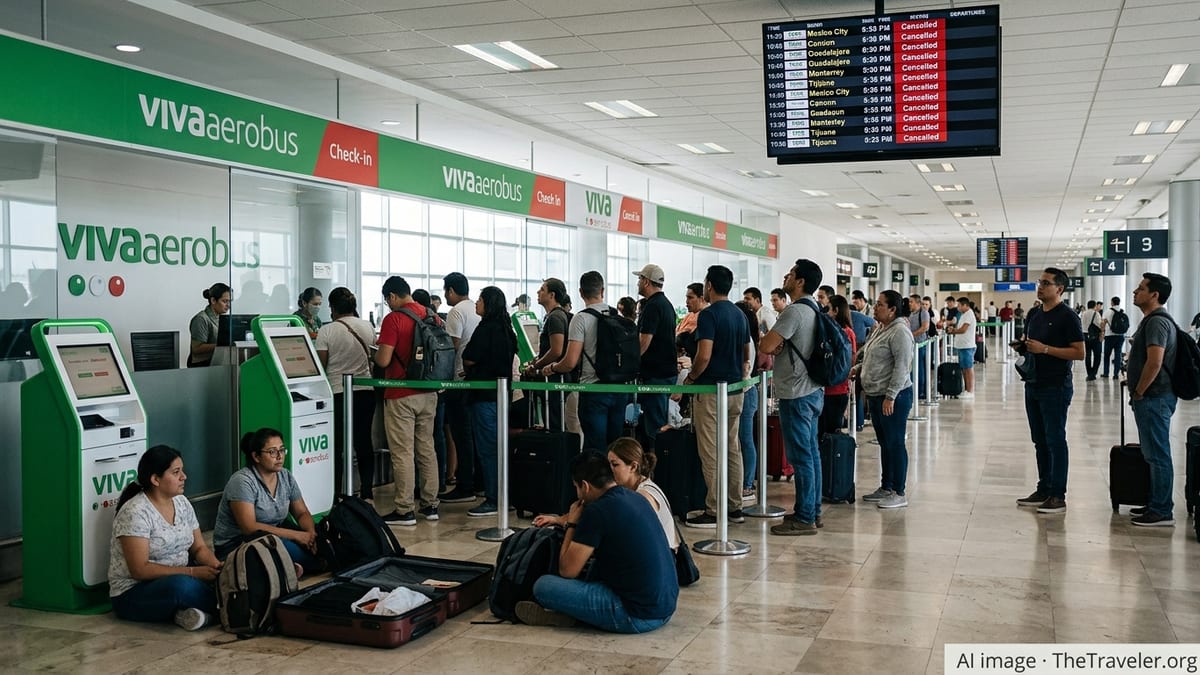
Travelers flying with low cost carrier VivaAerobus are facing widespread disruption in Mexico after more than 40 flights were cancelled across key hubs including Mexico City, Cancun, Guadalajara, Monterrey and Tijuana, according to multiple airport and media reports published over the weekend.
Get the latest news straight to your inbox!
Network Disruptions Hit Mexico’s Busiest Routes
The latest disruption affects some of Mexico’s most heavily traveled domestic corridors, with cancellations reported on services linking Mexico City, Cancun, Guadalajara, Monterrey, Tijuana and other regional cities. Publicly available airport boards and local media coverage indicate that the majority of affected flights are short haul domestic sectors that connect business and leisure travelers across the country.
Reports suggest that the interruptions began clustering within a relatively short time window, creating knock on effects for later departures as aircraft and crews ended up out of position. For passengers, this has translated into long queues at airport counters, rebooking challenges and limited same day alternatives on already busy routes.
Several of the cancelled flights involved trunk routes that normally see multiple frequencies per day, which can help airlines recover from operational issues. However, the concentration of disruptions across different cities at once has reduced that flexibility, with travelers in some regional airports reporting very few remaining options to reach larger hubs on the same day.
While precise figures continue to shift as schedules are adjusted, local coverage and airport data point to more than 40 VivaAerobus services being cancelled over the current operating period, with delays affecting additional flights beyond those fully removed from the schedule.
Operational Strain and a Crowded Low Cost Market
VivaAerobus operates one of Mexico’s densest low cost domestic networks, focused on point to point routes rather than traditional hub and spoke structures. This model allows airlines to keep fares low but can leave little room for error when aircraft or crew are unavailable, particularly during peak travel days.
Analysts following the Mexican aviation market note that carriers such as VivaAerobus and its rivals have been operating close to capacity on many routes, especially between large metropolitan areas and beach destinations like Cancun. In this context, a single day of widespread cancellations can have outsized impacts, as there are fewer empty seats available on later flights to accommodate displaced passengers.
Mexico’s airline sector has also been navigating a demanding environment that includes strong demand recovery, infrastructure limitations at some airports and occasional weather and security related constraints on ground transport. Aviation commentators point out that when several of these pressures intersect on the same day, low cost operators with tight schedules may be more vulnerable to cascading delays and cancellations.
Publicly available fleet data shows that VivaAerobus relies on a single aircraft family, which generally simplifies operations but means that any technical or supply chain issue affecting that fleet type can have systemwide consequences. In a compressed operating window, that can quickly translate into cancellations rather than minor delays.
Impact on Travelers in Mexico City, Cancun and Beyond
Mexico City, Cancun, Guadalajara, Monterrey and Tijuana together form the backbone of domestic air connectivity in Mexico, channeling both local residents and international visitors to dozens of smaller cities. When cancellations hit these nodes simultaneously, the disruption radiates outward, affecting travelers far from the original problem.
Passengers with connections, especially those traveling onward on separate tickets or to smaller airports with limited frequencies, may face the greatest challenges. According to accounts shared on social media and in local press, some travelers have been forced to overnight unexpectedly, while others have rerouted through alternate cities in order to reach their destinations.
Families returning from beach holidays in Cancun and business travelers shuttling between Monterrey and Mexico City are among those reporting interrupted plans. For visitors who do not speak Spanish or who are unfamiliar with Mexico’s domestic airline landscape, navigating last minute rebookings and compensation rules can add further stress.
Travel industry observers note that disruptions of this scale can also have knock on effects for ground transport, as stranded passengers turn to long distance buses or car rentals at short notice, tightening availability and pushing up prices on some routes.
What Affected Passengers Can Do Right Now
Consumer advocates in Mexico typically recommend that passengers whose flights are cancelled seek written confirmation from the airline of the disruption and the reason cited in the system. This documentation can be important when requesting refunds, rebooking, or additional support such as meals and hotel vouchers where applicable under Mexican aviation guidelines.
Travelers are also encouraged to monitor their booking status through the airline’s digital channels and airport information screens rather than relying solely on email notifications, which may lag behind real time operational decisions. In the current situation, some passengers have reported learning of cancellations only upon arrival at the airport.
For those with time sensitive commitments, such as international connections or events, travel planners suggest considering alternative carriers or nearby airports if same day options with VivaAerobus are limited. Mexico’s domestic market includes several airlines operating overlapping routes, but availability may be constrained during peak hours.
Passengers who purchased tickets through online travel agencies or third party platforms may need to coordinate both with their booking intermediary and the airline, which can extend resolution times. Keeping boarding passes, receipts and any written communication is advised in case formal complaints or compensation claims become necessary later.
Travel Planning Takeaways for Upcoming Trips to Mexico
The latest wave of VivaAerobus cancellations serves as a reminder for travelers to build extra flexibility into itineraries that rely on domestic connections in Mexico. Travel advisers often recommend longer layovers between international arrivals and domestic departures, particularly when using separate tickets or when traveling during busy holiday periods.
Booking earlier flights in the day, where possible, can improve the chances of being rebooked later the same day if a disruption occurs. Additionally, selecting refundable or flexible fares, or using travel insurance that covers missed connections and cancellations, can provide more options when plans change unexpectedly.
Observers of Mexico’s aviation sector underline that low cost carriers remain an important and generally reliable part of the country’s transport network, carrying millions of passengers each year. However, the current disruption illustrates how quickly conditions can shift, and why monitoring flight status closely in the days and hours before departure is increasingly essential.
As airlines adjust schedules in response to operational pressures, travelers planning upcoming trips within Mexico are encouraged to reconfirm their flights regularly and to have backup options in mind, particularly when traveling through major hubs such as Mexico City, Cancun, Guadalajara, Monterrey and Tijuana.