

More news on this day
Hundreds of travelers were left scrambling for options after low cost carrier VivaAerobus cancelled more than 35 flights across Mexico, disrupting busy routes between Mexico City and major destinations including Cancun, Guadalajara, Monterrey, and Tijuana, according to multiple Mexican media and airport operations reports published this week.
Get the latest news straight to your inbox!
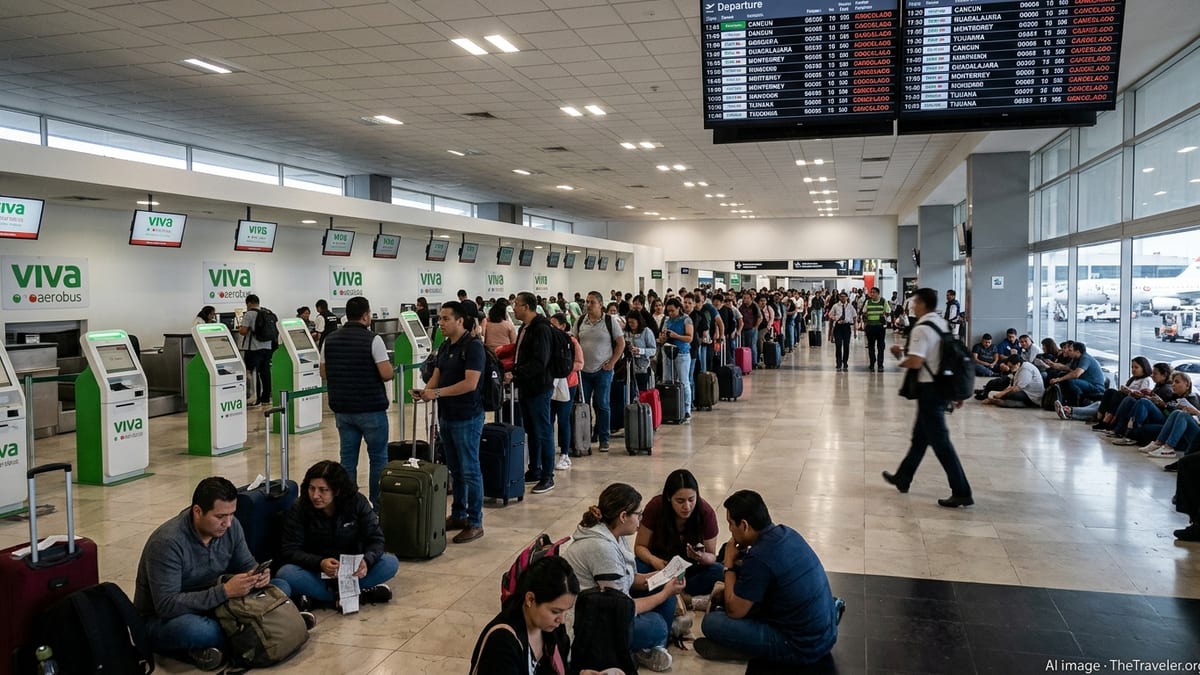
Widespread Cancellations Hit Key Domestic Routes
Published flight status boards and local news coverage indicate that VivaAerobus abruptly cancelled dozens of flights on popular domestic routes, with the largest impact seen on services linking Mexico City to Cancun, Guadalajara, Monterrey, and Tijuana. Additional cancellations were reported on routes connecting northern and western cities, compounding disruption across the carrier’s network.
Information compiled from airport departure boards suggests that more than 35 flights were withdrawn from the schedule over a short period, affecting both morning and evening operations. Passengers reported learning of cancellations only upon arriving at the airport or through last minute notifications, leading to long queues at check in counters and customer service desks.
The disruption coincides with a period of already heightened travel demand in Mexico, as domestic tourism continues to recover and large events draw visitors to major hubs. With VivaAerobus operating an extensive point to point network from Mexico City and regional bases such as Monterrey, even a limited reduction in flying can quickly cascade into delays, missed connections, and stranded travelers.
Travel industry observers note that Mexican low cost carriers typically run high aircraft utilization with tight turnarounds, leaving little spare capacity when operational issues arise. When one or more aircraft are taken out of rotation, it can force airlines to consolidate or cancel multiple flights on short notice.
Mexico City and Cancun See Heavy Passenger Disruption
Mexico City International Airport and Cancun International Airport appeared to be among the hardest hit locations, based on airport operations data and local reports. Flights between the capital and the Caribbean resort city are among the busiest corridors in the country, serving both leisure travelers and residents who rely on the route for family visits and business trips.
At Mexico City, travelers shared accounts of long lines at VivaAerobus counters and confusion over rebooking options after their flights to Cancun and other coastal destinations were pulled from the departure board. Some passengers described spending hours in the terminal seeking alternative flights, while others opted to purchase last minute tickets on competing carriers at significantly higher prices.
In Cancun, arriving family members and friends waited for passengers who never departed from Mexico City and other cities as the cancellations rippled through the system. The mismatch between inbound and outbound schedules caused additional challenges for hotels and transportation providers, which frequently coordinate airport pickups and tour departures based on expected flight times.
The timing of the disruption is particularly sensitive for Cancun and nearby destinations, where occupancy levels typically run high during late winter and early spring. Travel advisers are cautioning visitors to verify their flight status repeatedly before traveling to the airport, and to consider leaving extra time between flights when planning domestic connections within Mexico.
Guadalajara, Monterrey, and Tijuana Feel Knock-On Effects
Reports also highlight significant impacts at Guadalajara, Monterrey, and Tijuana, three of Mexico’s busiest airports and important nodes in the VivaAerobus network. These cities serve as key gateways for both domestic and cross border traffic, linking central and northern Mexico to resort areas and to the United States.
At Guadalajara, passengers described a combination of outright cancellations and substantial delays on VivaAerobus departures, especially on routes to Mexico City and northern destinations. Some travelers attempting to continue on to the United States reported losing onward connections after their domestic legs were cancelled or rescheduled.
In Monterrey, a core operational base for VivaAerobus, passengers faced confusion as multiple flights were consolidated or removed from screens. With alternative carriers also operating close to capacity on popular routes, same day rebooking options were limited, leaving some travelers to consider overnight stays or long distance bus journeys as backup plans.
Tijuana, which handles heavy cross border traffic and serves as a departure point for travelers connecting to Southern California, experienced cancellations on routes linking it to Mexico City and other Mexican cities. Local coverage and social media posts describe scenes of crowded check in areas and travelers hastily adjusting plans to avoid missing commitments across the border.
Airline Response and Limited Rebooking Options
According to publicly available information from airport information systems and traveler accounts, VivaAerobus staff at affected airports were offering a mix of rebooking on later company flights, vouchers, or refunds in line with the airline’s standard policies. However, high demand on remaining flights meant that same day or next day alternatives were not always available, particularly on trunk routes from Mexico City.
Some passengers reported being directed to online and app based channels for changes, but also indicated that digital tools struggled under heavier use during the disruption. Others described difficulties reaching call centers while waiting in long queues at airport counters. Travel advisers monitoring the situation recommended taking screenshots of any new itineraries, boarding passes, and written communications from the airline in case of later disputes.
Consumer advocates in Mexico frequently remind travelers that domestic airline compensation and care obligations can differ from those in other regions. While carriers may offer hotel stays, meal vouchers, or additional transportation in certain scenarios, the level of support often depends on the cause of the disruption, the length of the delay, and whether passengers accept rebooking or opt for a refund.
In this case, with information still emerging about the underlying causes of the flight cancellations, travelers are being urged to retain all receipts for additional expenses and to review the detailed terms and conditions associated with their tickets and any travel insurance policies.
What Affected Travelers Can Do Now
Travel specialists following the disruption suggest that passengers who were impacted by the wave of VivaAerobus cancellations take several practical steps to protect their travel plans and finances. The first is to verify the current status of any remaining segments on the same booking, since cascading schedule changes may continue even after the initial cancellation day.
Travelers are also advised to document their experience thoroughly, including photos of airport departure boards, copies of boarding passes, and any written communication from the airline regarding the cancellation or rebooking. This documentation can assist with subsequent claims, whether through the carrier, a credit card travel protection benefit, or a standalone travel insurance provider.
For those still needing to reach destinations such as Cancun, Guadalajara, Monterrey, or Tijuana in the coming days, publicly available fare data suggests that flexibility on departure times and airports may be essential. Some travelers may find better availability by splitting their trip across different airlines or by considering nearby secondary airports, though such options can add ground transport time and cost.
With domestic air travel in Mexico remaining busy and certain regions subject to occasional security related disruptions, travel planners recommend building extra time into itineraries, avoiding extremely tight connections, and keeping essential items in carry on baggage whenever possible. As airlines like VivaAerobus continue to adjust schedules, passengers are likely to benefit from closely monitoring flight information and maintaining backup plans for critical journeys.