

More news on this day
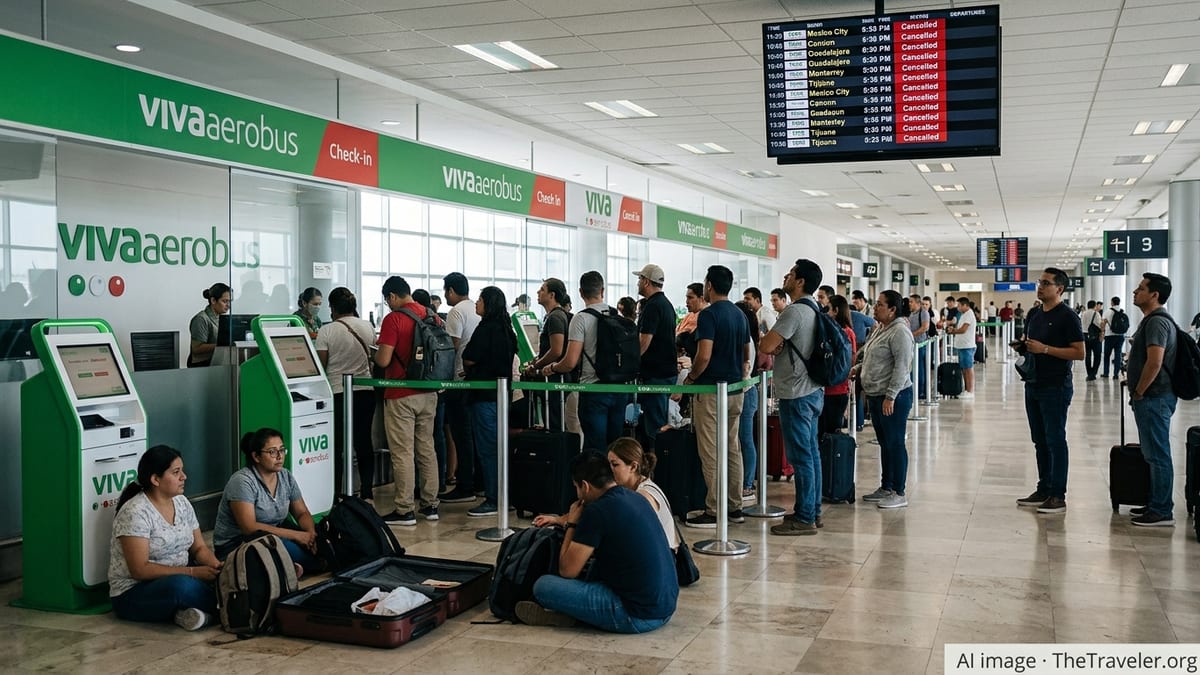
Travelers across Mexico faced last-minute disruption as low-cost carrier VivaAerobus canceled more than 40 flights on short notice, snarling operations at major airports including Mexico City, Cancun, Guadalajara, Monterrey and Tijuana, according to early reports and publicly available flight data.
Get the latest news straight to your inbox!
Widespread Disruptions at Major Mexican Hubs
Reports from Mexican media, airport dashboards and passenger accounts indicate that VivaAerobus cancellations and delays have rippled through several of the country’s busiest airports over the past 24 hours. Mexico City’s primary hub and secondary terminals, along with key leisure and business gateways such as Cancun, Guadalajara, Monterrey and Tijuana, have all seen schedule disruptions involving the carrier.
Publicly available flight information suggests that the cancellations span both early-morning and evening departures, affecting popular domestic routes that connect tourism centers with industrial regions. Routes between Mexico City and coastal destinations, as well as trunk services linking Guadalajara, Monterrey and Tijuana, appear to be among the most affected, resulting in missed connections and disrupted holiday and business plans.
While overall airport operations have continued and other airlines have maintained most of their flights, the concentration of cancellations within a single carrier has created bottlenecks at check-in counters and rebooking desks. Passengers report crowded customer service lines, confusion over revised departure times and uncertainty about when they will be able to reach their destinations.
Possible Links to Broader Security and Operational Strain
The latest wave of cancellations arrives against the backdrop of broader security and transport challenges in parts of Mexico in recent weeks. Travel advisories and security alerts describing roadblocks, intermittent violence and access issues around cities such as Guadalajara, Tijuana and Monterrey have highlighted how quickly transport networks can become strained when highway and urban routes are disrupted.
Publicly available information shows that, even when airports remain technically open, access problems on surrounding roads can complicate crew logistics, aircraft positioning and ground handling operations. Airlines operating point-to-point networks, such as VivaAerobus, can be particularly exposed when aircraft and crews are not where they are scheduled to be at the start of the day, creating a knock-on effect across multiple routes.
Industry observers note that Mexico’s domestic air market is heavily reliant on a handful of low-cost carriers to connect secondary cities and tourism destinations. When one of these carriers experiences a concentrated period of disruption, even a few dozen cancellations can significantly affect overall connectivity, especially in regions with limited alternative ground transport options due to security concerns or long distances.
Impact on Travelers: Long Lines, Missed Plans and Limited Options
Passenger accounts shared on social platforms describe travelers arriving at the airport to find their VivaAerobus flights delayed repeatedly or canceled outright, sometimes with only short-notice notifications via email or app. Some travelers report needing to purchase last-minute tickets on competing airlines at significantly higher fares to avoid missing international connections or time-sensitive commitments.
For those staying within Mexico, particularly between major hubs like Mexico City, Guadalajara and Monterrey, options have included waiting for rebooking on later VivaAerobus flights, switching to other carriers where seats are still available, or considering long-distance bus routes where security conditions and schedules permit. In several cities, however, recent reports of intermittent highway closures and security operations have made overland travel less predictable.
Families returning from beach destinations such as Cancun and other Caribbean gateways have reported extended airport waits as they seek updated information from departure boards and carrier representatives. Some travelers have highlighted challenges in contacting call centers or using mobile apps during peak disruption periods, adding to frustrations as they try to secure hotel vouchers, meal support or alternative routing.
Guidance for Affected Passengers in Mexico
Consumer advocates and travel specialists consistently recommend that passengers dealing with cancellations or long delays document all communications with airlines, keep receipts for additional expenses and monitor the status of their flights directly through airport information systems. In Mexico, compensation and assistance rules can differ from those in other regions, so travelers are encouraged to review the conditions of carriage published by their airline and any applicable Mexican consumer protection guidance.
Travelers who have flexible schedules are often advised to accept rebooking on the next available flight, even if it departs from an alternative airport within the same metropolitan region. For example, passengers in the Mexico City area may find more options by considering different local airports, while those in northern Mexico might look at flights via Monterrey or Tijuana to reconnect to their final destination.
For visitors with onward international travel from hubs such as Mexico City or Cancun, publicly available advice from consular and travel resources suggests keeping airlines and, if relevant, tour operators informed as early as possible. Reissuing tickets and rerouting through other North American gateways may be feasible in some cases, although availability can tighten quickly when a large block of domestic connections is disrupted.
What This Means for Mexico’s Busy Spring Travel Season
The timing of the cancellations is particularly sensitive, as Mexico heads into a busy spring travel period that combines domestic holidays, school breaks and rising inbound tourism. Carriers including VivaAerobus have expanded their networks from cities such as Guadalajara, Monterrey, Tijuana and secondary airports serving Mexico City and Puebla in recent years, increasing reliance on low-cost operators to carry record passenger volumes.
Analysts tracking Mexico’s aviation sector note that even short-lived disruption can expose capacity constraints, especially when fleets are scheduled tightly and turnarounds are brief. When one day’s cancellations cascade into the next due to aircraft and crew being out of position, it can take several days of stable operations to fully absorb the backlog and restore normal patterns.
For travelers planning upcoming trips within Mexico, the current episode is a reminder to build extra time into itineraries that involve tight domestic connections, particularly when linking to long-haul international flights. Monitoring flight status closely, considering travel insurance that covers disruptions and having a backup routing plan through alternative hubs such as Mexico City, Guadalajara or Monterrey can help reduce the risk of major interruptions if cancellations continue to flare up.