

More news on this day
Vivanta has opened a new 135-key hotel in the heart of Vrindavan, enhancing the city centre’s accommodation mix with an upscale property positioned for both spiritual and leisure travel.
Get the latest news straight to your inbox!
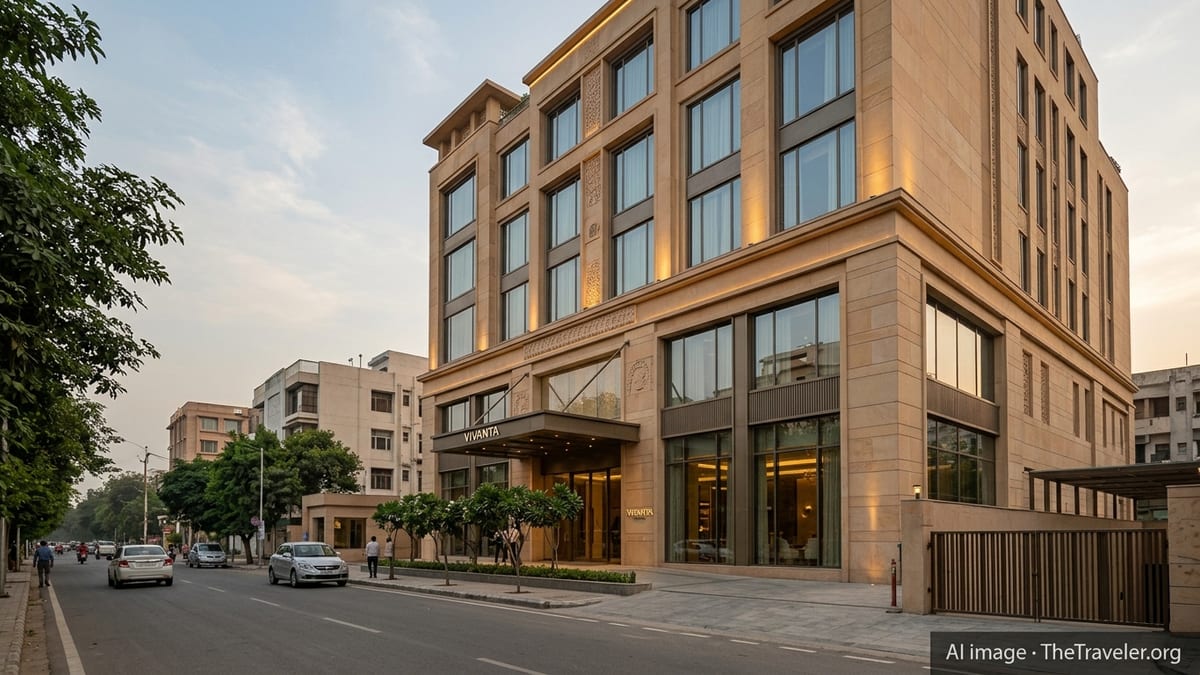
New Landmark Property in Vrindavan’s Urban Core
Publicly available information on the Vivanta brand site describes Vivanta Vrindavan as a new landmark hotel set in the city’s core precincts, combining contemporary design with references to the region’s spiritual heritage. The property is presented as a modern base for visitors navigating Vrindavan’s dense network of temples and pilgrimage sites, while remaining integrated into an established neighbourhood setting in the city centre.
The hotel is located in the Rukmani Vihar area, an emerging hospitality hub that has attracted a series of branded hotel signings in recent years. Earlier announcements about the project indicated that Vivanta’s arrival in Vrindavan forms part of a wider push by major hotel groups to anchor full-service properties close to key approach roads and urban services, rather than only around the older temple lanes. This positioning places Vivanta Vrindavan within convenient reach of both historic quarters and newer residential enclaves.
Vrindavan’s role as part of the broader Krishna pilgrimage circuit, linking Mathura, Govardhan, Barsana and nearby destinations, has translated into sustained demand for year-round accommodation. The 135-key inventory at Vivanta Vrindavan significantly expands the branded room supply in the city centre, where midscale guesthouses and dharamshalas have traditionally dominated.
135 Keys, Contemporary Rooms and Suites
The Vivanta Vrindavan hotel website outlines a room portfolio comprising 135 keys across superior rooms, deluxe categories and suites, all configured with a modern, understated aesthetic. Rooms are described as featuring clean lines, soft colour palettes and city or neighbourhood views, aiming to provide calm interiors that contrast with the bustle of the surrounding pilgrimage corridors.
Entry-level superior rooms offer king or twin configurations with compact yet functional layouts, while higher-category rooms and suites deliver additional space for families and small groups. Suites are positioned as elevated options with separate seating areas and enhanced amenities, targeting long-stay guests, wedding parties and premium spiritual travellers who often arrive in multi-generational groups.
Across the inventory, the brand information highlights contemporary fixtures, efficient storage, and technology-focused details designed to support both short pilgrim stays and extended visits. The hotel’s key count and room mix align with earlier development plans for a large, full-service property in Vrindavan, adjusted to reflect a higher final capacity than some of the initial project descriptions.
Pure Vegetarian Dining, Wellness and Rooftop Pool
According to the hotel’s published overview, Vivanta Vrindavan has been configured as a self-contained urban retreat with a focus on vegetarian cuisine and wellness. The property features a pure vegetarian all-day dining restaurant, reflecting local expectations in a market where many visitors observe religious dietary preferences. The outlet is positioned to cater to both in-house guests and walk-in diners from the neighbourhood.
The hotel also offers a lounge space intended for informal meetings and socialising, alongside a spa and a modern fitness centre. These additions signal a broader target segment that includes domestic leisure travellers, small corporate groups and families combining pilgrimage with short holiday breaks.
A rooftop infinity pool is highlighted as a key visual feature, providing elevated views over the surrounding city blocks. The pool and terrace areas add resort-style elements to a city-centre setting, differentiating the property from many of Vrindavan’s smaller lodges and ashram accommodations that focus primarily on basic overnight stays.
Banqueting, Weddings and Spiritual Gatherings
In line with Vrindavan’s rising profile as both a wedding and spiritual-events destination, Vivanta Vrindavan incorporates meeting and banqueting spaces positioned to host social, religious and corporate functions. The brand’s description references elegant venues suited to weddings, receptions, satsangs and conferences, supported by modern audiovisual capabilities.
Earlier coverage of the project indicated that the Vrindavan hotel was planned with substantial banqueting capacity to address the growing demand for destination weddings and large-scale gatherings in the region. By combining flexible indoor halls with pre-function areas and potential outdoor extensions, the property is expected to appeal to organisers seeking a branded, full-service hotel environment rather than fragmented facilities spread across multiple smaller venues.
This emphasis on events aligns with a broader trend in North India’s pilgrimage towns, where improved road connectivity and rising disposable incomes have encouraged families to choose religious cities as backdrops for major life ceremonies. Vivanta Vrindavan’s 135 rooms and on-site amenities position it to host sizeable residential events without relying heavily on external accommodation support.
Strengthening Branded Hospitality Presence in a Key Pilgrimage Hub
Vrindavan has seen a steady inflow of branded hotel announcements over the past few years, as national and international chains respond to rising visitor numbers. Previous development reports have highlighted multiple forthcoming projects in the wider Mathura Vrindavan belt, including midscale and upscale hotels clustered around Rukmani Vihar and other growth corridors.
The opening of Vivanta Vrindavan marks a significant milestone in that evolution, representing one of the city centre’s larger branded inventories to date. The property reinforces the shift from largely unbranded accommodation to a tiered mix of international, national and locally operated hotels, giving pilgrims and leisure travellers a broader spectrum of price points and service levels.
Public filings and campaign material from the wider hotel group have pointed to spiritual tourism as a strategic growth theme, with Vrindavan listed among key destinations where new capacity is being added. The launch of a 135-key Vivanta in the city centre underlines that focus, while also signalling continued confidence in demand fundamentals driven by festivals, long weekends and year-round religious travel.
As Vrindavan continues to evolve into a more structured tourism market, Vivanta Vrindavan’s combination of contemporary accommodation, vegetarian dining, wellness facilities and event infrastructure is expected to play a visible role in shaping how visitors experience the city’s historic core.