

More news on this day
Indian Hotels Company’s Vivanta brand has marked a significant milestone in Vrindavan, Uttar Pradesh, with the debut of Vivanta Vrindavan, positioning the holy town as a fast-emerging premium spiritual retreat destination.
Get the latest news straight to your inbox!
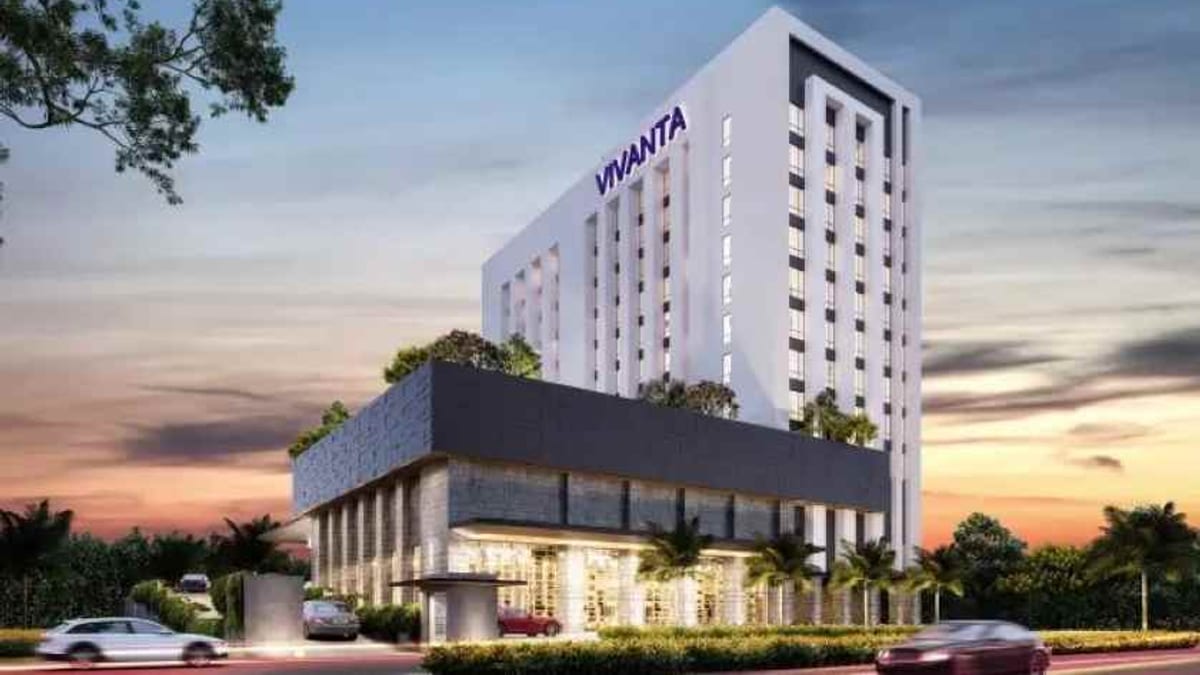
Image by International Hotels News, Hotel Industry & Hospitality News
A New Chapter for Branded Hospitality in Vrindavan
The debut of Vivanta Vrindavan follows earlier announcements that Indian Hotels Company Limited (IHCL) would expand its footprint in key pilgrimage markets with new greenfield projects in Uttar Pradesh. Publicly available corporate disclosures list Vivanta Vrindavan among the company’s latest management contract openings, indicating a scale of around 130 to 140 rooms and placing the property within IHCL’s wider strategy to grow its Vivanta portfolio in high-demand spiritual and leisure destinations.
The hotel is located in Rukmani Vihar, a rapidly developing precinct of Vrindavan. Earlier project information about the site highlighted its proximity to major temples and religious attractions and its positioning as a contemporary, design-forward property aimed at younger pilgrims, families and urban travelers seeking upgraded stays in India’s temple towns. With Vivanta Vrindavan now operational, the area gains a full-service, upper-upscale address that complements the town’s mix of ashrams, dharamshalas and midscale hotels.
The opening also reflects the broader investment wave reshaping Vrindavan’s visitor infrastructure. Over the past two to three years, multiple domestic and international hotel chains have announced or opened branded properties in the town, underscoring a structural shift from primarily devotional stays to a more diversified market that includes destination weddings, spiritual retreats and short leisure breaks for travelers from Delhi, the National Capital Region and beyond.
Designing a Contemporary Spiritual Retreat
While detailed interior imagery is still emerging, early project descriptions of Vivanta Vrindavan point to a design approach that blends modern lines with subtle references to Braj’s devotional heritage. The property’s key count, spread across standard rooms and suites, is expected to support both individual pilgrims and larger family or group bookings that are common during major festivals and long weekends.
Facilities outlined at the project stage include an all-day dining restaurant, a swimming pool, a fitness centre and a spa, as well as flexible banqueting and meeting spaces. This mix places Vivanta Vrindavan firmly in the premium segment, targeting guests who expect the comforts of an urban business hotel while traveling for spiritual, cultural or social reasons in a traditional pilgrimage setting.
The positioning as a “retreat” rather than a purely transit property aligns with a wider trend in Indian religious tourism, where visitors increasingly look for spaces that allow longer stays, wellness-focused experiences and curated local immersion. Vivanta’s brand ethos, which combines playful contemporary styling with destination-driven experiences, gives IHCL scope to tailor programming and services specific to Vrindavan’s devotional calendar and temple circuits.
Strategic Location Near Key Temples and Circuits
Rukmani Vihar, where Vivanta Vrindavan is situated, has emerged as one of the town’s most active hospitality and residential corridors. Earlier project notes emphasize that the site offers road access to major temples such as Banke Bihari and ISKCON Vrindavan, as well as onward connections to Govardhan, Gokul, Nandgaon, Barsana and Mathura. This makes the hotel a potential base for visitors exploring the broader Krishna pilgrimage circuit, not just Vrindavan itself.
The location is also significant from a connectivity standpoint. Vrindavan sits roughly midway between Delhi and Agra, and is linked to the wider region through road and rail connections via Mathura. Ongoing development of the Noida International Airport at Jewar is expected to further strengthen air access to western Uttar Pradesh’s religious and cultural destinations, which could benefit premium hotels positioned to serve both domestic and inbound international travelers.
For Vrindavan, the addition of a branded hotel in Rukmani Vihar contributes to the gradual shift of visitor infrastructure away from a single, congested core to multiple micro-clusters. This helps ease pressure on older neighbourhoods while giving guests more choice in terms of access, parking and crowd management during peak periods such as Janmashtami, Holi and the Kartik month.
Rising Competition in Vrindavan’s Premium Segment
The arrival of Vivanta Vrindavan comes at a time when several major hospitality players are firming up plans in the town. Over the last year and a half, reports have highlighted signings by Wyndham Hotels & Resorts under the Ramada and Ramada Encore brands, ITC Hotels with a Welcomhotel in Vrindavan, and Lemon Tree Hotels with a Keys Select property. More recently, Accor announced plans for a Novotel Vrindavan, scheduled to open towards the end of the decade.
This wave of branded supply signals growing confidence in Vrindavan’s visitor economy. Once dominated by unbranded guesthouses and religious accommodations, the market is steadily diversifying into a tiered structure, where upscale and midscale chains coexist with traditional stays. For guests, this means more predictable service standards, rewards-programme integration and enhanced safety and hygiene protocols, alongside access to familiar food and beverage offerings.
For IHCL, Vivanta Vrindavan strengthens its presence in Uttar Pradesh, where the group has outlined plans for a portfolio spanning Taj, SeleQtions, Vivanta and Ginger hotels in cities that are both economic hubs and pilgrimage centres. The brand’s entry into Vrindavan also complements the company’s development activity in other spiritual destinations, positioning IHCL to benefit from India’s expanding domestic travel base and rising interest in faith-driven journeys.
Vrindavan’s Evolution as a Year-Round Spiritual Hub
Vrindavan’s transformation into a premium spiritual retreat destination is tied to broader developments in the town. New temple complexes, expanded religious festivals and improved highways have increased year-round visitation from across India, while high-profile events and official visits to landmarks such as Prem Mandir have brought the town greater national and international visibility.
Real estate and hospitality updates over recent years show developers and hotel chains increasingly describing Vrindavan as part of a larger “Golden Triangle” of Delhi, Agra and Jaipur, with the holy town positioned as a spiritual anchor within a wider tourism corridor. This narrative has encouraged investment in higher-quality accommodation, wellness-focused projects and gated communities catering to retirees and repeat pilgrims who wish to spend extended time in the Braj region.
Within this context, Vivanta Vrindavan’s debut as a premium retreat illustrates how India’s religious centres are evolving to serve new types of visitors without abandoning their devotional core. As additional branded hotels open in the coming years and connectivity improves, Vrindavan appears set to consolidate its role as one of North India’s most prominent spiritual destinations, supported by an increasingly sophisticated hospitality landscape.