

More news on this day
Vizhinjam International Seaport in Thiruvananthapuram is poised for a major tourism push, with port operator Adani Vizhinjam Port Pvt Ltd seeking around 20 acres of land to develop a global-standard cruise village next to Kerala’s flagship deepwater port.
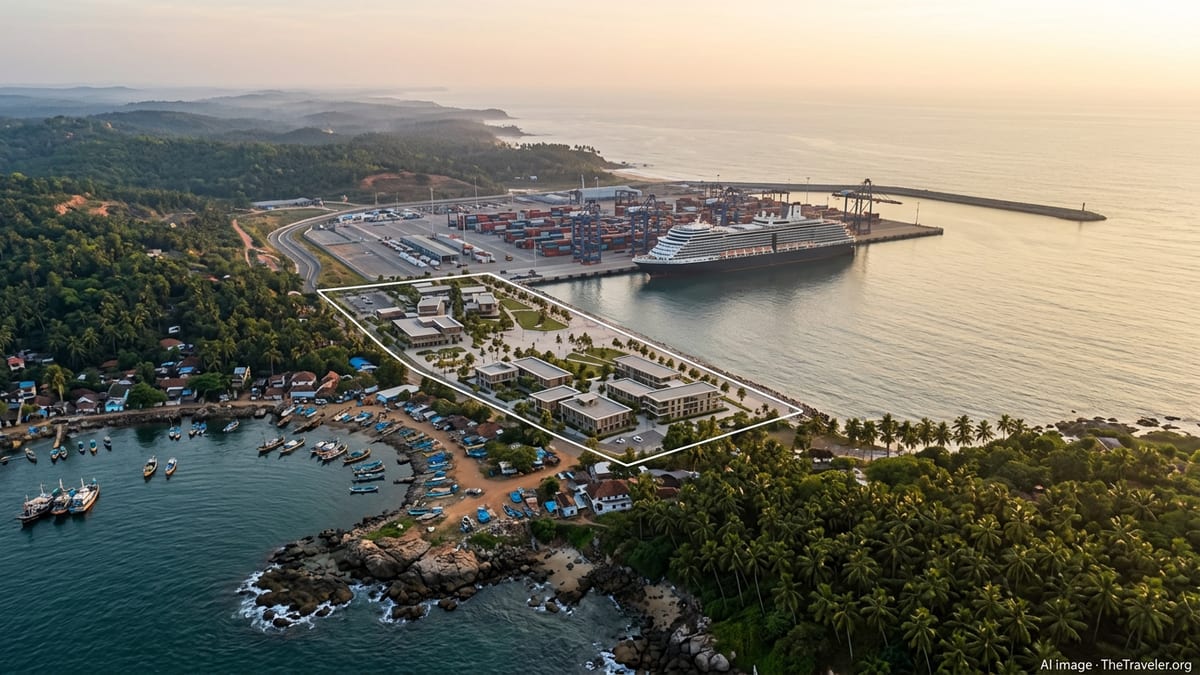
Plan for a Global-Standard Cruise Village
The proposal, submitted to Kerala’s ports minister, senior officials in the ports department and Vizhinjam International Seaport Ltd, outlines a dedicated cruise village designed to international benchmarks. The project would sit adjacent to the main port complex, adding a tourism-focused layer to a facility primarily conceived as a transshipment and container hub.
According to officials familiar with the plan, the cruise village is envisioned as an integrated waterfront zone for cruise passengers, combining arrival facilities with leisure, shopping and cultural experiences. The operator has requested about 20 acres on the landward side of the port, allowing the village to connect directly with the existing road network while remaining within the security perimeter of the terminal area.
The proposal is currently under consideration by the state government, and a final decision is expected to be shaped both by land availability and broader policy on tourism infrastructure along Kerala’s coastline. While formal agreements may take time, the move signals a clear intent to position Vizhinjam as more than a cargo gateway.
Tourism Push Along Kovalam–Vizhinjam Coastline
The planned cruise village is aimed at turning Vizhinjam into a new entry point for international leisure travelers to Kerala, complementing existing cruise calls at Mumbai, Goa, Kochi and Chennai. With Kovalam’s beaches located a short drive away and Thiruvananthapuram’s heritage core within easy reach, officials see the port as a natural anchor for curated shore excursions.
Project plans under discussion include a modern bus terminal within the village complex to ferry passengers to key attractions across the district. Priority routes are expected to cover Kovalam and nearby beaches, the temple and museum precincts in central Thiruvananthapuram, and cultural landmarks spread across the city’s coastal belt.
Local tourism stakeholders view the proposal as an opportunity to disperse visitor spending beyond traditional hotspots. A dedicated cruise hub, they argue, could extend stays, encourage repeat visits and support small businesses offering guided tours, homestays and niche experiences tied to Kerala’s coastal culture.
Marketplace, Cultural Hub and Passenger Services
Beyond basic terminal functions, the proposed village is being pitched as a compact urban district tailored to cruise travelers. Plans include a waterfront marketplace showcasing locally made products, handicrafts and souvenirs, giving artisans and small producers direct access to a higher-spending international clientele.
The village is also expected to feature restaurants and food courts serving regional cuisine, as well as cultural performance spaces where traditional music and dance can be staged for visiting groups. Officials say the aim is to create an environment where passengers can experience Kerala’s culture without having to travel far immediately after disembarkation.
Standard cruise-support infrastructure is also envisaged, including customs and security processing, tourist information counters, currency exchange, medical support and facilities for guided tour operators. The goal is to streamline the first and last mile of the cruise experience while encouraging passengers to explore the wider region during their time ashore.
Strengthening Vizhinjam’s Emerging Maritime Ecosystem
The cruise village proposal comes as Vizhinjam consolidates its role as India’s first deepwater container transshipment hub, built under a public–private partnership model and operated by Adani Ports. The port’s natural depth of around 20 metres and proximity to major east–west shipping lanes have already attracted large container vessels and positioned the facility as a competitor to regional hubs.
Recent announcements around phase-two development, including additional berths, cargo yards and rail-linked logistics infrastructure, underscore the state’s ambition to build a diversified maritime ecosystem around Vizhinjam. The cruise village would slot into this broader framework, adding a tourism-led revenue stream to a port complex otherwise dominated by container traffic and associated logistics.
Industry analysts say combining cargo operations with cruise tourism could help de-risk the long-term business model, spreading earnings across multiple segments. For Kerala, tying cruise growth to a strategically important port could strengthen the state’s case for further central and private investment in hinterland connectivity and coastal infrastructure.
Opportunities and Questions Ahead for Kerala Tourism
For Kerala’s tourism industry, a functioning cruise village at Vizhinjam would mark a significant shift in how international visitors enter the state. Instead of flying into Kochi or Thiruvananthapuram alone, travelers could arrive by sea on large cruise ships, sampling coastal destinations before potentially extending their stay inland.
At the same time, questions remain over timelines, land acquisition and integration with existing coastal communities. With elections on the horizon and regulatory clearances to navigate, officials acknowledge that any agreement is unlikely to be finalized immediately, even as preliminary planning work continues behind the scenes.
Local residents and business owners along the Kovalam–Vizhinjam stretch are watching developments closely, hoping that new investment will translate into jobs and improved services without overwhelming the fragile coastal environment. How the proposed cruise village balances growth with sustainability and community concerns is likely to shape public support as the project moves through the approval pipeline.