

More news on this day
Volotea is set to expand its footprint at Strasbourg Airport with new routes to Copenhagen, Granada and Porto, reinforcing the city’s role as a regional hub and widening nonstop options for travelers across eastern France.
Get the latest news straight to your inbox!
Strasbourg Base Gains Fresh Momentum
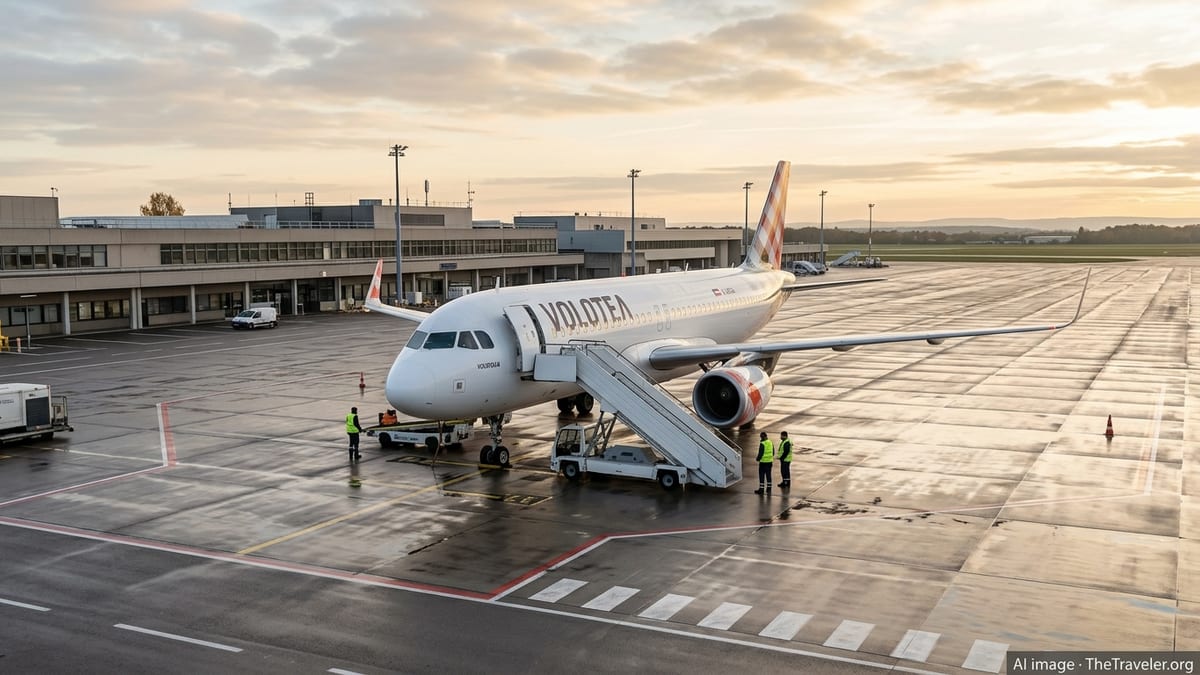
Publicly available information from Volotea and Strasbourg Airport indicates that the low-cost carrier is preparing a new phase of growth at its Alsace base, centered on additional links to Northern and Southern Europe. The latest development focuses on a trio of routes connecting Strasbourg with Copenhagen in Denmark, Granada in southern Spain and Porto in Portugal, complementing an already dense network of leisure and city-break destinations.
The expansion builds on several years of continuous growth for Volotea at Strasbourg. Recent airport and company documents highlight that the carrier has progressively become the leading airline at the airport in terms of destinations served, with capacity measured in available seats more than doubling since the base opened in the mid‑2010s. The addition of three more international routes aligns with that trajectory and underlines the airline’s strategy of focusing on medium-sized regional cities rather than major hubs.
Reports on planned capacity for 2025 and 2026 suggest that Volotea is prioritizing consolidation of its existing portfolio while selectively adding destinations with strong outbound and inbound demand potential. Copenhagen, Granada and Porto fit within that approach, offering a blend of cultural tourism, city breaks and VFR (visiting friends and relatives) traffic that is typically resilient across seasons.
For Strasbourg and the wider Grand Est region, the move enhances direct access to diverse parts of Europe without the need to route through larger airports such as Paris or Frankfurt. This is expected to be particularly attractive to passengers seeking short breaks and to cross-border travelers from nearby Germany and Switzerland looking for low-cost point-to-point options.
Copenhagen Link Strengthens Northern Europe Connectivity
The planned route between Strasbourg and Copenhagen connects two mid-sized European cities with strong cultural profiles and growing tourism flows. Copenhagen Airport functions as a major Scandinavian gateway, and publicly available schedule data show that links from secondary French cities to the Danish capital have been gaining in popularity, driven by both tourism and business travel.
Strasbourg’s position near the German border, combined with its role as a European institutional center, gives the new service a potentially wider catchment than its local population alone would suggest. Travelers from the Eurodistrict, including parts of Baden-Württemberg, may see the Copenhagen link as an appealing alternative to itineraries connecting via Frankfurt, Munich or Paris.
While detailed schedules and aircraft types for the Strasbourg–Copenhagen service are expected to follow closer to launch, Volotea generally deploys Airbus A319 and A320 aircraft on similar European routes. These narrowbody jets typically allow for two to three weekly frequencies in the early stages of a new route, with scope to add capacity if demand proves robust across both city-break and corporate segments.
The Copenhagen addition also aligns with broader patterns in European aviation in which regional carriers target under-served city pairs. By avoiding the most competitive trunk routes and focusing on point-to-point markets, Volotea aims to capture travelers who value direct connectivity and schedule convenience, particularly for long weekend trips.
Granada Route Targets Sun, Culture and Niche Demand
The forthcoming Strasbourg–Granada route underscores Volotea’s continued emphasis on Spanish leisure markets, a core part of the airline’s network. Granada, known for the Alhambra and its historic neighborhoods, has become an increasingly visible destination for travelers seeking culture-focused stays that differ from Spain’s classic coastal resorts.
Regional tourism statistics for Andalusia in recent years point to sustained growth in international arrivals, including from France, as high-speed rail links and a diversified air network make secondary cities more accessible. A nonstop flight from Strasbourg positions Granada as a convenient long-weekend or short-holiday option for residents of Alsace and neighboring regions who might otherwise connect via Madrid, Barcelona or Paris.
Market observers note that such routes typically draw a mix of outbound French leisure demand and inbound traffic from Spain. Alsace’s Christmas markets, wine tourism and proximity to the Black Forest in Germany are established draws for international visitors, and a direct Granada link may encourage new itineraries that combine city-hopping and multi-country trips.
Operationally, Volotea has considerable experience serving smaller Spanish airports from French regional cities, often with two or three weekly flights concentrated around peak leisure travel days. The Strasbourg–Granada service is expected to follow a comparable pattern, with timing designed to enable extended weekend breaks while maintaining efficient aircraft utilization across the carrier’s wider network.
Porto Service Builds on Growing Portuguese Demand
The announcement of a Strasbourg–Porto route continues a wider trend of growing air connectivity between France and Portugal. Porto in particular has emerged as a favored destination for European city-break travelers, combining a compact historic center with strong food and wine appeal. Air traffic data for Portugal over recent years show rising volumes from France, reflecting both tourism and a sizable Portuguese diaspora.
Strasbourg Airport communications already highlight Porto among recent additions to the local route map, with launch timing typically positioned around the winter or shoulder seasons to take advantage of milder Atlantic weather and off-peak city tourism. For Volotea, Porto complements existing Portuguese operations and allows the airline to diversify demand beyond summer-only beach destinations.
From a network-planning perspective, the Strasbourg–Porto route fits Volotea’s focus on short- to medium-haul sectors of around two hours, where low-cost carriers can optimize aircraft productivity and maintain competitive fares. The city’s established profile among European travelers also lowers the marketing barrier compared with entirely new or lesser-known destinations.
For passengers in eastern France, a direct link to Porto reduces the need for connections through Paris or other hubs and may appeal particularly to travelers planning wine-focused itineraries in the Douro Valley or extended trips that combine northern Portugal with Galicia in Spain. It also reinforces Strasbourg’s position as a departure point not only for domestic flights but for a growing portfolio of European city gateways.
Strategic Outlook for Strasbourg as a Regional Hub
The addition of routes to Copenhagen, Granada and Porto contributes to a broader repositioning of Strasbourg as a stronger regional hub for low-cost and leisure-focused operations. Airport documents and recent traffic figures indicate that Volotea has played a central role in this evolution, progressively adding destinations and capacity while other carriers concentrate on major French and European hubs.
Industry analysts often highlight that such strategies can enhance regional economic activity by simplifying access for tourists and by facilitating outbound travel for local residents. Better direct connectivity typically supports sectors ranging from hospitality and events to export-oriented businesses that benefit from easier links to partners and clients abroad.
Looking ahead, available planning information points to a period of relative stability in Volotea’s overall capacity at Strasbourg, with growth focused on fine-tuning the destination mix rather than large-scale increases in seats. The three new routes fit within that framework, providing fresh options for travelers while relying on aircraft and crew resources already positioned at the base.
As schedules for upcoming seasons are finalized, travelers from the Grand Est region and neighboring countries can expect Strasbourg’s departure boards to reflect a network that stretches from northern Europe to the Iberian Peninsula. The new connections to Copenhagen, Granada and Porto are set to play a prominent role in that evolving map, reinforcing Strasbourg’s profile as a practical starting point for European city breaks.