

More news on this day
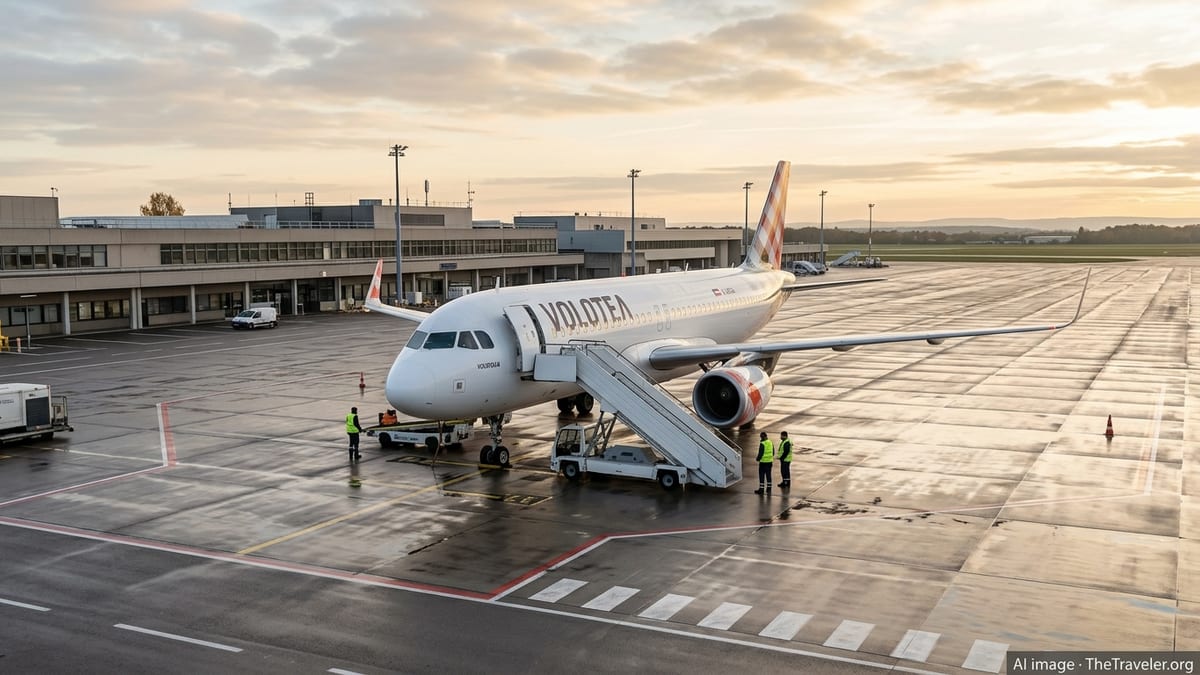
Spanish low-cost carrier Volotea is set to reinforce its Strasbourg hub with new routes to Copenhagen, Granada, and Porto, expanding cross-border connectivity from eastern France to both northern Europe and the Iberian Peninsula, according to recently published schedules and network data.
Get the latest news straight to your inbox!
Strasbourg Hub Strategy Enters a New Phase
The latest additions to Volotea’s network mark another step in the growth of Strasbourg as one of the airline’s key French bases. Publicly available information on the carrier’s route map and third-party schedule aggregators shows direct links between Strasbourg and Copenhagen in Denmark, Granada in southern Spain, and Porto in northern Portugal joining the network, broadening the airline’s European reach from the Grand Est region.
These routes complement an existing portfolio of domestic and leisure destinations from Strasbourg that has been steadily expanded over recent seasons. Previous announcements from the airport and the airline highlighted a focus on medium-size European cities and underserved leisure markets, positioning Volotea as a specialist in point-to-point connectivity beyond major hubs.
The Strasbourg hub strategy is aligned with Volotea’s broader European footprint, which centers on secondary and regional airports. Industry analyses of the carrier’s network underline a pattern of linking mid-sized cities such as Strasbourg, Nantes, and Bordeaux to holiday and city-break destinations across the Mediterranean and Atlantic coasts.
By adding Copenhagen, Granada, and Porto to the Strasbourg offering, Volotea is strengthening this model and reinforcing its role as a key operator in France’s regional aviation landscape.
New Links to Copenhagen, Granada, and Porto
Route-mapping services and airline schedule databases indicate that the Strasbourg hub will now connect directly to Copenhagen Airport, one of Scandinavia’s primary gateways. The link is expected to cater to both leisure and limited business demand, giving travelers in eastern France a new low-cost option to reach the Danish capital and onward connections across northern Europe.
At the same time, Volotea is adding Granada to the network from Strasbourg, creating a direct bridge between Alsace and Andalusia. Granada, situated at the foot of Spain’s Sierra Nevada mountains, is a popular city-break destination with strong cultural appeal, and the route taps into growing demand for short-haul escapes to southern Spain.
The third new route connects Strasbourg with Porto, Portugal’s second city and a major tourism magnet in its own right. Flight-search platforms and airport planning documents show Volotea positioned as a non-stop operator between the two cities, offering an alternative to itineraries that previously required at least one connection via larger hubs.
All three routes fit Volotea’s strategy of targeting medium-density markets that can sustain a few frequencies per week rather than high-frequency business corridors. While detailed seasonal patterns and exact weekly rotations may evolve, early schedule data suggests a focus on peak travel periods and weekend-friendly operations.
Strengthening Connectivity for Eastern France
The expanded Strasbourg network is expected to boost international access for the wider Grand Est region. For travelers based in and around Strasbourg, the new services reduce the need to route via Paris or Frankfurt for trips to Denmark, southern Spain, or northern Portugal, cutting travel times and simplifying itineraries.
From a regional perspective, the new connections add to Strasbourg Airport’s efforts to position itself as a practical gateway for both outbound and inbound tourism. Travel industry observers note that direct flights to cities such as Copenhagen, Granada, and Porto can support city-break traffic in both directions, encouraging Scandinavian, Spanish, and Portuguese visitors to discover Alsace and its surrounding regions.
Improved connectivity also supports local economic actors who benefit from more diverse links to European markets. While Volotea’s model is primarily leisure-oriented, small and medium enterprises, academic institutions, and cross-border organizations often rely on such routes for occasional business travel and project-based exchanges.
The development is particularly notable at a time when regional airports across Europe are competing to secure stable, year-round routes. Adding three distinct international destinations from a single carrier signals confidence in the Strasbourg catchment area and its potential to sustain point-to-point services.
Competitive Dynamics in the Regional Airline Market
Volotea’s move in Strasbourg unfolds against a backdrop of intensifying competition among low-cost and hybrid carriers in France. Network updates from rivals show new services and capacity adjustments at other regional airports, as airlines compete to capture leisure demand and replace routes previously operated by legacy carriers.
Market commentators highlight that adding Copenhagen, Granada, and Porto from Strasbourg places Volotea in a stronger position within the regional segment, particularly on routes that are either unserved or lightly contested. In several comparable markets, low-cost operators have been quick to occupy gaps left by restructuring at national carriers, and Volotea’s strategy in eastern France appears consistent with this broader trend.
The choice of destinations also reflects a balancing act between seasonality and diversification. Copenhagen offers a blend of city-break and business-related demand, while Granada and Porto are heavily driven by leisure, visiting friends and relatives, and cultural tourism. This combination can help smooth demand peaks across different periods of the year.
As with other European regional airports, the sustainability of these new links will likely depend on load factors, fare discipline, and the broader macroeconomic environment. Analysts note that carriers such as Volotea often refine schedules and adjust frequencies after initial seasons based on route performance.
What Travelers Can Expect
For passengers, the introduction of new Volotea routes from Strasbourg opens up additional non-stop options to three distinct European city profiles. Copenhagen offers a northern European capital with strong design, culinary, and waterfront attractions, while Granada provides access to Andalusian heritage sites and the nearby Sierra Nevada. Porto, meanwhile, combines historic riverside neighborhoods with access to the Douro Valley wine region.
Schedule data published on booking platforms suggests that Volotea is focusing on convenient departure times for short breaks, with operations aimed at maximizing weekend and holiday travel. As with many low-cost carriers, travelers can expect a no-frills base fare structure with optional extras such as checked luggage, seat selection, and priority boarding available at additional cost.
The routes also fit into broader patterns of shifting travel behavior, with many European travelers favoring multiple shorter trips across the year instead of a single long holiday. Direct flights from regional airports like Strasbourg can support this trend by reducing the time and complexity associated with connecting via major hubs.
With the addition of Copenhagen, Granada, and Porto, Strasbourg’s role within Volotea’s network is set to grow further, consolidating the city’s position on the map of European low-cost air travel as airlines and airports continue to adapt to evolving demand patterns.