

More news on this day
Volotea is preparing to link Strasbourg and Copenhagen with a new direct route, adding fresh capacity between Denmark and the French carrier’s fast-growing network across France, Germany, Spain, Italy, Greece, Morocco and Portugal.
Get the latest news straight to your inbox!
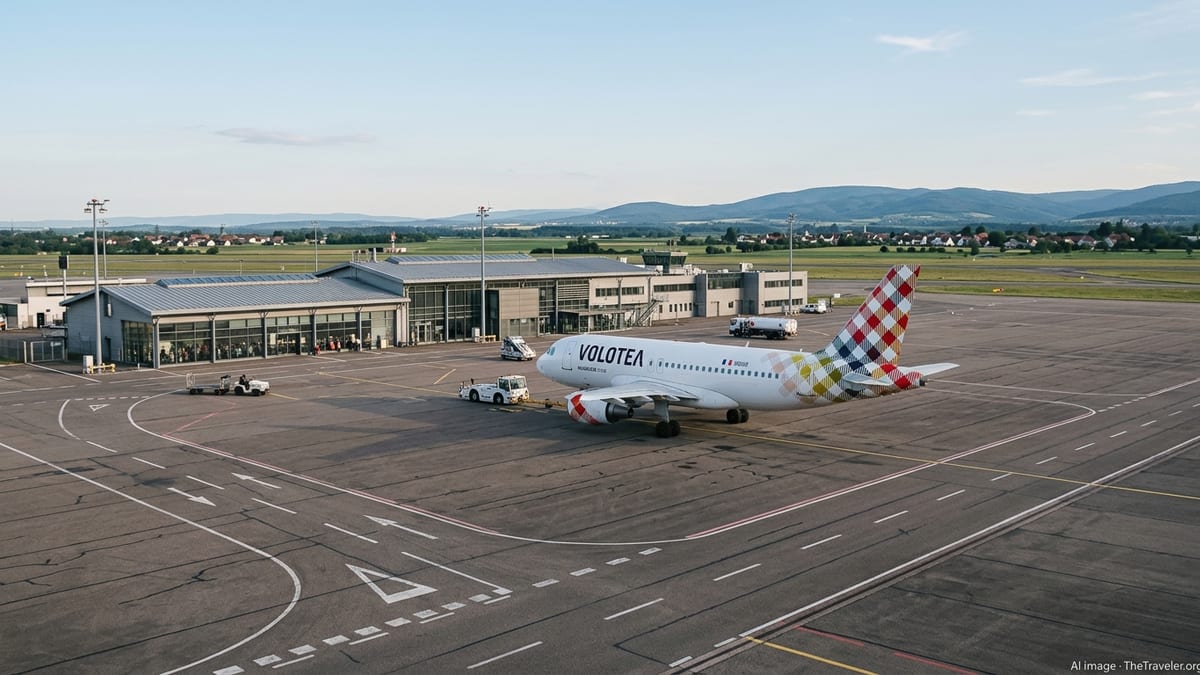
New Cross-Border Link Between Alsace and Scandinavia
The planned Strasbourg–Copenhagen connection positions Volotea to tap rising demand for short-break and holiday travel between central Europe and the Nordic region. Publicly available booking data and route updates indicate that the carrier is steadily adding links between its regional French bases and northern Europe, with Copenhagen emerging as one of its key gateways in Denmark.
The route is expected to serve both leisure travelers and business passengers drawn by Copenhagen’s role as a major Scandinavian hub and Strasbourg’s status as a European institutional center. The combination offers a mix of city-break tourism, political and institutional travel, and connecting options via onward flights from Copenhagen to the wider Nordic region.
Industry coverage of Volotea’s recent expansion strategy shows the airline focusing on point-to-point links between secondary and midsize cities rather than traditional hub-and-spoke models. The Strasbourg–Copenhagen service follows this pattern, giving residents in eastern France and neighboring Germany a nonstop option to Denmark without transiting through Paris or larger European hubs.
While detailed seasonal patterns and weekly frequencies are still being refined in airline reservation systems, initial indications point to a schedule aligned with weekend and holiday peaks. That reflects Volotea’s broader approach at its French bases, where flights are often timed to capture city-break traffic and school-holiday demand.
Strasbourg Strengthened as a Regional Base
Strasbourg has emerged as one of Volotea’s most important bases, with the carrier steadily building up a portfolio of domestic and international routes over the past decade. Published data for 2026 show the airline preparing to serve close to 30 destinations from Strasbourg, underlining its position as the airport’s leading operator by number of routes.
Recent announcements highlight new services from Strasbourg to Munich, Florence, Porto and Agadir, as well as increased capacity on existing leisure routes. Reports indicate that the Strasbourg–Munich service, operated under a public-service delegation, is scheduled to begin in April 2026, adding a key business and connecting market to the network.
By layering a new connection to Copenhagen onto this existing structure, Volotea is turning Strasbourg into a more versatile origin and destination airport. The city already acts as a gateway to Alsace, the Black Forest and the Upper Rhine region, attracting travelers from both France and southwestern Germany. Additional northern European links can broaden that catchment further, particularly for passengers seeking direct flights to Denmark without using larger hubs.
The enhanced network also appears to be a strategic response to shifts in the competitive landscape. Low cost competitors have scaled back some activity at French regional airports, and publicly available schedule data show Volotea stepping in on certain markets from Strasbourg, consolidating its role as a key carrier for the Grand Est region.
Connecting Denmark With Southern Europe’s Leisure Hotspots
Copenhagen is one of several Nordic gateways that European low cost carriers have been targeting for growth, particularly for links to Mediterranean and Atlantic leisure destinations. Volotea’s wider network shows flights between Denmark and a roster of cities in France, Germany, Spain, Italy, Greece, Morocco and Portugal, with routes typically concentrated in the spring, summer and early autumn months.
From Strasbourg, travelers bound for Denmark will gain new options for combined itineraries that include onward travel to Spanish coastal cities, Italian art capitals, Greek islands, Moroccan sun destinations or Portuguese seaside towns. Publicly accessible route maps and fare pages show the airline marketing Copenhagen alongside these established holiday markets, positioning the Danish capital as both a city-break destination and a connecting point.
For Danish travelers, the link to Strasbourg opens a direct path to one of Europe’s most picturesque regions, as well as access to Volotea’s French domestic and southern European routes. Passengers can use Strasbourg as a springboard to destinations such as Mediterranean France, Italian regional cities, Spanish coastal airports, Greek island gateways, Moroccan leisure markets and Portuguese resort areas served by the carrier.
The strategy aligns with broader trends in European aviation, where low cost airlines increasingly use secondary airports and regional bases to create bespoke holiday corridors. Rather than channeling all traffic through a single hub, airlines like Volotea are building networks of seasonal and year-round links tailored to specific flows, such as Scandinavia to southern Europe or central Europe to Atlantic islands.
Network Growth and Capacity Plans for 2026
Recent industry reports describe 2026 as a year of accelerated expansion for Volotea across its European network. The airline is opening new bases, adding aircraft at existing stations and rolling out additional cross-border services from France, Italy and Spain. Data published by airports and aviation analysts show new routes from Florence to cities including Strasbourg and Berlin, as well as fresh capacity from French regional airports to Scandinavian and central European destinations.
At Strasbourg specifically, estimates for 2026 suggest a substantial increase in available seats compared with the year the base opened, with projections indicating that total capacity could approach the one million mark on an annual basis. The planned Strasbourg–Copenhagen service fits into that broader capacity build-up, adding another international destination to a list that already includes cities in Germany, Spain, Italy, Greece, Morocco and Portugal.
For Copenhagen, Volotea’s arrival on the Strasbourg route would add to a diverse mix of incumbent carriers that link the Danish capital with major hubs and regional cities across Europe. While the airline remains a niche presence in the Nordic market compared with long-established competitors, its focus on city-pair combinations such as Strasbourg–Copenhagen introduces new options for travelers who previously faced one or more connections.
Forward-looking schedule information suggests that routes of this kind are generally operated with narrowbody aircraft in all-economy configurations, with a focus on keeping unit costs low and fares competitive. Frequency is often limited to a few flights per week in the early stages, with the possibility of additional services if demand materializes.
Implications for Travelers Across France, Germany and Beyond
The addition of a direct Strasbourg–Copenhagen service is likely to resonate beyond passengers originating in Strasbourg itself. The airport’s location near the German border and its rail links to cities such as Freiburg and Karlsruhe make it a realistic option for German travelers seeking new flight choices. Some may find that flying from Strasbourg to Copenhagen is more convenient or competitively priced than using larger hubs further west or north.
Publicly available connectivity studies for the region already highlight Strasbourg’s role as an access point for international travel from parts of eastern France and southwestern Germany. A new link to Denmark would add another layer of choice for residents who might otherwise travel overland to larger airports.
For travelers based in Denmark, the route opens up alternative pathways into continental Europe that bypass more congested hubs. Once in Strasbourg, they can connect onto Volotea’s network serving French regional cities, Iberian sun destinations, Italian cultural centers, Greek holiday islands, Moroccan coastal resorts and Portuguese leisure markets, often with schedules tailored to weekend and holiday demand.
As with any new airline route, the long-term success of the Strasbourg–Copenhagen link will depend on sustained demand, competitive pricing and operational reliability. For now, early indications from schedules and network announcements suggest that Volotea views the connection as part of a wider strategy to deepen its presence at Strasbourg while testing new city-pair opportunities between Denmark and the airline’s core markets in France and southern Europe.