

More news on this day
War jitters linked to the escalating conflict with Iran are casting a new shadow over Greece, Turkey and Cyprus, unsettling early bookings and testing the resilience of the Eastern Mediterranean’s tourism boom just weeks before the main summer season.
Get the latest news straight to your inbox!
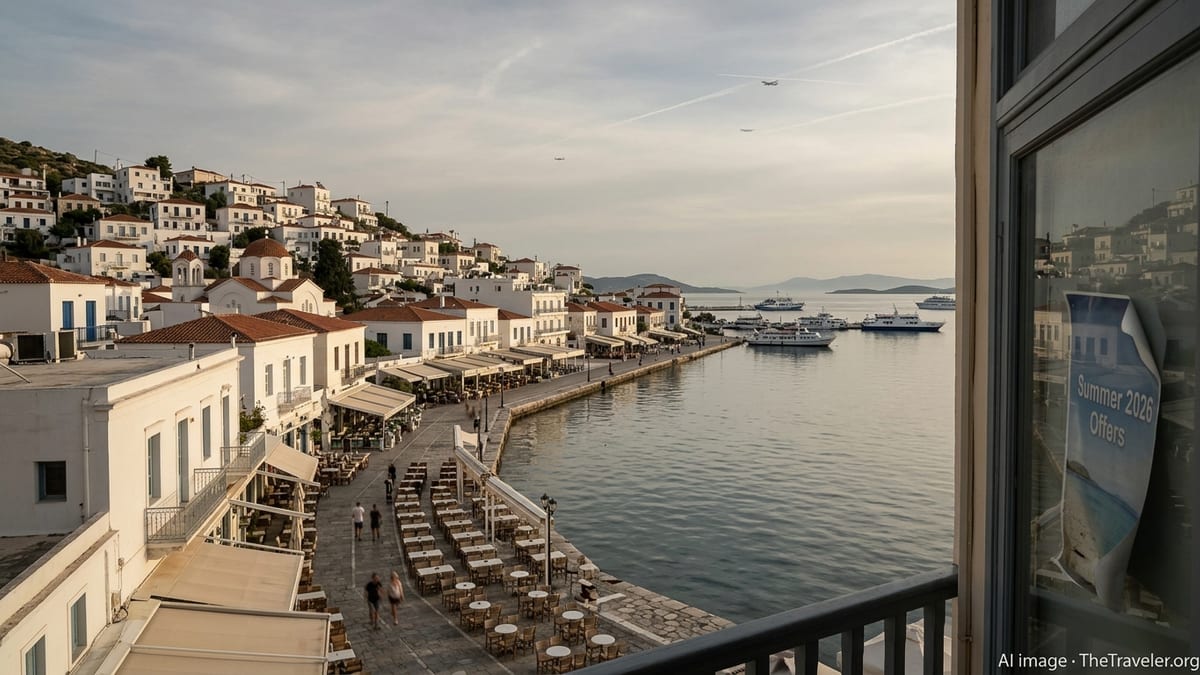
Middle East Crisis Pushes War Clouds Over the Eastern Mediterranean
The closure of the Strait of Hormuz to most commercial shipping since late February and the subsequent aerial campaign to reopen the waterway have reinforced perceptions that the wider region around Iran is at heightened risk. Publicly available information shows that Iranian officials have coupled missile drills and naval maneuvers with warnings of a stronger response in any renewed confrontation with Israel, adding to fears of a broader regional escalation.
Although no active fighting is taking place on the territory of Greece, Turkey or the Republic of Cyprus, many travelers see the Eastern Mediterranean as a single, volatile neighborhood stretching from the Greek islands to the Gulf. Analysts note that the drone attack on the British military base at Akrotiri in Cyprus in early March, attributed to forces aligned with Iran, deepened concerns that regional power competition is spilling into traditionally safe holiday zones.
Regional think-tank assessments highlight that critical energy and transport infrastructure in the Eastern Mediterranean is increasingly exposed to drones, missiles and maritime coercion. These vulnerabilities, once confined to specialist security debates, are now filtering into mainstream European media coverage and consumer travel advisories, directly shaping how potential visitors assess risk.
Against this backdrop, the Eastern Mediterranean’s long-standing disputes over maritime borders, hydrocarbons and security alignments are being reframed through the lens of the Iran crisis, further complicating the picture for the travel industry.
Bookings Fall as Tourists Reconsider Greece, Turkey and Cyprus
Recent reports from European travel companies indicate that holidaymakers are already reshuffling their plans. Coverage in major outlets describes a clear shift in demand away from the Eastern Mediterranean, particularly Turkey, Cyprus and parts of Greece, toward destinations perceived as further removed from the conflict zone, such as Spain, Italy, Malta, Croatia and long-haul Caribbean resorts.
According to published travel-industry analysis, bookings to Turkey, Greece, Cyprus and Egypt have slowed or reversed compared with last year, even though these destinations collectively posted record arrivals and revenues in 2025. The pattern reflects a familiar dynamic in times of geopolitical tension: large tour operators and online agencies react quickly to fluctuations in perceived safety, rerouting capacity and marketing budgets to alternative sunbelt markets.
Greek tourism data for 2025 showed nearly 38 million foreign visitors and revenues of more than 23 billion euros, underlining how central the sector has become to the national economy. In Cyprus, arrivals exceeded 4.5 million last year, an all-time high that significantly boosted growth. Turkey also depended heavily on a strong 2025 season, despite earlier headwinds from currency volatility and domestic economic strain.
Now, however, reports suggest that early summer 2026 bookings are softening in all three destinations, particularly from key European source markets. Analysts emphasize that even modest percentage declines can translate into substantial revenue losses given how elevated the 2025 base was. Tour operators warn that the main question is not only the severity of the current dip, but how long the conflict and associated airspace and shipping disruptions will last.
Iran’s Reach and the Perception of Risk in Holiday Markets
The strategic geography of the region is central to the new wave of anxiety. Defense reporting on Iran’s ballistic and cruise missile programs, as well as its network of allied armed groups, frequently highlights range circles that encompass much of the Eastern Mediterranean, including parts of Greece, Turkey and Cyprus. Recent European press coverage pointedly noted that more than 13 million Germans who traveled to Greece, Turkey, Egypt and Cyprus in 2025 had chosen destinations that lie within theoretical missile range.
Security analysts also underline that asymmetric tactics used by Iranian-aligned actors in the Red Sea and Gulf of Aden, including attacks on commercial vessels, have reoriented attention toward sea lines of communication that connect the Suez Canal, the Levant and the Mediterranean. Any perception that similar tactics could one day be deployed closer to European shores amplifies unease among travelers unfamiliar with the complexities of military targeting and risk management.
In practice, major resort zones on the Turkish Riviera, the Greek islands and the Cypriot coast remain far from active battlefields. Tourism boards and hotel associations in the region have issued repeated reassurances that security conditions at established destinations are stable and that airports and ports are functioning normally. Yet tourism research indicates that perception often outweighs reality: a single high-profile incident, advisory or viral social media post can outweigh years of positive experience in the minds of would-be visitors.
For the Eastern Mediterranean, Iran’s defiant messaging and its vow to respond to perceived threats intertwine with preexisting tensions over Cyprus, maritime boundaries and military deployments. The result is a layered risk narrative in which distant developments in the Gulf are mentally mapped onto beaches and islands hundreds of kilometers away.
Old Disputes, New Pressures: Greece, Turkey and Cyprus on Edge
The latest shock comes atop decades of unresolved friction among Greece, Turkey and Cyprus. NATO partners Greece and Turkey continue to disagree over maritime boundaries, airspace and drilling rights in the Aegean and Eastern Mediterranean, while the island of Cyprus remains divided between the internationally recognized Republic and the Turkish-controlled north.
In recent months, public statements from Athens and Ankara have stressed dialogue, yet the long-standing Turkish parliamentary declaration that potential Greek territorial waters expansion in the Aegean would constitute a casus belli still looms large in regional commentary. Commentators argue that even when direct confrontation appears unlikely, such background threats reinforce a generalized sense of volatility that worries investors and travelers alike.
Cyprus, meanwhile, finds itself uncomfortably close to the epicenter of the Iran crisis. The drone strike on the Akrotiri base in early March, coupled with prior concerns over military buildup in Northern Cyprus, has fed narratives that the island could become a staging ground or target in a broader conflict. Analysts point out that Cyprus also plays a pivotal role in energy and telecommunications infrastructure, further sharpening its strategic profile.
At the same time, Greece, Cyprus and Israel have sought to deepen their trilateral cooperation on energy, defense and tourism. Policy papers describe this emerging axis as a counterweight to regional instability and a way to present the Eastern Mediterranean as a zone of coordinated security management. How that message resonates with mass-market holidaymakers over the coming months remains uncertain.
Tourism Sector Braces for a Volatile 2026 Season
Industry experts note that the Eastern Mediterranean has repeatedly demonstrated resilience in the face of shocks ranging from the eurozone crisis to the pandemic. Market research on past conflicts suggests that leisure travel often rebounds within one or two summer seasons once visible deescalation occurs and headlines move on, even if lost bookings in the immediate year cannot be recaptured.
For summer 2026, however, operators are preparing for a more uneven landscape. Airlines are adjusting schedules around affected air corridors, potentially lengthening flight times and raising costs into the region. Cruise lines that traditionally included Eastern Mediterranean ports in broader itineraries are reviewing routes in light of maritime security assessments and insurance conditions.
Destination marketing organizations in Greece, Turkey and Cyprus are expected to intensify campaigns highlighting safety records, diversified experiences and the physical distance between their resorts and active conflict zones. Some are also quietly exploring price incentives, flexible cancellation policies and targeted outreach to markets less sensitive to Middle East developments in order to cushion potential downturns from northern Europe.
For travelers, the new uncertainty presents a familiar trade-off between risk perception and value. While many will still opt for the Aegean and Eastern Mediterranean, a significant share is likely to experiment with alternatives in the western Mediterranean or beyond. The coming months will show whether war clouds on the horizon merely dull the region’s shine temporarily, or mark a more serious downsizing of its tourism dreams for 2026.