

More news on this day
Thousands of travelers in Turkey, Israel and Qatar are facing rolling cancellations and lengthy delays as regional airspace closures linked to the Iran war ripple through major hubs in Istanbul, Tel Aviv, Doha and Brussels.
Get the latest news straight to your inbox!
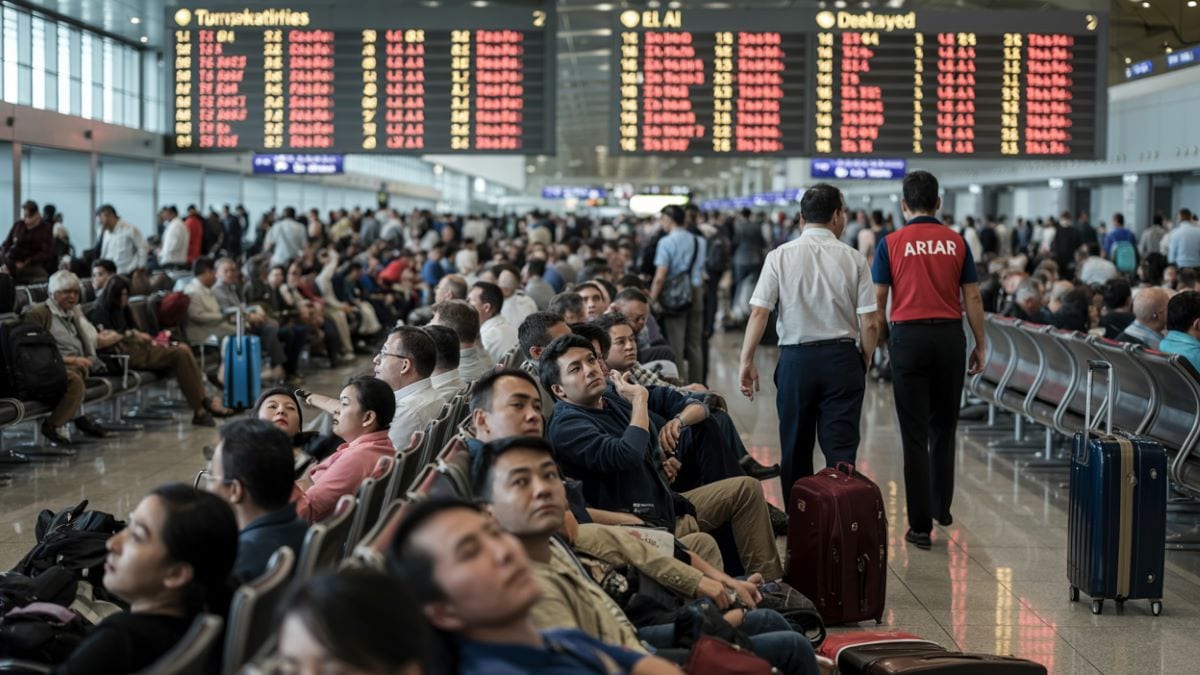
Image by Travel And Tour World
Airspace closures trigger cascading disruptions
Publicly available information indicates that widespread flight disruption across the Middle East began after joint United States and Israeli strikes on Iran on 28 February 2026, followed by retaliatory missile and drone attacks that prompted several governments to close their skies. Aviation and conflict monitoring reports describe Bahrain, Iraq, Israel, Kuwait, Qatar, Syria and the United Arab Emirates among the states that have severely restricted or fully closed airspace, forcing airlines to cancel services or divert aircraft onto longer routes.
Qatar’s airspace was among the first to shut following Iranian missile barrages that targeted, among other locations, the area around Hamad International Airport in Doha. Civil aviation notices and local press coverage state that standard commercial traffic in and out of Doha has been largely suspended for most of March, with only limited emergency, evacuation and cargo flights permitted on tightly controlled routes. Flight-status tools show that Qatar Airways has maintained a skeleton operation, but that most of its usual long-haul network remains disrupted.
In Israel, published timetables and airport data for Tel Aviv’s Ben Gurion Airport show repeated waves of cancellations by multiple carriers since late February. El Al, Israel’s flag carrier, has continued to operate select services using adjusted routings and schedules, but industry trackers point to dozens of scrubbed or rescheduled flights every week as aircraft avoid conflict zones and navigate shifting government restrictions.
Turkey’s large role as a bridge between Europe, the Middle East and Asia has magnified the impact in Istanbul. Data collated by flight-tracking and analytics firms suggests that Turkish Airlines has cancelled a significant share of its services to Gulf destinations, Iran and Israel since the escalation began, while maintaining most of its European and domestic schedule. Even where flights remain on the board, congestion and rerouting frequently translate into missed connections and extended delays.
Turkish Airlines adjusts network as Istanbul feels the strain
Istanbul Airport and Sabiha Gökçen, the city’s two main aviation gateways, have been operating well below their usual early-spring capacity, according to traffic statistics released by airport operators and independent databases. Routes linking Istanbul to Doha, Tel Aviv and other Gulf and Levant destinations are among the worst affected, with Turkish Airlines and other regional carriers cutting frequencies or temporarily withdrawing service.
Travelers transiting Istanbul report on social platforms that overnight queues at transfer desks have become common as disrupted services from the Middle East arrive off-schedule or not at all. Accounts shared publicly describe passengers sleeping in terminal seating while waiting for rebooking onto scarce seats to Western Europe and North America. In some cases, rerouted itineraries involve detours via secondary European hubs such as Brussels, Vienna or Zurich instead of the usual nonstop Gulf connections.
Operationally, Turkish Airlines appears to be prioritizing core European and domestic routes while trimming flights that would normally traverse or approach restricted airspace. Industry observers note that this strategy can keep a larger share of the fleet productive, but it also concentrates demand onto a reduced number of departures. The result, according to multiple passenger reports, is fuller aircraft, higher standby lists and a heightened risk of being bumped from oversold flights, particularly on long-haul services that connect through Istanbul.
With summer timetables due to begin across Europe, schedule filings show airlines attempting to maintain planned seasonal growth out of Istanbul despite the regional turmoil. Analysts caution, however, that any further deterioration in the security situation or extension of airspace closures could force another round of revisions, with Istanbul-bound passengers advised by travel agents and consumer advocates to monitor bookings closely.
Qatar Airways grapples with near-paralysis in Doha
Doha, typically one of the world’s busiest long-haul transfer hubs, has seen an abrupt collapse in passenger throughput since the start of the conflict. Reports from Hamad International Airport and Qatar’s civil aviation authorities describe a phased reopening of air navigation under “limited emergency conditions,” initially focused on evacuating foreign nationals and maintaining critical cargo flows rather than restoring ordinary commercial services.
Qatar Airways, which is heavily reliant on sixth-freedom transfer traffic, has been among the hardest hit. Airline advisories and widely shared passenger experiences indicate that hundreds of flights across its network have been cancelled outright, with many others blocked from sale. Travelers whose itineraries previously routed through Doha are being offered refunds, date changes or rerouting via partner and non-partner airlines, often through Istanbul, European hubs or Gulf airports that retain partial operations.
Consumer forums and social media posts highlight the challenges this creates for passengers stranded in Doha. Some describe multiple failed attempts to secure alternative routes out of Qatar as limited seats on available departures quickly sell out. Others recount being rebooked from suspended Qatar Airways flights onto Turkish Airlines or European carriers, only to face further disruption when those onward legs are delayed or cancelled due to knock-on congestion.
Although planning documents and airline-facing bulletins refer to a target of late March for a more comprehensive restart of Qatar Airways services, the pace and scale of any resumption remain highly dependent on regional security assessments and the easing of airspace restrictions. Travel industry commentators warn that even once routine flights through Doha resume, clearing the backlog of disrupted journeys could take weeks.
El Al’s constrained operations ripple into Europe
In Israel, El Al and foreign carriers serving Tel Aviv have been operating in an environment of heightened security checks and intermittent airspace constraints. Airport movement logs and schedule summaries suggest that a notable portion of El Al’s network has continued to run, but with frequent last-minute adjustments in departure times and routings, as well as temporary suspensions on certain regional links.
The impact extends well beyond Israel’s borders. European airports that handle a high volume of Middle East traffic, including Brussels, Frankfurt, Paris and London, are reporting clusters of late arrivals and missed connections tied to flights originating in or re-routed around the eastern Mediterranean. Brussels in particular, which serves as both a European Union political hub and a transfer point for Africa and North America, has seen waves of stranded passengers as disrupted services from Tel Aviv, Istanbul and Doha converge on already busy terminals.
Travelers arriving in Brussels on delayed flights from the region have described, in public online posts, long waits at transfer counters, limited hotel availability and difficulty securing new seats to onward destinations. Airline customer-service teams, facing simultaneous disruption across several hubs, are reportedly struggling to keep hold times and airport queues under control, especially during peak travel days.
As in Istanbul and Doha, the strain on European hubs highlights how a regional airspace crisis can quickly reverberate through the global network. Even where flights are not cancelled, extended routings around closed skies increase block times and reduce schedule resilience, meaning that relatively minor delays can cascade across multiple sectors and leave aircraft, crews and passengers out of position.
Passengers navigate a maze of delays, reroutes and backlogs
For individual travelers, the most immediate effects of the current disruption are measured in missed holidays, delayed business trips and long hours spent in terminals. Publicly shared experiences from passengers attempting to travel through Istanbul, Doha and Tel Aviv describe a patchwork of outcomes, ranging from relatively smooth same-day reroutings to multi-day odysseys involving several carriers and unexpected layovers in third countries.
Consumer advocates note that passengers face a complex landscape of rights and remedies that vary depending on the airline, point of origin and applicable regulations. In the European Union, for example, certain delays and cancellations on flights operated by Turkish Airlines or European carriers may trigger compensation or care obligations, while services operated by non-EU airlines from non-EU airports are often governed only by each carrier’s own policies. The extraordinary nature of the current security-driven airspace closures further complicates claims, as airlines frequently classify such events as outside their control.
Travel industry guidance circulating online encourages passengers to keep all documentation of disruption, regularly check airline apps and booking tools for automatic rebooking, and consider alternative routings through unaffected hubs where possible. Some travelers have reported success asking carriers to reroute them via partner airlines such as Turkish Airlines or European network carriers, although capacity on these alternatives is limited and subject to overbooking.
With no definitive timeline for a full restoration of pre-crisis flight patterns in the region, analysts expect that passengers connecting through Turkey, Israel and Qatar will face an elevated risk of disruption for some time. Prospective travelers are being advised by tour operators and booking platforms to build extra buffer time into itineraries, remain flexible on routing, and stay alert to evolving advisories and schedule changes.