

More news on this day
Thousands of passengers have been left in limbo across Turkey, Israel and Qatar as conflict-related airspace closures and operational restrictions trigger cascading cancellations and delays from Istanbul and Doha to Brussels and beyond.
Get the latest news straight to your inbox!
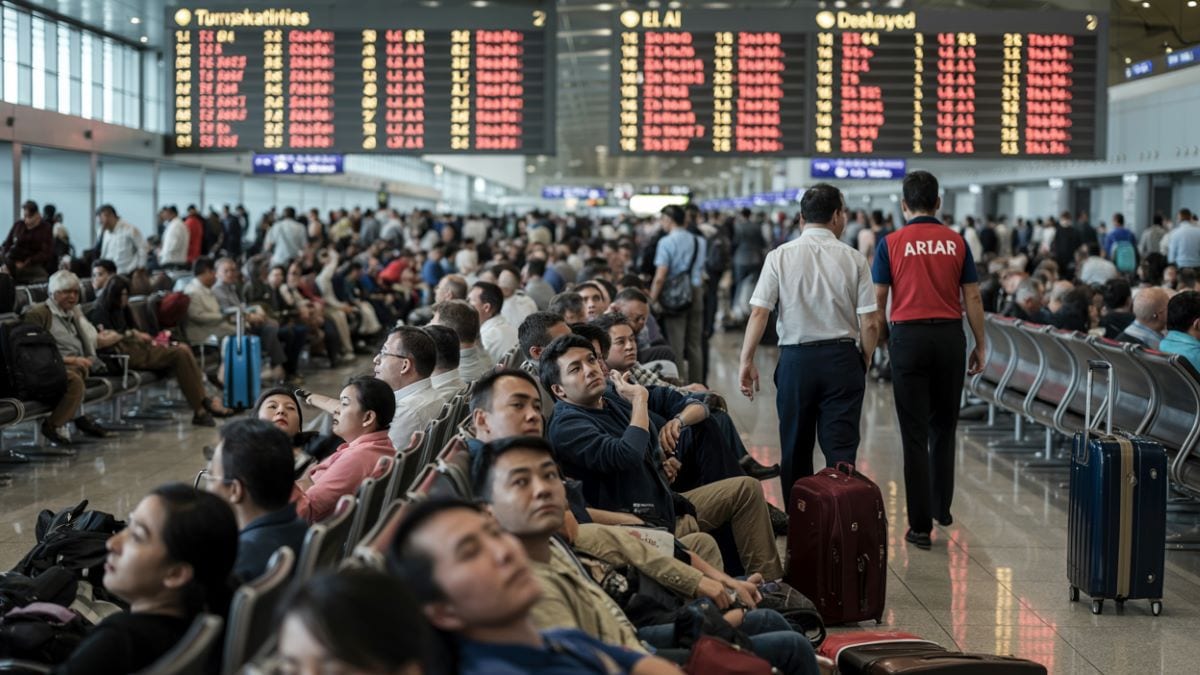
Image by Travel And Tour World
Regional Conflict Triggers Fresh Disruptions
Recent escalation in the Iran conflict has reshaped flight paths across the Middle East and parts of Europe, with Israel and several Gulf states restricting or closing airspace at various points in late February and March. Publicly available information shows that these measures have particularly affected long-haul routes crossing Iranian and Gulf airspace, stranding travelers far from their original destinations.
In Qatar, Hamad International Airport in Doha has operated on a severely reduced schedule after Qatari airspace was initially shut at the end of February. According to published coverage, standard commercial services were suspended while authorities focused on limited evacuation and cargo flights, only allowing a gradual and highly controlled restart of passenger operations in early March.
Israel’s Ben Gurion Airport has also seen repeated waves of cancellations and diversions as airlines adapt to evolving risk assessments for routes into and over the country. The combination of security concerns and knock-on schedule disruptions has meant that even flights technically able to operate have often departed late or with altered routings, adding further uncertainty for passengers.
These large-scale operational changes have rippled outward across airline networks, leaving travelers stranded not only in Middle Eastern hubs but also at connecting airports in Europe and Asia as crews, aircraft and time slots fall out of sync.
Turkish Airlines Wrestles With Congested Skies
Turkish Airlines, which relies heavily on Istanbul as a mega-hub linking Europe, Asia and Africa, has been drawn deeply into the disruption. Publicly available scheduling data and traveler accounts indicate that a wave of cancellations and retimings has hit services passing through conflict-adjacent airspace, especially routes connecting Europe to South and Southeast Asia.
Although domestic and regional flights within Turkey have generally continued, reports suggest they have been affected by rolling delays as aircraft and crews are reassigned to cover broken long-haul rotations. Istanbul’s main airport has seen growing crowds around transfer desks as passengers seek alternative routings on short notice, with some itineraries rebooked via secondary hubs or overnight stopovers.
For travelers whose journeys originate in smaller European cities such as Brussels, the Istanbul hub has become both a lifeline and a bottleneck. When flights onward to the Gulf or South Asia are canceled with little notice, passengers are often left with limited rebooking options, particularly during peak travel periods when remaining seats fill quickly.
According to aviation analysts cited in recent coverage, these disruptions highlight how deeply interconnected Turkish Airlines’ network is with Middle East overflight corridors. Even when Turkish airspace remains open, restrictions further south can unravel carefully balanced schedules within days.
Qatar Airways Faces Prolonged Suspension and Limited Restart
Qatar Airways, one of the region’s key long-haul carriers, has been among the most heavily affected. Public advisories and travel updates show that its regular commercial operations were temporarily suspended following the closure of Qatari airspace at the start of the conflict, leaving many passengers unexpectedly stranded in Doha or at outstations around the world.
Subsequent notices from aviation authorities and airline communications describe a cautious, phased reopening. Initially, only special repatriation services and a handful of contingency routes were permitted. Over time, Qatar Airways has outlined a target for a broader restart of services toward the end of March, though this timeline remains contingent on security conditions and airspace availability.
During this transition period, publicly available information and passenger reports indicate that the carrier has been selectively reinstating routes while cancelling or retiming others with just days of notice. Some travelers have been rerouted on partner airlines via Istanbul or other European hubs, while others have opted for refunds to rebook entirely new itineraries.
Despite these efforts, capacity through Doha remains sharply constrained compared with normal schedules. Long-haul travelers bound for Asia, Africa and Oceania via Qatar continue to face uncertainty, with many forced into multi-stop routings that significantly extend travel times and increase the risk of missed connections.
El Al Adjusts Operations Amid Security Concerns
Israel’s flag carrier El Al has also had to reshape its network as the security situation evolves. According to airline statements referenced in recent media coverage, the carrier has periodically reduced or suspended certain international services while maintaining a core schedule on key routes to Europe and North America.
Flight-tracking data and passenger accounts suggest that departures from Tel Aviv have experienced rolling delays, often linked to changes in preferred routings that avoid sensitive airspace. Such detours lengthen flight times, complicate crew duty schedules and can push aircraft out of their planned rotations, driving secondary delays on later services.
Travelers transiting via European cities such as Brussels have been caught in this web of adjustments. When El Al flights depart late or are cancelled altogether, passengers connecting onward on other airlines can lose their onward segments, triggering a chain of rebookings across multiple carriers and alliances.
Industry observers note that El Al’s situation illustrates how airlines operating from front-line states must constantly balance operational continuity with evolving security guidance, often at very short notice. This volatility can be especially challenging for travelers planning time-sensitive trips for work, study or family emergencies.
120 Delays Highlight Fragility of Global Networks
Across Turkish Airlines, El Al and Qatar Airways, publicly available tracking platforms and media reports point to at least 120 significant delays tied to the current crisis, alongside multiple outright cancellations. While the exact figures shift daily, the pattern is clear: a localized conflict is exerting global pressure on aviation networks.
Operational experts quoted in recent analysis argue that modern hub-and-spoke systems amplify the impact of any large-scale airspace restriction. When a central corridor such as the Gulf becomes constrained, aircraft and crews quickly fall out of position, and the effects spread to airports far from the original disruption, including major European gateways like Brussels.
For passengers, the practical consequences include missed connections, unexpected overnight stays and crowded customer service lines as airlines work within limited flexibility to re-accommodate disrupted journeys. Many travelers have turned to social media and consumer forums to share rerouting strategies, discuss refund policies and compare experiences across different carriers.
With airspace arrangements and security assessments still shifting, observers suggest that travelers planning trips through Istanbul, Doha, Tel Aviv or key European hubs should build extra time into itineraries, stay alert to schedule changes and remain prepared for last-minute adjustments as airlines navigate an exceptionally volatile operating environment.