

More news on this day
Escalating conflict across the wider Middle East has triggered a fresh tourism shock for Indonesia, the United Arab Emirates, Saudi Arabia and Thailand, as airspace closures, missile strikes and soaring fuel costs force airlines to slash routes and travelers to rethink long-haul plans.
Get the latest news straight to your inbox!
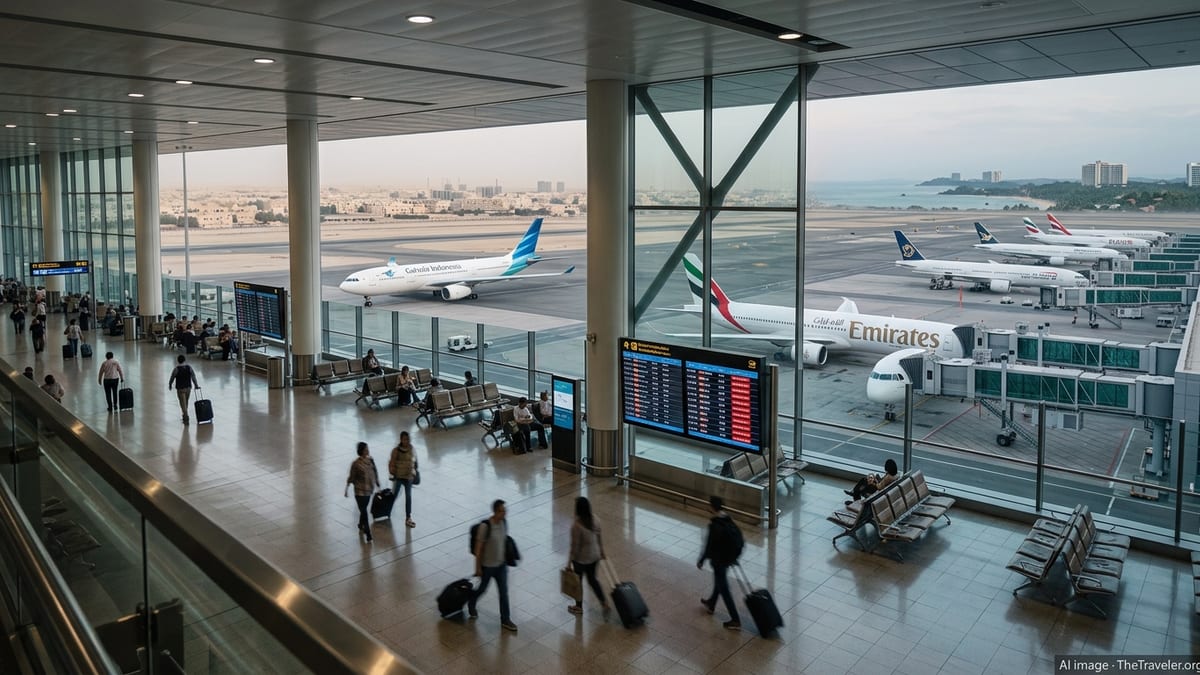
War-Driven Flight Cuts Ripple Across Key Tourism Corridors
Flight cancellations linked to the latest escalation in the Middle East have surged worldwide, disrupting some of Asia’s busiest leisure corridors. Industry data compiled in March 2026 indicate that more than 37,000 flights have been canceled globally since the start of the crisis, with Thailand alone seeing hundreds of services scrapped or rerouted over a matter of days. Thailand’s Ministry of Transport has reported more than 600 cancellations across its airports in early March, including long-haul links that rely on Middle Eastern hubs for connections.
The shock has been especially acute for routes that traditionally funnel European and Middle Eastern travelers into Southeast Asia and the Indian Ocean. Airlines using Dubai, Abu Dhabi and Doha as transit points have had to lengthen flight paths, add technical stops or temporarily suspend services when missile alerts or airspace closures make direct routings impossible. Publicly available operational updates from major carriers show short-notice suspensions on some sectors, with itineraries through the Gulf now seen as a higher-risk option by a growing share of leisure travelers.
The impact is not limited to Thailand. Indonesia’s resort islands, particularly Bali, are heavily exposed to swings in international capacity. Industry reports describe a softening in forward bookings from Europe and parts of the Middle East as travelers weigh the cost and uncertainty of long-haul trips that depend on now-volatile corridors. Analysts note that even where flights are still operating, additional fuel burn on longer routings is feeding into higher fares, undermining the mass-market appeal that helped power pre-crisis tourism growth.
For destinations that only recently rebuilt capacity after the pandemic, the timing is particularly damaging. Economic research on Thailand’s tourism sector suggests that long-haul markets, which had been a rare bright spot after a broader slowdown in 2025, are now slipping backwards again as conflict-driven disruptions ripple through airline schedules and consumer confidence.
Garuda, Emirates and Gulf Hubs Rework Networks on the Fly
Flag carriers at the heart of these corridors are scrambling to protect their networks while limiting financial damage. Garuda Indonesia, already under pressure from past restructurings and debt workouts, faces renewed challenges as weaker demand from Europe and the Middle East collides with higher operating costs. Public fleet and schedule information shows the airline increasingly prioritizing regional and domestic routes, where demand remains more resilient and exposure to conflict zones is lower.
In the Gulf, Emirates has been one of the most directly affected by heightened regional security risks. Following Iranian strikes on the United Arab Emirates in 2026, publicly reported disruptions at Dubai International Airport included temporary evacuations and waves of cancellations, prompting a rapid re-accommodation effort for tens of thousands of passengers. Aviation incident summaries and local media coverage indicate that, while core trunk routes were quickly restored, the carrier has been forced to adjust timings, build more slack into schedules and maintain contingency capacity in case of renewed attacks or airspace restrictions.
Other Gulf-based carriers, including those in Abu Dhabi and Doha, have made similar tactical adjustments, thinning frequencies on some leisure-heavy routes while reinforcing higher-yield business and essential travel links. Travel forums and booking data reflect a noticeable hesitancy among some tourists to transit via conflict-adjacent hubs, with a shift toward itineraries through East Asia or direct services when available. This erosion of confidence poses a strategic test for hub-and-spoke models that depend on the perception of seamless, reliable connectivity.
To counter these pressures, airlines are deploying a familiar crisis toolkit: flexible rebooking policies, targeted fare promotions, and closer cooperation with tourism boards to shore up demand from alternative markets. Yet with jet fuel costs elevated and insurance premiums under review, analysts caution that discounting has limits, especially for carriers already grappling with balance-sheet scars from the pandemic.
Thailand’s Tourism Slump Exposes Fragile Recovery
Thailand has emerged as one of the clearest case studies of how fast a tourism rebound can falter when global routes are disrupted. Government statistics and local media reporting show that international arrivals between March 1 and March 9, 2026 fell by nearly 6 percent year on year, with weekly arrivals in early March sliding by around 9 percent compared with the prior week. Projections by Thai industry councils suggest the country could forfeit up to 40 billion baht in tourism revenue if the conflict and associated airspace restrictions drag on.
The pain is sharpest in long-haul markets. Data compiled by Thailand’s Ministry of Tourism and Sports indicate that arrivals from Germany, Russia, the United Kingdom and France have dropped noticeably in early March, aligned with cuts to connecting flights through Middle Eastern hubs. While overall visitor numbers remain far above pandemic lows, the setback is significant for a sector that has been trying to diversify away from overreliance on short-haul regional demand.
Policymakers in Bangkok have moved quickly to set up monitoring centers and support desks at major airports for affected travelers, according to official communications. The Tourism Authority of Thailand is simultaneously accelerating a pivot that was already under way, targeting higher-spending segments from China, India, Japan and Australia, and promoting longer-stay packages in secondary destinations. Economic research from Thai banks has highlighted that such diversification is now critical, with tourism still a major contributor to national GDP.
At the same time, the latest crisis has rekindled debate over structural weaknesses in Thailand’s tourism model, including its heavy exposure to external shocks, seasonal pollution issues and infrastructure strains in key destinations. Industry figures have warned that simply chasing volume will not be enough if flight disruptions, geopolitical risk and changing traveler expectations become a recurring feature of the landscape.
Saudi Arabia Pushes Ahead With Mega-Projects Amid Volatility
While much of the current disruption centers on flight routings and traveler sentiment, Saudi Arabia’s tourism ambitions face a more complex test. The kingdom has framed tourism as a cornerstone of Vision 2030, seeking to draw tens of millions of visitors a year to new resorts along the Red Sea coast and mega-projects such as NEOM and the Sindalah island development. Reports from multilateral organizations and regional business outlets show that Saudi Arabia has already become one of the world’s fastest-growing tourism spenders, with international arrivals in 2024 and 2025 surpassing pre-pandemic benchmarks.
Yet the same conflict dynamics unsettling routes elsewhere also threaten to complicate Saudi Arabia’s path. Any sustained perception of regional insecurity can weigh on high-end leisure demand, particularly from Western markets that remain crucial to the profitability of luxury coastal resorts and cruise itineraries. Commercial real estate and hospitality analyses published in early 2025 point to healthy occupancy and rising room rates across major Saudi cities, but also flag the need for careful pacing of new supply to avoid overcapacity should global demand falter.
In response, planners and developers linked to Red Sea projects have emphasized phased openings, diversified source markets and a greater focus on intra-regional tourism that may prove more resilient during geopolitical shocks. Financing commitments from the Public Investment Fund reported in late 2025 underscore the state’s determination to stay the course, even as broader government spending undergoes periodic review. For global hotel brands entering the Saudi market, this mix of strong backing and elevated risk is prompting a cautious but continued rollout of new properties.
Industry observers note that, unlike more mature destinations, Saudi Arabia is trying to build a tourism ecosystem at scale precisely as regional conflict tests traveler confidence. The outcome will help determine whether the kingdom can position itself as a safe, premium alternative within the broader Middle East, or whether it remains tethered in the minds of visitors to the turbulence affecting neighboring hubs.
Dubai and Global Hotel Giants Pivot to New Survival Strategies
For hotel operators such as Marriott, the immediate impact of war-driven flight cuts is visible in softer bookings and shorter lead times in affected markets. Portfolio and earnings updates over recent quarters have highlighted both the vulnerability and resilience of the group’s Middle Eastern and Southeast Asian properties. In the United Arab Emirates, resorts that had been benefiting from strong pent-up demand now face intermittent waves of cancellations when security incidents, such as the 2026 missile strikes on the UAE, hit headlines and trigger temporary travel advisories.
Local media coverage from Dubai describes a familiar crisis response playbook in the city’s hotel sector: rate cuts to fill sudden gaps in occupancy, flash promotions aimed at regional residents, and bundled offers with airlines and credit-card partners. Some properties have shifted their mix toward longer-stay guests, including expatriate workers and digital nomads, to stabilize occupancy while traditional holiday bookings remain volatile. At the luxury end, operators are leaning heavily on loyalty programs and personalized outreach to keep high-value repeat guests engaged despite the uncertainty.
In Southeast Asia, global chains are experimenting with similar tactics. In Bali and other Indonesian resort areas, hoteliers are drawing on domestic and regional markets to cushion weaker demand from Europe and the Middle East, promoting wellness retreats, remote-work packages and family-friendly stays that do not depend on long-haul air links. In Thailand, major branded properties in Bangkok, Phuket and Koh Samui are increasingly partnering with tourism boards on co-funded marketing campaigns in East Asia and Oceania, seeking to replace lost long-haul volume with closer, more resilient demand pools.
Across all four countries, a common survival strategy is emerging: diversify guests, de-risk reliance on any single corridor, and lean into flexible pricing and product design. While the immediate shock has come from missiles and airspace closures, the longer-lasting response is likely to be a structural reshaping of how airlines, hotels and tourism boards think about routes, source markets and resilience in a world where geopolitical turbulence is no longer an outlier but a recurring reality.