

More news on this day
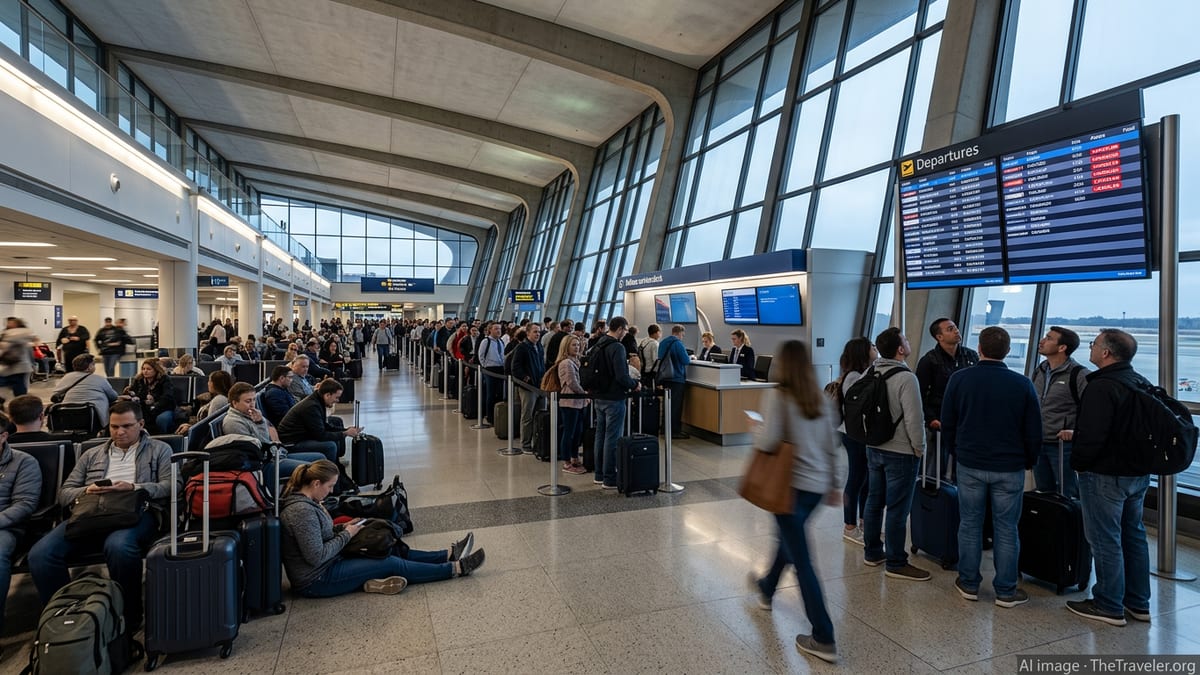
Air travelers at Washington Dulles International Airport faced hours of confusion and disruption on March 16 as multiple flights to Chicago, Orlando, and Doha were abruptly canceled, leaving hundreds of passengers scrambling for alternatives and immediate guidance on what to do next.
Get the latest news straight to your inbox!
What Is Happening at Washington Dulles Right Now
Publicly available flight-tracking data and passenger reports on March 16 indicate a cluster of cancellations and severe disruptions at Washington Dulles International Airport, particularly affecting departures to Chicago, Orlando, and Doha. The pattern reflects broader strain across parts of the U.S. and international network linked to both operational constraints and ongoing instability affecting routes via the Gulf region.
Travelers reported long lines at airline counters, crowded gate areas, and difficulty obtaining clear, timely information about rebooking options. With Chicago and Orlando acting as major hubs and leisure gateways, and Doha serving as a critical long-haul connection point, the cancellations had a ripple effect on onward journeys to Europe, Africa, and Asia.
The disruption at Dulles comes against a backdrop of recent large-scale cancellations elsewhere in North America driven by winter weather and operational knock-on effects earlier in the season. Those earlier issues left airline schedules already fragile, so additional route-specific problems have translated quickly into bottlenecks and last-minute changes for passengers.
Why Chicago, Orlando, and Doha Flights Are Being Hit
Chicago and Orlando are among the busiest U.S. destinations from Washington-area airports, serving as major nodes for both business and leisure travel. When irregular operations occur, flights to these cities are often adjusted or canceled as airlines attempt to rebalance aircraft and crews across their networks. Even localized issues, such as ground delays or congestion at hub airports, can cascade into route cancellations from Dulles.
Routes involving Doha are facing a separate layer of complexity. In recent weeks, regional airspace restrictions and intermittent disruptions around Qatar have led to cancellations and rerouting across several long-haul markets. Open-source reporting describes a period of closures and restrictions around Doha’s Hamad International Airport from late February, followed by a limited and phased restoration of service in mid-March. That evolving situation has made long-haul schedules particularly fluid, affecting travelers connecting between North America, the Middle East, and beyond.
For passengers at Dulles, this means that even if local weather appears calm and the airport itself is operational, flights can still be canceled at short notice because of factors many time zones away. Limited aircraft availability, repositioning constraints, and uncertainty over onward legs from Doha have all contributed to cancellations on Washington–Doha services and onward itineraries routed through Qatar.
What Stranded Passengers Can Do Immediately
Travelers caught up in the latest wave of cancellations at Dulles are being urged, in publicly shared guidance and consumer travel advice, to act quickly but methodically. The first step is to confirm the status of a specific flight through airline mobile apps or departure boards inside the terminal. Once a cancellation is confirmed, passengers generally have the option to rebook, request travel credits, or pursue a refund, depending on the airline’s policies and the type of ticket.
In many recent disruption episodes, travelers who used airline apps or websites to self-service rebookings reported faster outcomes than those relying solely on physical service counters. Phone support and social media channels can provide additional options, though hold times may be long when cancellations are widespread. Some airlines also open temporary waivers that allow passengers to change travel dates without additional change fees, particularly where flights are affected by large-scale regional disruptions.
Passengers with complex itineraries connecting beyond Chicago, Orlando, or Doha may need to consider whether they can be rerouted through different hubs altogether. In situations involving disrupted service to Doha, some travelers have reportedly been re-accommodated via alternate gateways in Europe or the Middle East. Others have opted to request refunds and rebook new trips on carriers that still have available capacity on alternative routes.
Know Your Rights and What Compensation to Expect
What passengers are entitled to after a cancellation depends heavily on the circumstances and on the airline operating the flight. In the United States, current regulations generally require carriers to provide a refund if a flight is canceled and the traveler chooses not to be rebooked. However, there is no universal obligation for airlines to cover hotels or meals when a cancellation is caused by weather, airspace closures, or other events considered outside their direct control.
Travelers who purchased separate travel insurance may have additional protection, especially for trip interruption, missed connections, or extra accommodation costs. Policy wording varies significantly, and recent consumer explanations of travel coverage highlight that some policies distinguish between general trip interruption and specific event-related cancellations. Passengers dealing with complex itineraries through multiple hubs, including Doha, are advised to keep documentation such as cancellation notices, boarding passes, and receipts for extra expenses in case they need to file claims.
On international itineraries, different rules may apply depending on the origin and destination of the journey. Some routes involving the European Union or other jurisdictions can trigger additional compensation rights under local regulations. Because the disruptions at Dulles touch both domestic routes like Chicago and Orlando and international links via Doha, passengers on multi-leg journeys may find themselves navigating a patchwork of rules and carrier policies.
How to Plan Upcoming Trips Through Dulles Amid Ongoing Uncertainty
For travelers with upcoming departures from Washington Dulles, recent events highlight the importance of building flexibility into travel plans. Public travel advisories increasingly recommend allowing extra connection time when itineraries rely on vulnerable hubs or routes that may be affected by regional instability or seasonal weather. Booking longer layovers, especially when connecting through Doha or other Middle Eastern gateways, can reduce the risk of missed onward flights if delays occur.
Experts in airline operations also note that early-morning departures sometimes experience fewer knock-on delays than flights later in the day, after disruption has had time to ripple through the network. Travelers with a choice of departure times from Dulles to hubs such as Chicago or Orlando may wish to favor earlier flights where feasible, particularly on days following previously disrupted operations.
Given the dynamic situation affecting Doha-linked services, travelers planning long-haul journeys in the coming days are being encouraged by widely shared guidance to monitor airline announcements closely and to verify that all segments of their itinerary remain confirmed. Keeping contact details updated in airline profiles, opting in to text or app alerts, and checking flight status repeatedly in the 24 hours before departure can help passengers react quickly if schedules change again.