

More news on this day
As international travel surges back to pre-pandemic levels, a quieter wave is rising alongside it in Europe’s most popular destinations: a sharp increase in tourist-targeted theft, from old-fashioned pickpocketing on metro lines to sophisticated digital scams that begin long before a traveler boards a plane.
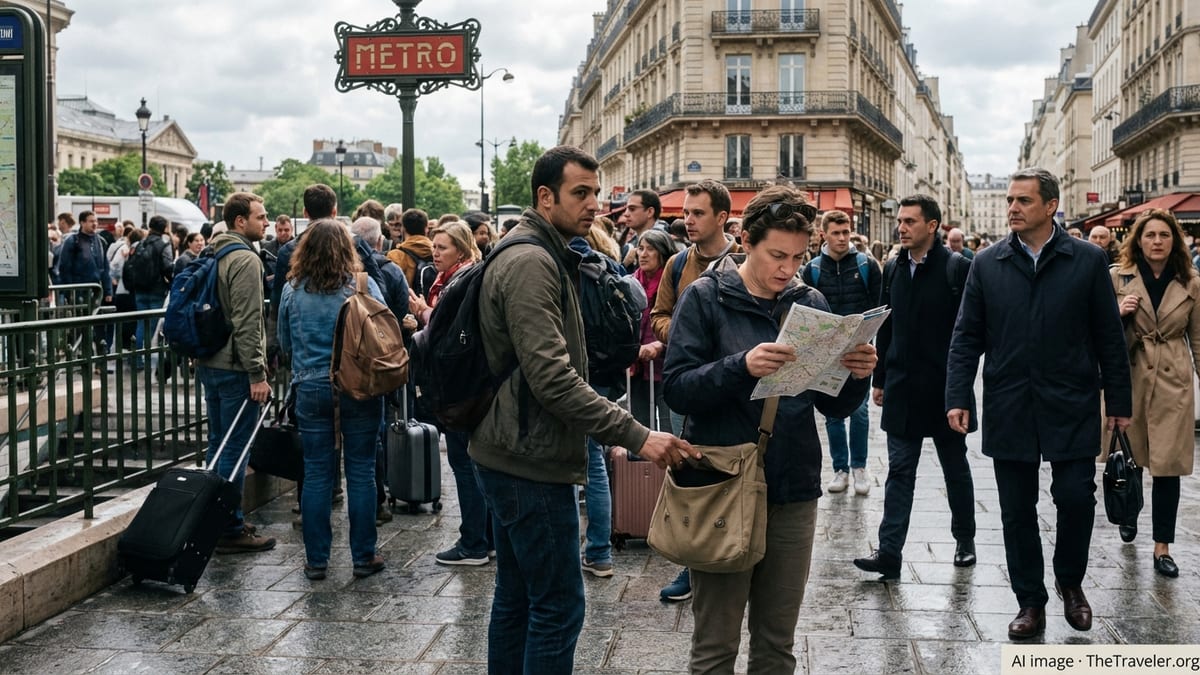
How 2026’s Tourist Theft Map Is Being Redrawn
Across Europe, a patchwork of recent crime reports, insurance claims and traveler review analysis is beginning to show a clear pattern for 2026: large, crowded cultural capitals remain the most dangerous places for visitors’ wallets and phones, but the methods thieves use and the locations they target are shifting. Researchers who examined millions of online reviews between October 2024 and November 2025 found that some of the world’s most beloved European cities also generated the highest proportion of theft-related complaints, including references to “pickpocket”, “robbery” and “scam.” Paris, Rome and Barcelona stood out globally, not just within Europe, for how often visitors described being targeted.
Travel analysts stress that these cities are not necessarily unsafe overall. Violent crime against tourists remains relatively rare compared with petty theft, and most trips pass without incident. But the data suggests that in 2026, visitors who arrive in Europe’s busiest hubs without a clear strategy for protecting their belongings face significantly higher odds of losing phones, passports or payment cards than they did even five years ago.
The resurgence of mass tourism has played a crucial role. After several subdued seasons, the return of densely packed metro carriages, long queues at landmarks and crowded summer festivals has recreated ideal working conditions for organized pickpocketing crews and opportunistic thieves alike. Police forces in major European cities report that petty theft statistics have rebounded faster than many other crime categories, prompting new patrols, targeted operations and warnings directed specifically at foreign visitors.
Paris: Global Capital of Pickpocketing
Paris, long known anecdotally as a magnet for pickpockets, is now being quantified as one of the world’s foremost theft hotspots. One comparative study of online travel reviews released in late 2025 found that the French capital generated a higher share of theft-focused comments than any other city surveyed worldwide, accounting for more than one in six reviews that mentioned problems such as stealing or scams. Another analysis found that nearly a third of all online reviews worldwide that specifically used the term “pickpocket” referred to incidents in Paris.
The concentration of incidents around the city’s signature landmarks is striking. Visitors frequently report thefts and attempted scams near the Eiffel Tower, Sacré-Cœur and the streets of Montmartre, as well as around the Louvre and on the metro and RER lines feeding these attractions. Classic distraction techniques persist: the so-called friendship bracelet trick, in which a bracelet is tied to a tourist’s wrist before payment is demanded; clipboard petitions that draw attention to a fake cause while an accomplice works a bag or pocket; and the “dropped ring” ruse, where a stranger claims to have found a valuable item and pressures the tourist into a “reward.”
French authorities have issued repeated advisories warning that mobile phones and passports are now prime targets, particularly in crowded transport hubs and around the city’s major train stations. In recent years, thousands of foreign passports have been reported stolen each year in the capital alone, prompting consular officials to caution travelers not to carry all identification and payment cards in a single wallet or bag. In response, police have stepped up plainclothes operations on the metro and deployed multilingual warning campaigns, but the continued volume of complaints suggests that Paris will remain on any list of Europe’s most dangerous cities for tourist theft through 2026.
Rome and Milan: Italy’s Surging Street-Theft Problem
Italy features prominently in virtually every recent ranking of pickpocket risk in Europe. A Europe-wide index compiled in 2024 using traveler reports put the country at the top of the list for mentions of pickpocketing per million visitors, ahead of France and Spain. Rome and Milan are central to that picture, combining enormous visitor numbers with historic centers designed for pedestrians and congested public transport systems that lend themselves to opportunistic crime.
In Rome, official figures paint a stark picture of escalating petty theft. Crime research cited by Italian media indicates that reported pickpocketing incidents in the capital climbed to more than 33,000 in 2024, a jump of around two-thirds compared with 2019. That roughly equates to close to 100 reported cases each day, with experts warning that the true number is likely higher due to underreporting. Overall recorded crime in the broader metropolitan area has risen by more than 20 percent over the past five years, and robberies have surged by more than half in the same period.
The hotspots are familiar to most visitors: the Trevi Fountain, the Colosseum and its surrounding streets, the Pantheon, and the busy concourses and platforms of Termini station. Local and foreign travelers alike describe a predictable rhythm of thefts on jam-packed metro lines, especially the route linking Termini to the Vatican Museums. Common scams, such as unsolicited bracelets or “free” roses pressed into a tourist’s hand before payment is aggressively demanded, remain widespread around these attractions.
Farther north, Milan has emerged as another serious concern. Recent national statistics place the city at or near the top of Italy’s major urban areas for per-capita crime, with close to 70 reported offences per 1,000 residents in 2024. While not all of these incidents involve tourists, police and insurance officials say that theft in and around popular shopping streets, transit hubs and trade fairs continues to generate disproportionate claims from foreign visitors. For 2026, travel risk experts view Italy’s two largest cities as among the most challenging in Europe for keeping belongings secure, particularly during peak spring and summer travel periods.
Barcelona and Madrid: Spain’s Persistent Pickpocket Hubs
Spain’s biggest urban destinations have grappled with a stubbornly high rate of street theft as tourism numbers have climbed back toward pre-pandemic heights. In Barcelona, authorities estimate that theft accounts for around half or more of all recorded crime in the city, and recent figures from local police indicate that close to half of reported offences involve some form of pickpocketing or bag snatching.
A 2025 assessment cited by travel industry outlets found that pickpocketing incidents in Barcelona, while down from a 2019 peak, remained markedly higher than in many other European hubs and had risen again compared with 2022. Specific metro stations, such as those serving the city’s beaches, have seen double-digit percentage increases in theft reports, while historic central districts like the Gothic Quarter, El Born and the areas around Las Ramblas and the Sagrada Família continue to generate large numbers of complaints from foreign visitors.
Madrid and other Spanish cities follow similar patterns, with professional pickpocket gangs using carefully choreographed distractions. Techniques include staged bumps or spills, sudden arguments, or impromptu performances that draw the crowd’s gaze, allowing accomplices to remove wallets or phones in the confusion. Spanish police have also warned of impostors dressed to resemble law enforcement officers who approach tourists, demand to inspect wallets or bank cards and then vanish with cash. Officials stress that genuine officers do not demand on-the-spot cash fines and will encourage anyone uncertain about their identity to go to a station.
For 2026, security analysts note that while Spain is investing in more visible policing and public awareness campaigns in central districts, the combination of high visitor volumes, dense historic streets and an entrenched culture of organized petty theft means Barcelona and Madrid remain among Europe’s most hazardous cities for tourists who fail to take basic precautions.
Prague, Amsterdam and the New Scam Geography
Some of Europe’s smaller but intensely popular city-break destinations are also featuring more prominently in theft and scam statistics. Prague, with its compact medieval core and several heavily trafficked bridges and squares, has appeared near the top of global rankings that track mentions of scams and pickpocketing in visitor reviews. Recent analyses suggest that the Czech capital ranks among the world’s most frequently cited cities for such incidents, with many reports clustered around the Old Town Square, the Astronomical Clock and Charles Bridge.
Visitors commonly describe scenarios in which densely packed crowds create cover for experienced pickpocket teams. Travelers report hands slipping into open handbags during photo stops or wallets disappearing as groups squeeze past each other on narrow walkways. Authorities in Prague have responded with bilingual warning signs, targeted surveillance and undercover patrols in central areas, but tourism experts say the city’s layout and enduring popularity make it likely that it will remain a European pickpocket hotspot in 2026.
In the Netherlands, Amsterdam has drawn attention for scams that exploit the city’s reputation for permissiveness and its complex network of canals and nightlife streets. Law enforcement and travel advisories highlight a recurring pattern of thieves posing as police officers who claim to be investigating counterfeit currency or drugs. Tourists are asked to hand over wallets or cards “for inspection” and later discover that cash or even bank cards have vanished. Combined with more traditional pickpocketing on crowded trams and in nightlife districts, these ruses place Amsterdam firmly among the European cities where visitors most often report feeling targeted.
What binds Prague and Amsterdam to the larger capitals on this list is not just the volume of incidents but their symbolic importance in Europe’s tourism ecosystem. Both cities generate strong “city break” demand from within Europe and beyond, and both rely heavily on pedestrian exploration. As a result, experts expect them to remain under scrutiny in 2026 as authorities try to balance the economic value of tourism with growing pressure to curb street crime.
Beyond the Classics: London, Brussels and Mediterranean Resort Trouble Spots
While continental heavyweights dominate perceptions of tourist theft, newer hotspots are emerging as travel patterns evolve. In the United Kingdom, London has recorded a noticeable spike in phone thefts and bag snatches, particularly in dense nightlife districts and on public transport. Parliamentary reports and media investigations in 2024 highlighted tens of thousands of stolen phones in the capital, many linked to fast-moving scooter and e-bike gangs that target pedestrians using their devices in the street.
Central Tube lines, busy interchanges and tourist-heavy neighborhoods around Westminster, Camden and the West End are all repeatedly cited in crime briefings as higher-risk zones for opportunistic theft. Urban security experts warn that as payment, navigation and identity increasingly converge in a single smartphone, the impact of losing a device in London can be significantly more disruptive than the classic lost wallet scenario.
In Brussels and other political and financial capitals, rising reports of both street theft and more complex fraud schemes are also raising alarm. European consumer agencies have pointed to a combination of physical pickpocketing in busy rail hubs and digital scams that target visitors through fraudulent booking platforms, ticket resellers and fake tour operators. Crime data cited by analysts shows that cities such as Brussels post relatively high rates of reported theft per 100,000 residents, placing them firmly on watch lists for 2026.
Further south, Mediterranean resort islands and coastal strips once marketed almost exclusively on their sun-and-sea appeal have seen a parallel surge in tourist-targeted crime. Local media and tourism stakeholders in parts of Spain’s Balearic Islands, for example, describe organized gangs working airport arrival halls, supermarket car parks and nightlife districts in search of distracted visitors. While these areas may not appear on global top-ten rankings compiled from online reviews, national crime statistics and local warnings suggest that some resort zones now pose theft risks comparable to major cities during peak season.
How Thieves Are Adapting: From Metro Carriages to Booking Screens
Perhaps the most striking shift shaping Europe’s theft risk map for 2026 is that the danger no longer begins at the metro turnstile. Fraud experts and police warnings across the continent indicate that scammers are increasingly targeting tourists at the planning stage, through deceptive websites, cloned booking platforms and fake listings on accommodation and activity marketplaces.
Studies released in 2024 showed double-digit percentage increases in travel-related digital fraud compared with previous years, including a rise in cases where travelers paid deposits for apartments or villas that did not exist or arrived at properties only to find them already occupied. Other schemes involve highly convincing “customer service” messages that prompt travelers to enter card details on fraudulent payment pages, or unofficial tour operators whose sleek websites conceal a lack of licenses or insurance coverage.
Traditional techniques have not disappeared. Metro and tram networks in Paris, Barcelona, Rome and other hubs still provide fertile ground for pickpockets working in teams, while café terraces, busy markets and festival crowds offer cover for quick bag grabs. But law-enforcement agencies increasingly stress that the line between physical and digital theft is blurring. Card skimmers on unattended ATMs, fraudulent QR codes attached to parking meters or bike-share stands, and hacked public Wi-Fi networks can all serve as entry points for criminals targeting tourists’ financial data.
For travelers, this evolution means that vigilance must extend beyond the street and into the browser tab. Security specialists recommend booking only through well-established providers, treating unsolicited emails and text messages about reservations with caution, and using secure payment methods that offer fraud protection. In effect, the same careful skepticism that seasoned visitors apply to a stranger with a clip board at the base of the Eiffel Tower now needs to be applied to “too good to be true” deals encountered during trip planning.
Staying Safer in Europe’s High-Risk Cities in 2026
Despite the worrying statistics, travel experts emphasize that it is still possible to enjoy Europe’s great cities and resorts with relatively low risk, provided visitors adopt a few pragmatic habits. One of the most effective measures is simply to separate critical items: keeping passports, primary bank cards and large amounts of cash in a locked hotel safe or money belt, while carrying only what is needed for the day in a zipped, crossbody bag worn in front.
Travel insurers and consular services also advise against placing wallets or phones in back pockets, leaving bags unattended at café tables or on train seats, or hanging handbags on the backs of chairs. In crowded environments, a hand placed lightly on the opening of a bag or jacket pocket can be enough to deter an opportunistic thief looking for the easiest possible target. When approached by strangers offering unsolicited assistance or attempting to create a sense of urgency, experts recommend stepping away from the crowd, declining firmly and moving on.
On the digital front, using two-factor authentication on banking and email apps, avoiding public Wi-Fi for financial transactions and checking card statements frequently during and after a trip can limit the impact of any breach. Where possible, travelers are encouraged to use virtual cards or mobile wallets that can be quickly frozen if a device is lost or stolen. Many banks now allow customers to set temporary transaction limits or geographic restrictions, which can serve as an additional safeguard while abroad.
Ultimately, the picture emerging for 2026 is one of contrast. Paris, Rome, Barcelona and their peers remain extraordinary places to visit, and millions of travelers will explore them without incident. Yet the same crowds that make these cities feel vibrant also create ideal cover for thieves. For tourists, recognizing that reality and adjusting habits accordingly may be the most effective way to ensure that Europe’s cultural riches are the only unforgettable part of the journey.