

More news on this day
A fresh wave of flight disruptions is rippling across the United States in early April 2026, with several major hub airports logging hundreds of delays in a single day and residual knock-on effects continuing into the week.
Get the latest news straight to your inbox!
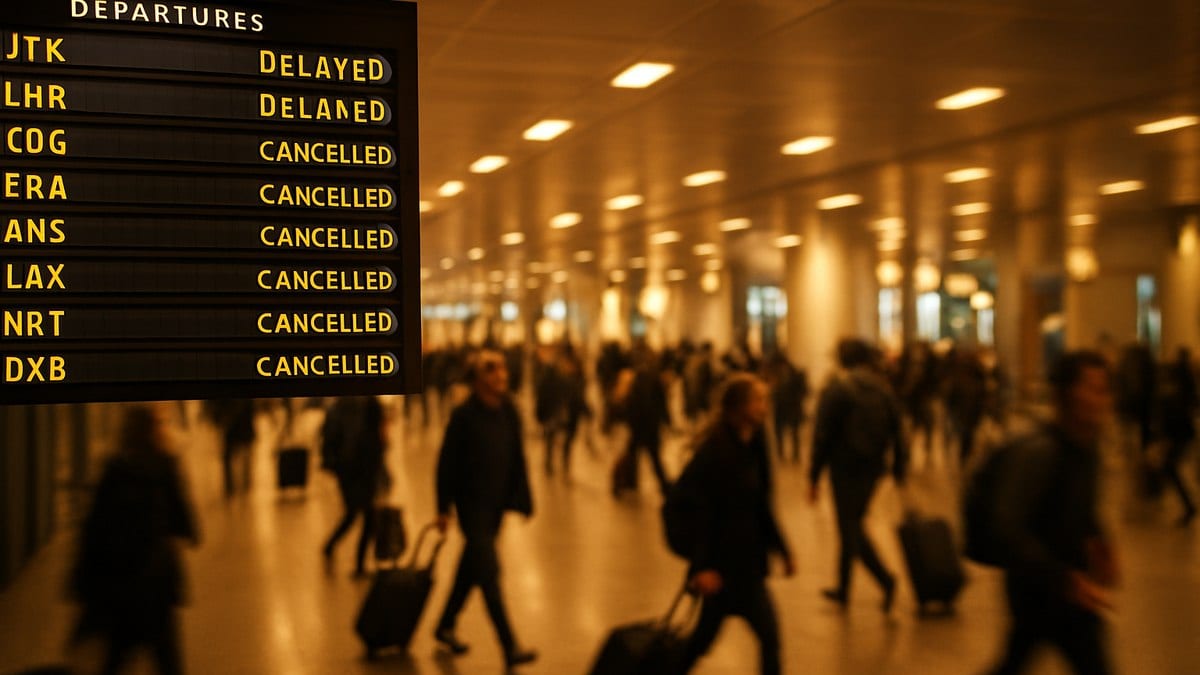
Hundreds of Delays Across Key Hubs
Publicly available flight status data for the first full week of April indicate that major U.S. hubs have recorded well over 500 combined delays on several recent days, as storms, traffic-management programs and heavy spring passenger volumes strain operations. The impact is particularly visible at large connecting airports including Atlanta, Chicago, Orlando, Houston, Los Angeles and the New York area facilities, where delay counts have frequently climbed into the triple digits.
Coverage from aviation-focused outlets notes that April 7 saw more than 4,000 delayed flights nationwide, with airports such as Hartsfield Jackson Atlanta, Chicago O Hare, Orlando International, and the New York hubs among those reporting the highest concentrations of disruptions. In some cases, individual airports recorded more than 200 delayed departures or arrivals in a single day, underscoring how quickly congestion can mount when weather and traffic constraints coincide with peak travel demand.
Reports focusing on April 8 highlight Orlando International Airport as a fresh focal point, with nearly 200 delays and a smaller number of cancellations recorded by midday. Those figures are contributing to another day in which nationwide delays are tracking in the hundreds, pushing the broader network into another cycle of schedule adjustments and missed connections.
Although precise totals fluctuate throughout the day as flights move from on time to delayed status, the pattern shows a sustained period in which the largest hubs are shouldering a disproportionate share of the disruption. That concentration magnifies the number of passengers affected, because a single late departure from a major hub can disrupt connections for travelers across multiple regions.
Weather, Congestion and Airspace Constraints Combine
Recent coverage from travel and aviation publications points to a familiar combination of factors driving the April disruptions. Thunderstorms and unsettled spring weather around Florida and the Southeast have triggered holding patterns and ground delay programs at Orlando and other regional airports, temporarily reducing arrival rates and forcing airlines to push back departure times throughout their networks.
At the same time, reports analyzing federal aviation data describe ongoing pressures on the U.S. air traffic control system, including staffing shortfalls at several busy facilities. When controllers cannot safely handle normal traffic volumes, capacity reductions and flow-control measures are introduced, which can mean extended taxi queues, airborne holding, or metered departure slots even in relatively benign weather.
The timing of this latest wave of operational strain coincides with the peak of the Easter and spring break travel period, when passenger volumes are among the highest of the year. Industry statistics for recent spring seasons show millions of travelers moving through U.S. airports every day, leaving airlines and airports with limited flexibility to absorb unexpected disruptions without generating long queues and rolling schedule changes.
Analyses of historical delay data from the Department of Transportation indicate that once a day begins with significant weather or airspace constraints, late arriving aircraft and crew displacement quickly become secondary drivers of disruption. That pattern appears to be playing out again in April 2026, as early morning interruptions around a few hubs translate into evening waves of missed connections and rebookings across the country.
Network Effects Ripple Beyond the Biggest Airports
The heaviest disruption has been documented at the largest hubs, but smaller and mid sized airports are also feeling the effects as the wave of April delays rolls through the national network. Regional facilities that rely on a limited number of daily departures to major hubs have seen clusters of late arrivals, missed banks of connections and, in some cases, localized spikes in cancellations over the last several days.
Travel coverage focused on upstate New York, for example, has described how a relatively modest number of delays and cancellations at a regional airport can still cause significant disruption for local travelers when those flights are tied to congested hub operations in cities such as Chicago, Atlanta or Orlando. Similar patterns are emerging across the Southeast and Midwest, where passengers bound for long haul destinations often depend on a single connection through a major hub that is already under strain.
Observers who study the structure of U.S. air travel note that the hub and spoke model increases the efficiency of airline networks but also amplifies the impact of localized problems. When a single storm system slows traffic into Florida or a single air traffic facility restricts flows into New York, the resulting schedule adjustments can quickly cascade to medium sized cities hundreds or thousands of miles away.
Data driven research into flight delays suggests that this amplification effect has become more pronounced in recent years as airlines have optimized schedules and operated with less built in slack. The current wave of disruptions appears consistent with that trend, with relatively narrow weather systems or capacity bottlenecks producing extensive knock on effects across the broader network.
Travelers Confront Long Lines and Tight Connections
For travelers moving through major U.S. hubs in early April, the statistical picture translates into crowded gate areas, long customer service queues and tight or missed connections. Reports from travel news outlets describe passengers at airports such as Orlando, Atlanta, Chicago and New York waiting through rolling departure time changes while airlines juggle aircraft rotations and crew duty limits.
Public guidance from airlines and airports during this period emphasizes practical steps for passengers trying to navigate the disruptions. Common recommendations include checking flight status repeatedly in the hours before departure, using mobile apps and text alerts, allowing extra time at the airport in case of security or check in bottlenecks, and remaining flexible about routing when rebooking is necessary.
Some carriers have introduced temporary travel waivers tied to specific storm systems or regional disruptions, allowing customers to change flights without additional fees if they can shift their trips to less affected days or times. Travel industry analysis suggests that passengers who can adjust their schedules by even a few hours may have a better chance of avoiding the worst of the congestion when a particular hub is operating under ground delay programs.
For those already en route, the concentration of delays at hub airports means that tight connections are particularly vulnerable. When inbound flights arrive late into sprawling facilities like Atlanta or Chicago, passengers with short connection windows may find it difficult to move between gates in time, leading to additional rebookings and overnight stays.
Outlook for the Remainder of April
Looking ahead through the rest of April 2026, publicly available information from flight tracking platforms and industry commentary suggests that some level of elevated disruption could persist, particularly on peak travel days and in regions prone to spring storms. The combination of high seasonal demand, lingering operational strain and the potential for convective weather across the South and Midwest points to a volatile environment for on time performance.
Analysts who track historical delay patterns caution that early spring often brings a series of weather driven events rather than a single, isolated disruption. That means hubs which have already experienced several days of heavy delays, including Atlanta, Chicago, Orlando and the New York area airports, may face additional pressure as new storm systems develop.
At the same time, there are indications that airlines are attempting to reset operations by repositioning aircraft and crews and, where possible, consolidating lightly booked flights to free up capacity. Travel coverage from the early days of April notes that carriers have been prioritizing first wave departures in the morning in an effort to rebuild schedule reliability before afternoon thunderstorms typically develop.
For now, the picture for U.S. air travelers in April 2026 is one of cautious planning rather than certainty. With major hubs already logging hundreds of delays across successive days and the broader system still absorbing the impact of recent storms and congestion, passengers passing through the busiest airports are likely to continue facing a higher than usual risk of disruption as the month progresses.