

More news on this day
Travelers across the United States faced another day of disruption as Milwaukee Mitchell International Airport reported 105 flight cancellations and 59 delays, forcing hundreds of passengers to hastily rebook journeys to and from major hubs including Denver, Phoenix, Orlando, and Tampa.
Get the latest news straight to your inbox!
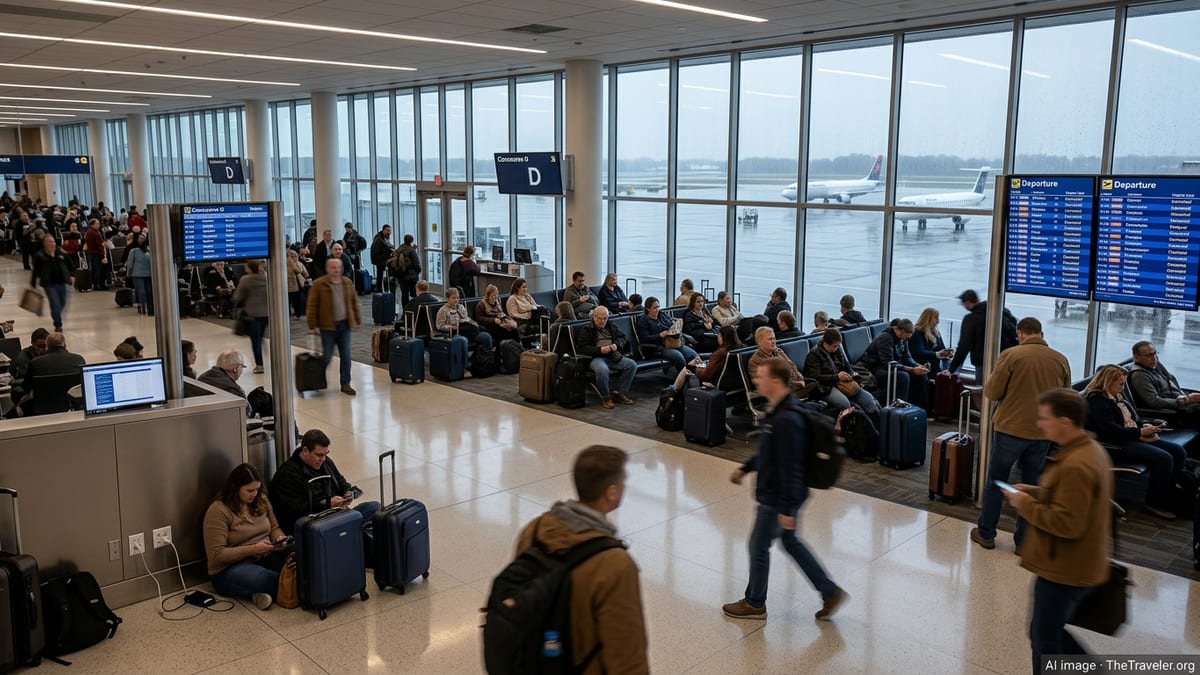
Storm-Linked Disruptions Ripple Through Milwaukee
Publicly available tracking data on March 16 indicates that Milwaukee Mitchell International Airport experienced a sharp spike in cancellations and delays, coinciding with severe late-winter weather sweeping parts of the Midwest. The disruption at the Wisconsin hub quickly translated into missed connections and altered plans for passengers headed to popular destinations across the country.
Operational records and flight-tracking dashboards show that a total of 105 flights were canceled and 59 delayed at Milwaukee, an unusually high figure for the airport at this time of year. While some affected flights were regional hops, many were crucial links in longer itineraries that connected through Denver, Phoenix, Orlando, Tampa, and other sunbelt and mountain destinations.
These disruptions emerged against the backdrop of an active March storm pattern affecting multiple Midwest and Great Lakes hubs. As airlines adjusted schedules, thinned out frequencies, and repositioned aircraft, Milwaukee’s role as a secondary connecting point left many travelers contending with last-minute changes, longer travel days, and unexpected overnight stays.
Airlines generally prioritize mainline operations at their largest hubs during capacity constraints, which can leave mid-sized airports such as Milwaukee more exposed to sweeping schedule cuts. Today’s wave of cancellations highlighted the vulnerability of travelers relying on these regional gateways when storms and operational pressures converge.
Passengers Scramble for Alternatives to Key Sun and Mountain Destinations
The knock-on effect from Milwaukee’s cancellations was felt most acutely by passengers with itineraries linked to Denver, Phoenix, Orlando, and Tampa, four of the most in-demand leisure and connecting markets heading into the spring travel period. Route maps and airline schedules show multiple daily services between Milwaukee and these cities, so concentrated disruption quickly translated into a rush for remaining seats.
Reports shared on traveler forums and social platforms describe passengers attempting to reroute through nearby hubs such as Chicago, Minneapolis, and Detroit in order to salvage vacations or make critical business appointments. Others opted for creative solutions such as flying into alternate Florida airports when Tampa or Orlando services disappeared from departure boards, then continuing by rental car or shuttle.
As rebooking options tightened, travelers also began turning to ground transportation. Regional bus and shuttle providers serving Milwaukee and Chicago saw increased interest from passengers whose short connecting flight had been canceled but who still needed to reach a larger hub for an onward departure. For some, transferring by road to Chicago’s main airport became faster than waiting for the next available replacement flight out of Milwaukee.
Families heading to Florida theme parks and snow-weary travelers bound for Arizona or Colorado ski resorts were particularly affected. With school holidays and spring breaks approaching in many parts of the country, demand is already high, making same-day alternatives harder to secure and driving up fares on the few open seats that remained.
Strain on Airline Operations and Limited Spare Capacity
The scale of disruption at Milwaukee also underscored how little spare capacity remains in the U.S. domestic network on peak days, especially during weather-driven events. Airlines have been operating with leaner buffers in both aircraft scheduling and crew availability, which can amplify the impact of storms or air-traffic constraints across multiple airports.
Industry data and published airline updates show that when a cluster of flights in one region is grounded or delayed, aircraft and crews scheduled to operate subsequent legs often arrive late or out of place. At a connecting point like Milwaukee, that can quickly cascade into a high number of cancellations in a short window, especially on routes that rely on a single daily round-trip to cities such as Denver or Phoenix.
Public information from airline customer channels indicates that some carriers relaxed change-fee policies and offered limited same-day rebooking options for affected passengers, although availability remained highly constrained. Several travelers reported spending extended periods on hold with call centers while simultaneously trying to rebook via mobile apps or airport kiosks.
The pattern at Milwaukee mirrors broader strains that have appeared periodically since the pandemic, as carriers work to meet resurgent demand with fleets and staffing that are still catching up. When weather, congestion, or technical issues hit, the system has less resilience, and secondary airports can become focal points of disruption out of proportion to their size.
What Stranded Travelers Are Doing Now
Travelers affected by the cancellations at Milwaukee have been turning to a familiar set of strategies to keep their trips on track. Publicly shared accounts suggest a surge in same-day searches for alternative routings, including indirect journeys that would normally be less attractive, such as flying north or west first before turning south toward Florida or the Southwest.
Some passengers have opted to split their journeys, securing any available flight to a major hub like Denver or Phoenix and planning to buy a separate onward ticket once arrived, despite the added cost and risk. Others have switched airports entirely, asking airlines to rebook them from nearby cities or choosing to self-transfer to larger hubs that offer more frequent departures to Orlando, Tampa, and other leisure markets.
Airport hotels and nearby accommodations have also come under pressure as travelers confronted unexpected overnight stays. With many cancellations announced close to scheduled departure times, some passengers reported limited availability at on-airport hotels and a need to travel farther into the city for a room, adding to the overall stress and expense of the disruption.
Ground transport has emerged as an important backstop. Shared accounts describe travelers carpooling with newly acquainted fellow passengers to reach distant airports or vacation rentals, while others turned to intercity buses and shuttles running between Milwaukee and neighboring metropolitan areas in search of more stable departure points.
Guidance for Upcoming Travelers Through Milwaukee and Beyond
For travelers with flights scheduled through Milwaukee in the coming days, the events of March 16 serve as a reminder to prepare for potential knock-on effects. Airline operations often take time to fully recover after a significant round of cancellations, as carriers reposition aircraft and crews and work through accumulated passenger backlogs.
Travel experts and consumer advocates routinely recommend several steps that are particularly relevant in situations like this. These include monitoring flight status frequently on both airline and tracking platforms, enabling mobile alerts for schedule changes, and being ready with a shortlist of acceptable alternative routings or airports before contacting customer service. Passengers connecting to high-demand destinations such as Denver, Phoenix, Orlando, and Tampa may benefit from extra vigilance, given the limited seat inventory typical on peak travel days.
Publicly available guidance also stresses the importance of understanding airline policies regarding delays and cancellations, including options for fee-free changes, refunds in cases of significant disruption, and coverage offered by travel insurance. Travelers whose plans are time-sensitive, such as cruise departures or ticketed events, often consider booking earlier arrivals or building in buffer days during seasons when storms are more likely.
As Milwaukee Mitchell International works through today’s backlog and airlines adjust their schedules, travelers across the country are reminded that even mid-sized hubs can quickly become flashpoints for widespread disruption. In a tightly interconnected air network, a rough day at a single airport can leave passengers from Wisconsin to Florida and the Mountain West scrambling to keep their journeys moving.