

More news on this day
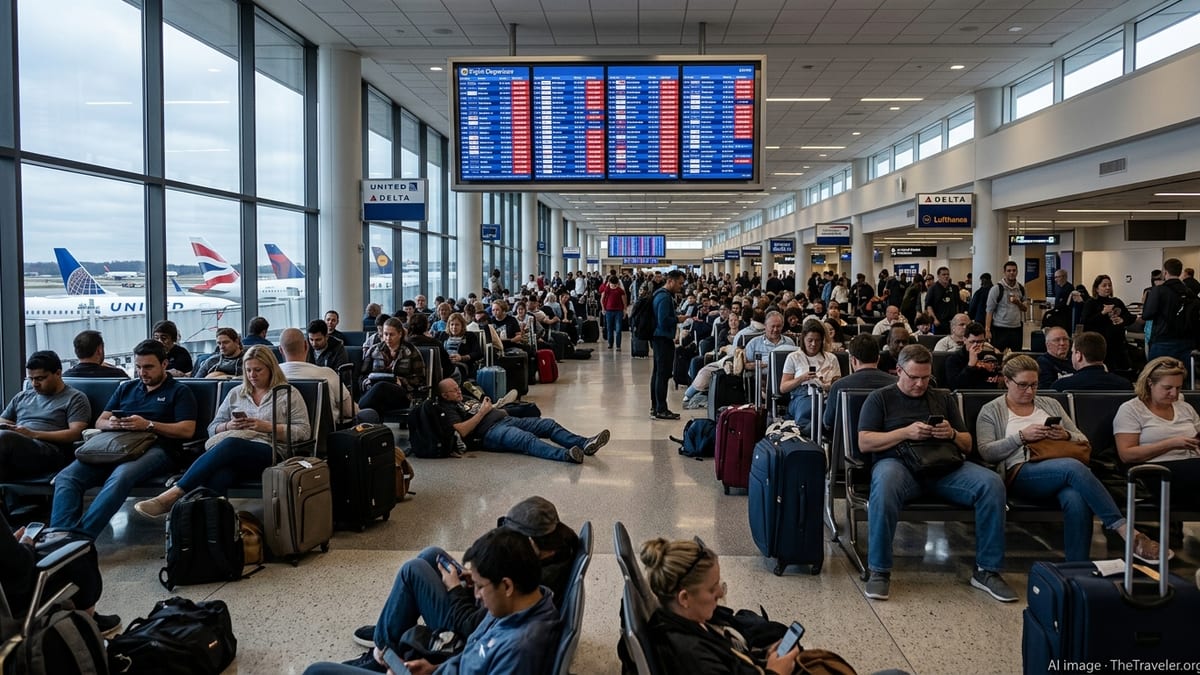
Travelers at Washington Dulles International Airport faced widespread disruption today as at least 59 flight delays and eight cancellations affecting services operated by United Airlines, Delta Air Lines, British Airways and Lufthansa rippled across key routes to New York, Chicago, Boston, London and other major US cities.
Get the latest news straight to your inbox!
Operational Disruptions Ripple Across Key Hubs
Publicly available flight-tracking data shows a concentrated cluster of delays on departures and arrivals at Washington Dulles, with knock-on effects for some of the busiest corridors in the United States and transatlantic services to the United Kingdom and Europe. The pattern reflects how quickly schedule instability at one major hub can spread across an airline’s wider network.
United Airlines, which maintains a large presence at Dulles, appears to have been among the most affected, with multiple services to New York area airports and Chicago O’Hare experiencing extended departure holds and rolling gate changes. Delta Air Lines, which links Dulles to its own hubs, also recorded delays on flights feeding into the broader national network.
On the long-haul side, British Airways and Lufthansa services between Dulles and London and other European hubs encountered a mixture of late departures and cancellations. These disruptions complicate onward connections for passengers aiming to reach secondary US markets or European destinations, particularly for travelers relying on tight transfer windows.
While the specific operational triggers ranged from aircraft rotation issues to congestion and weather-related constraints elsewhere in the system, the net result for passengers at Dulles was the same: crowded gate areas, lengthening queues at customer-service desks and uncertainty over when journeys would resume.
Links to New York, Chicago, Boston and London Hit Hard
The hardest hit routes include Dulles connections with New York, Chicago and Boston, as well as the high-demand link to London. These city pairs form critical arteries for both business and leisure travelers, and even modest schedule disruptions can quickly compound into missed meetings, lost hotel nights and abandoned weekend plans.
Services to New York and Chicago, typically operated several times daily by United and Delta, saw a succession of delayed departures, with some aircraft held on the ground and others pushed back only to face further waits. For travelers attempting same-day returns or onward connections to the US Midwest and West Coast, the cascading delays made itineraries increasingly fragile.
Boston also experienced disruptions, with flights to and from Dulles facing extended waits and, in some cases, cancellations. Travelers connecting through Boston to other New England cities encountered added complexity as regional schedules were adjusted in response to late inbound aircraft.
Across the Atlantic, the disruption was particularly visible on services between Washington Dulles and London, a route shared by British Airways and other transatlantic carriers. Even a single delayed or canceled flight on this corridor can displace hundreds of passengers, and today’s irregular operations added pressure to already busy services linking London with New York, Chicago and Boston.
Airlines Rebook and Adjust as Stranded Travelers Wait
As delays accumulated through the day, airlines moved to rebook affected passengers on later departures or alternative routings. United and Delta made use of their domestic networks to reroute some travelers through other hubs, while British Airways and Lufthansa relied on available seats across their transatlantic and intra-European services.
Rebooking capacity, however, remained limited during peak travel periods, and many travelers faced the prospect of overnight stays in the Washington region or at intermediate hubs. Airport seating areas near affected gates filled with passengers refreshing airline apps, monitoring departure boards and searching for remaining hotel availability within reasonable distance of Dulles.
Airport operations staff responded by adjusting gate assignments, repositioning aircraft where possible and coordinating with airline station teams as congested departure banks built up. Ground handling and ramp operations were also under pressure as schedule changes forced rapid turnarounds and revised staffing plans.
Some passengers were able to secure alternative same-day itineraries by accepting longer routings or connections through secondary hubs, while others opted to shift travel to later in the week once it became clear that original schedules could not be preserved.
Broader Network Effects Across Major US Cities
The wave of disruptions at Dulles illustrates how a localized problem can reverberate across a wider route map, particularly for carriers that rely on hub-and-spoke models. Delayed departures to New York, Chicago and Boston can quickly lead to aircraft and crew being out of position for subsequent flights, causing additional late operations and cancellations.
Airports in the New York region, including LaGuardia and Newark, already operate near capacity for much of the day, and unexpected delays from a key feeder such as Dulles can contribute to congestion and slot pressure. Similar dynamics apply at Chicago O’Hare and Boston Logan, where the balance between on-time arrivals, available gates and runway capacity is closely managed.
For travelers, this means that a disruption originating at Dulles can translate into later knock-on delays on flights that never touch Washington. Passengers boarding flights in cities as far apart as Houston, Denver or Miami may experience schedule changes rooted in earlier irregular operations on Dulles corridors to New York, Chicago or London.
Industry data and previous episodes of large-scale disruption show that it can take several schedule cycles for operations to fully normalize, especially when aircraft and crews have been redeployed to cover earlier cancellations. As a result, residual delays on certain routes may continue even after the immediate issues at Dulles have eased.
What Travelers Can Do as Irregular Operations Continue
Travel experts typically recommend that passengers caught in airport-wide disruption focus first on securing a new confirmed booking, whether through airline apps, websites or airport self-service kiosks, before seeking additional assistance in person. During peak irregular operations, digital channels often update more quickly than airport queues can move.
Publicly available guidance from aviation regulators underscores that travelers on delayed or canceled flights may have different rights and options depending on the origin, destination and operating carrier. For domestic US journeys, airlines generally offer rebooking or refunds when significant schedule changes occur, while international routes may be subject to a mix of US and foreign consumer-protection rules.
At Dulles, many travelers opted to adjust their itineraries by shifting to earlier or later departures, changing connecting hubs or modifying their final destinations where flexible tickets allowed. Others chose to cancel nonessential trips entirely and request refunds once it became apparent that onward connections could no longer be met.
With airlines still working to absorb today’s 59 delays and eight cancellations into already tight schedules, passengers planning to travel through Dulles in the coming hours are being advised by publicly available information to check flight status frequently, allow extra time at the airport and be prepared for gate or timing changes as carriers work to stabilize operations.