

More news on this day
Thousands of travelers across the United States faced a fresh round of schedule chaos on April 11, 2026, as severe weather systems and knock-on operational pressures triggered waves of flight delays and cancellations at key airports.
Get the latest news straight to your inbox!
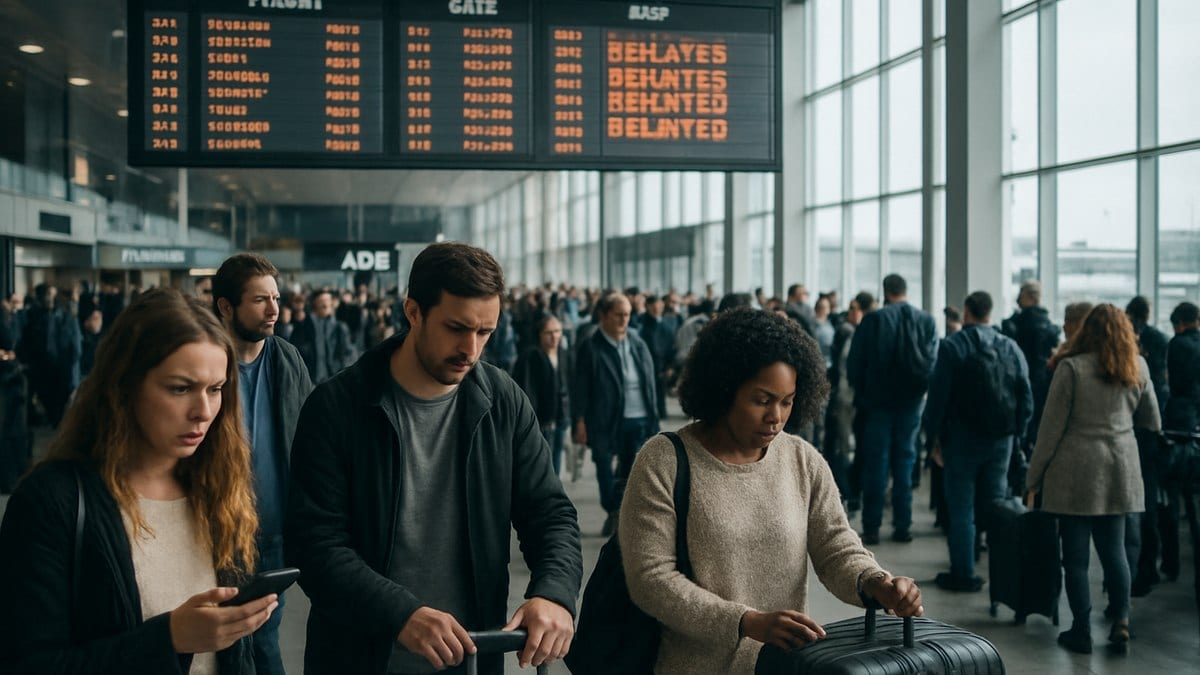
Storm Systems Collide With Peak Weekend Travel
Publicly available weather forecasts for April 11 highlighted a broad swath of unstable conditions stretching from the southern Plains through the Midwest and into parts of the West, with forecasters warning of thunderstorms, damaging winds and localized flooding. As those systems pushed across the country, aviation data shows they intersected with one of the busiest weekend travel periods of early spring, constraining takeoff and landing windows at several major hubs.
According to coverage from national weather outlets and aviation trackers, severe storms intensified through Saturday afternoon in portions of Texas and the central United States, prompting periodic ground holds and reroutes. Those constraints, combined with heavy passenger volumes, left airlines with limited flexibility to absorb even short-lived interruptions, setting the stage for rolling delays that extended into the evening.
Industry analysts note that the pattern fits a broader trend in 2026, with clusters of disruptive weather events repeatedly brushing against already tight airline schedules. When arriving aircraft are slowed by storms in one region, knock-on effects can rapidly spread as planes and crews fail to reach their next assignments on time, even in cities where the skies remain clear.
Flight-tracking platforms monitoring the national picture on April 11 reported hundreds of delays and dozens of cancellations by late afternoon, with the greatest concentration at large connecting airports. While the total did not approach the scale of winter’s worst disruptions, it was enough to create significant lines at customer service desks, backed-up security checkpoints and crowded gate areas across multiple states.
Major Hubs Log High Numbers of Delays
Operational summaries compiled from publicly accessible flight-status data point to several standout pressure points on April 11. Dallas Fort Worth International Airport, one of the country’s largest connecting hubs, saw close to 200 flights disrupted in a single day, with a mix of late departures, missed arrival slots and cancellations rippling across domestic and international routes. The pattern there reflected the airport’s role as a critical junction for traffic into and out of storm-affected regions.
Further west, Harry Reid International Airport in Las Vegas recorded more than 250 delayed services along with a smaller number of cancellations, according to aviation-data reports and travel-industry coverage. Delays accumulated steadily from the morning into the afternoon as inbound aircraft arrived late from other parts of the network, compressing turnaround times and forcing airlines to push back later departures.
Phoenix Sky Harbor International Airport also experienced a notable spike in disruption, with published analyses citing more than 160 delayed flights and at least a handful of cancellations on April 11. The airport’s role as a key desert hub meant that even modest schedule changes elsewhere could quickly translate into missed connections and last-minute gate swaps for travelers moving through the Southwest.
In the Midwest, Detroit Metropolitan Wayne County Airport saw broad disruption across both domestic and transborder routes. Reports summarizing flight-status data for April 11 described a day marked by rolling delays, especially on connections linking the Great Lakes region with storm-exposed cities to the south and west. The combined effect across these hubs was a jagged national map of delays that left passengers facing extended journey times even when their flights ultimately operated.
Weather-Linked Ground Stops Add to Cascading Impacts
While many of the April 11 delays were measured in tens of minutes, localized ground stops and airport-specific weather constraints periodically brought operations close to a standstill. In the San Francisco Bay Area, local coverage documented a ground stop at San Francisco International Airport late in the day as a band of thunderstorms swept through, producing gusty winds and low visibility. Arrivals and departures slowed sharply, with average delays stretching toward one to two hours as airlines worked through the backlog.
Elsewhere, temporary arrival and departure rate reductions linked to passing storm cells limited how many aircraft could move through busy terminal airspace at once. Reports referencing air traffic management advisories indicated that airports in storm-threatened corridors saw intermittent restrictions designed to keep spacing between aircraft safe in rapidly changing conditions. Each such slowdown, even if brief, made it more difficult for carriers to recover their schedules before the end of the operating day.
Travel experts point out that spring weather can be especially challenging for airlines because convective storms are often highly localized and can develop quickly. A line of thunderstorms near a departure fix or arrival gate can be enough to halt operations in a particular direction, forcing controllers to reroute aircraft or temporarily pause movements until conditions stabilize.
The experience of April 11 underscored how these targeted measures can translate into widespread passenger disruption when they coincide with tight aircraft rotations. Flights that missed departure windows due to lightning in one city often arrived late into their next, compounding the delays for travelers who had already been waiting.
Airlines Juggle Recovery as Passengers Seek Alternatives
Publicly available information from airline networks on April 11 and the following morning suggests that carriers spent much of the weekend rebalancing aircraft and crew assignments in order to restore normal operations. In many cases, airlines sought to consolidate lightly booked flights, swap aircraft types or rebook travelers through less congested hubs to reduce the number of people stranded at any one airport.
Travel-industry reporting indicates that domestic carriers most exposed to storm-prone regions bore a disproportionate share of delays and cancellations, particularly on short-haul routes that rely on frequent turns. For travelers, this often meant same-day options were limited, especially on mid- and late-evening departures where spare capacity had already been absorbed by earlier disruptions.
Some airlines activated flexible rebooking policies tied to severe weather forecasts, enabling customers to shift travel dates or reroute journeys without change fees within specified windows. Consumer advocates note that such waivers are becoming a more common tool during volatile seasons, reflecting both regulatory expectations and the practical challenges of accommodating large numbers of disrupted passengers in real time.
Even so, the uneven nature of the April 11 disruption meant that outcomes varied widely. While some passengers were able to depart only slightly behind schedule, others faced overnight stays, extended tarmac waits or multi-stop routings that turned relatively simple journeys into day-long odysseys.
What the April 11 Disruptions Signal for Spring Travel
The wave of disruptions on April 11 arrives against a backdrop of steadily rising passenger volumes and a domestic aviation system still working to build resilience after several difficult travel seasons. Recent weather-driven interruptions earlier in 2026, including major winter storms, have already highlighted the vulnerabilities that arise when extreme conditions intersect with busy travel periods.
Transportation analysts observing the latest events suggest that the April 11 episode may serve as an early stress test for the spring and summer schedule. With airlines operating fuller timetables and many flights departing near capacity, there is less slack in the system to absorb unexpected storms, airspace constraints or localized outages at individual airports.
For travelers, the pattern reinforces long-standing advice to monitor flight status closely, allow extra time for connections, and keep digital tools at hand for rapid rebooking when plans change. Publicly available guidance from consumer agencies continues to stress that passengers are generally entitled to refunds when flights are canceled and they choose not to travel, even on nonrefundable tickets, while compensation for delays varies by airline policy and route.
As forecasters point to additional rounds of severe weather in the central United States through mid-April, the experience of April 11 is likely to remain fresh in the minds of travelers and airlines alike. The latest disruptions illustrate how quickly conditions can deteriorate once storms intersect with tightly scheduled networks, and how recovery can take well into the following day even after the skies have cleared.