

More news on this day
Weekend travelers across the United States encountered a fresh wave of flight disruptions on April 11, as storms and operational strains combined to delay or cancel hundreds of services at major airports.
Get the latest news straight to your inbox!
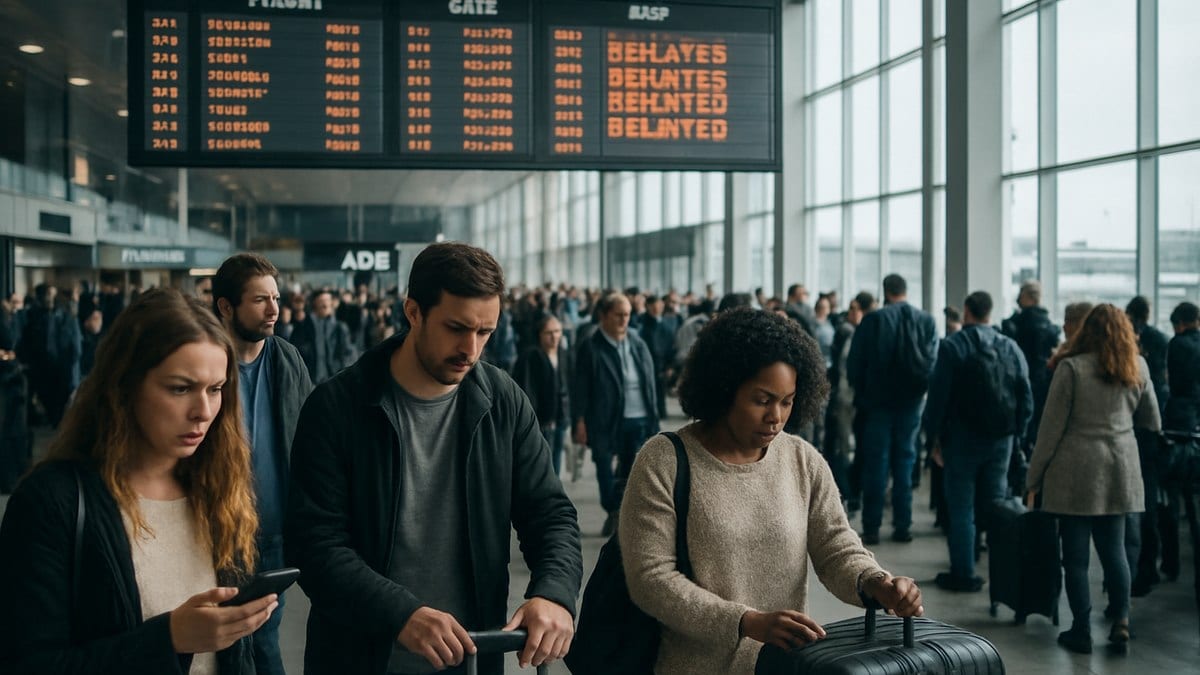
Nationwide Delays Mount Across Major Hubs
Publicly available flight tracking data for April 11 indicates that airlines operating in the United States faced a broad pattern of disruption, with scores of cancellations and well over a thousand delays recorded across the national network. Aggregated figures highlighted by industry-focused outlets reported around 79 flight cancellations and roughly 1,700 delays affecting carriers including Delta Air Lines, United Airlines, Spirit Airlines and regional operators. The impact stretched across key hubs such as Chicago, Atlanta, New York, Los Angeles and St. Louis, affecting both domestic and connecting international itineraries.
These numbers, while below the most extreme holiday meltdown scenarios seen in recent years, were significant enough to create long queues at check-in counters and security lanes, as well as crowded gate areas. The pattern pointed to a system under pressure rather than a single isolated incident, with delays often rippling through the day as aircraft and crews fell behind schedule.
According to published coverage, the April 11 figures fit into a broader run of elevated disruption days in early April, with some airports experiencing successive days of above-average delay counts. Aviation analysts note that such clustered events can result in prolonged recovery times, as airlines struggle to reposition aircraft and crew to restore normal operations.
For passengers, the practical effect was a familiar blend of missed connections, last-minute rebookings and extended waits on tarmacs and in terminal seating areas. Travel forums and social media posts on April 11 reflected growing frustration among travelers who had expected a relatively routine spring weekend of flying.
Storm Systems Trigger Ground Stops and Local Bottlenecks
Weather remained a central factor in many of the April 11 disruptions. In Northern California, San Francisco International Airport temporarily halted ground movements in the early evening as a band of thunderstorms brought heavy rain and gusty winds. Local reporting indicated that the ground stop, introduced shortly after 5 p.m. Pacific time, produced average delays approaching an hour for both arrivals and departures, with warnings that some services could face waits stretching toward two and a half hours as operations resumed.
The San Francisco slowdowns added to a difficult operational backdrop at a time when the airport is already bracing for additional constraints linked to upcoming runway work and tighter federal rules on parallel approaches. Even a relatively short-lived ground stop can create knock-on effects across airline networks, particularly when it hits a major West Coast gateway handling a large share of transcontinental and transpacific traffic.
Elsewhere in the country, pockets of unsettled weather over the Southwest and central states compounded the strain on airline schedules. In Phoenix, publicly available data compiled in travel-industry reporting shows that Sky Harbor International Airport recorded around 163 delayed flights and a small number of cancellations on April 11, skewing heavily toward late departures and arrivals rather than outright flight cuts. That pattern is consistent with scenarios in which storms, low visibility or nearby convective activity repeatedly force short holding patterns and minor flow restrictions.
Such conditions often result in uneven experiences for travelers: some flights depart close to schedule while others operating only minutes apart can face extended delays, depending on when specific traffic management initiatives are imposed or lifted. On April 11, this contributed to a patchwork of delays that made it difficult for passengers to predict whether tight connections would hold.
Texas and Southwest Gateways Face Continued Strain
In Texas and the broader Southwest, several major airports reported elevated disruption levels that fed into the national totals. At Dallas Fort Worth International Airport, publicly available flight tracking summaries cited in regional travel coverage indicate that approximately 197 flights linked to the airport on April 11 were affected by schedule changes, including a mix of delays and cancellations. The scale of the disruption was notable, given DFW’s role as one of the country’s busiest connecting hubs.
When delays climb at large hub airports such as DFW, the impact often extends far beyond the local region. Passengers on seemingly unrelated point to point routes can find themselves disrupted when an aircraft scheduled to operate their flight is held or rerouted earlier in the day. On April 11, travelers passing through North Texas reported extended waits and rebookings as airlines adjusted their schedules to cope with the mounting imbalance between aircraft, crews and gate availability.
Additional pressure was reported at other Texas airports, including Austin and Houston, with regional travel media noting hundreds of combined delays and a more limited number of cancellations across the state over the broader April 11 to April 12 period. These localized issues formed part of the wider pattern of strain on airline operations, highlighting how even modest weather disturbances or ground constraint episodes can quickly cascade through tightly scheduled hub-and-spoke networks.
Farther west, Las Vegas also experienced a difficult operational day. Analysis of publicly available data for Harry Reid International Airport, referenced in coverage by TheTraveler.org, shows that the airport registered more than 250 delayed flights on April 11 alongside a smaller number of cancellations. As in Phoenix, the emphasis on delays rather than wholesale cancellations suggested that airlines were intent on preserving as much of the schedule as possible, albeit at the cost of significant lateness.
Data Underscore Ongoing Vulnerability of US Air Travel
The flight data emerging from April 11 underline the continuing vulnerability of the United States air travel system to compounding factors such as convective weather, air traffic control constraints and tight staffing at both airlines and federal facilities. Industry and government statistics have repeatedly shown that weather remains the single largest driver of delays, a trend reflected in the thunderstorms that affected San Francisco and other parts of the network during the latest disruption wave.
Even on days without headline-generating storms, modern airline schedules leave limited margin for recovery when multiple hubs experience simultaneous strain. Academic and industry analyses of airline operations describe how small disruptions in one region can propagate across the network as aircraft and crews miss their planned rotations. The April 11 pattern, with delays scattered from the West Coast to the central states and major eastern hubs, followed this familiar template.
Publicly available reports from aviation data providers also highlight the changing mix of disruption types. Compared with the large scale winter storm events that can force airlines to preemptively cancel hundreds or thousands of flights, many recent episodes, including April 11, have been characterized by a higher proportion of delays. This can reduce the total number of passengers left without flights but increases the volume of travelers facing multi hour waits and missed same day connections.
For airports and travelers alike, the statistics from April 11 provide another reminder that periods of relatively routine seasonal demand can still bring substantial operational turbulence. With spring and early summer travel ramping up, the ability of airlines and airports to manage localized weather systems and infrastructure bottlenecks without triggering widespread schedule disruption remains under close scrutiny.
What Travelers Experienced and How They Responded
For individual passengers, the April 11 disruption wave played out in familiar scenes at terminals across the country. Crowded departure lounges, long customer service lines and gate change announcements became common as the day progressed. Published accounts from travel media and user generated reports described families separated across multiple flights, business travelers missing meetings and leisure passengers watching weekend getaways shrink by the hour.
Many travelers turned to airline mobile apps and flight tracking tools to monitor real time status, often receiving a rapid succession of small schedule changes that cumulatively resulted in lengthy delays. In some cases, passengers opted to abandon air travel entirely for shorter regional trips, choosing car, train or bus alternatives when it became clear that same day arrival by air was no longer realistic.
Consumer advocates noted through published commentary that the April 11 events again highlighted the importance of flexible booking options and transparent communication. Some travelers were able to take advantage of existing travel waivers or same day change policies to reroute around the worst affected hubs, while others reported difficulty reaching customer service during peak disruption windows.
As airlines and airports continued efforts to normalize operations into April 12, the experiences of travelers on April 11 added to a growing body of public evidence about how recurring mid scale disruption days affect confidence in the reliability of domestic air travel. For many, the latest wave of delays and cancellations reinforced the need to build extra time into itineraries, especially when connecting through large hubs that have shown repeated exposure to weather and capacity related bottlenecks.