

More news on this day
Travelers across the United States faced a fresh wave of flight disruptions on April 11, 2026, as severe weather, staffing strains and already tight airline schedules combined to delay or cancel hundreds of departures at major hubs.
Get the latest news straight to your inbox!
Nationwide Delays Build Through the Day
Publicly available tracking data and industry summaries for April 11 indicate that airlines operating in the United States recorded scores of cancellations and well over a thousand delays, as thunderstorms in several regions and lingering operational strains rippled through tightly packed weekend schedules.
Figures compiled by travel-industry outlets for that date point to at least 79 cancellations and more than 1,700 delayed flights across the country, affecting carriers including Delta Air Lines, United Airlines, Spirit Airlines, SkyWest and several regional operators. These numbers reflect disruption at both coastal gateways and inland hubs, underscoring how quickly local weather can escalate into a nationwide challenge once aircraft and crews fall out of position.
Although the overall totals on April 11 remained below the worst days seen during major winter storms earlier in the year, the pattern mirrored a familiar dynamic for U.S. aviation: a mix of convective weather, air traffic control constraints and high spring demand leaving airports with little margin to absorb even modest interruptions.
Travel advisories from weather services in the days leading up to April 11 had highlighted a stormy pattern from Texas through the Midwest into parts of the East, warning that heavy rain, strong winds and thunderstorms could slow both ground transportation and flights through mid-April.
Southern Hubs Struggle With Storms and Staffing
The disruptive conditions were particularly evident in the Southeast, where Hartsfield-Jackson Atlanta International Airport, the country’s busiest passenger hub, operated through a combination of strong storms and staffing pressures. Local coverage from Atlanta on April 11 described a day marked by significant schedule changes, with severe weather in eastern North America identified as the main trigger and Transportation Security Administration staffing shortfalls cited as a compounding factor.
Reports from the region linked those elements to a broader tally of more than 1,700 flights affected across multiple airports, as ground stops, reroutes and longer security lines slowed passenger flows and limited the ability of airlines to recover from early-morning disruptions. As is typical during convective weather events, thunderstorms near departure and arrival corridors forced traffic management programs that reduced the rate at which aircraft could safely land and take off.
In Texas, Dallas Fort Worth International Airport also emerged as a notable pressure point. A detailed breakdown published by TheTraveler.org shows that approximately 197 flights associated with DFW on April 11 were delayed or canceled, generating long lines at check-in counters and security checkpoints and pushing some travelers into missed connections.
Operational summaries for DFW point to fluctuating weather conditions in North Texas, interacting with peak-period congestion at one of the nation’s largest connecting hubs. Analysts note that once taxi times increase and gate availability tightens, delays tend to cascade quickly, especially late in the afternoon and evening when crews approach duty-time limits.
Western Gateways See Knock-On Effects
Farther west, airports that initially appeared outside the core storm track nevertheless experienced significant knock-on effects from the national disruption picture. At Phoenix Sky Harbor International Airport, publicly available data for April 11 show 163 delayed flights and two cancellations, creating bottlenecks at a critical desert gateway that serves both domestic and international routes.
Coverage by TheTraveler.org links the Phoenix delays to a combination of factors, including aircraft arriving late from weather-affected regions and broader air traffic capacity limits. Even when conditions around Phoenix itself remained relatively stable, the airport’s role as a connecting point meant that earlier interruptions elsewhere translated into later departures and tighter connections for passengers passing through Arizona.
Harry Reid International Airport in Las Vegas followed a similar pattern. Flight-tracking snapshots for April 11 cited in travel-industry reporting indicate that more than 250 services at Las Vegas were delayed, with a smaller number of cancellations recorded. The disruptions affected both arrivals and departures, complicating turnarounds for airlines banking on quick ground times during a busy spring weekend.
Analysts note that while western hubs often escape the direct impact of storms centered over the Midwest and East, they remain highly exposed to displacement of aircraft and crews. When an early-morning departure from the central United States is held or canceled, the ripple can reach evening flights out of desert and coastal cities many hours later.
Midwest Storm Track Adds Another Layer of Risk
In the Midwest, the April 11 disruptions unfolded against a backdrop of intense and, in some areas, unseasonable weather. Regional coverage from Chicago and Minneapolis on that date described a powerful storm system bringing heavy snow, high winds and the threat of additional travel problems across the Great Lakes corridor.
While comprehensive, airport-by-airport delay counts for the region on April 11 were still emerging, reports of hazardous road conditions, blowing snow and reduced visibility highlighted the vulnerability of both air and ground travel infrastructure. High crosswinds and low cloud ceilings in particular can force approach changes and runway restrictions, reducing capacity at major hubs and contributing to rolling delays.
The disturbance followed a series of winter and early spring events that have already tested airline and airport resilience in 2026. Meteorological outlooks published in early April noted that repeated storm systems sweeping out of the Rockies toward the Great Lakes were likely to maintain elevated disruption risk for aviation, even as temperatures began to rise and leisure travel picked up.
Travel experts point out that the Midwest’s central position in U.S. air networks amplifies the impact of any weather system moving through the region. When airports there must trim arrival and departure rates, passengers bound for the coasts or secondary cities often feel the resulting delays, even if skies are clear at their final destination.
Travelers Confront Long Lines and Limited Options
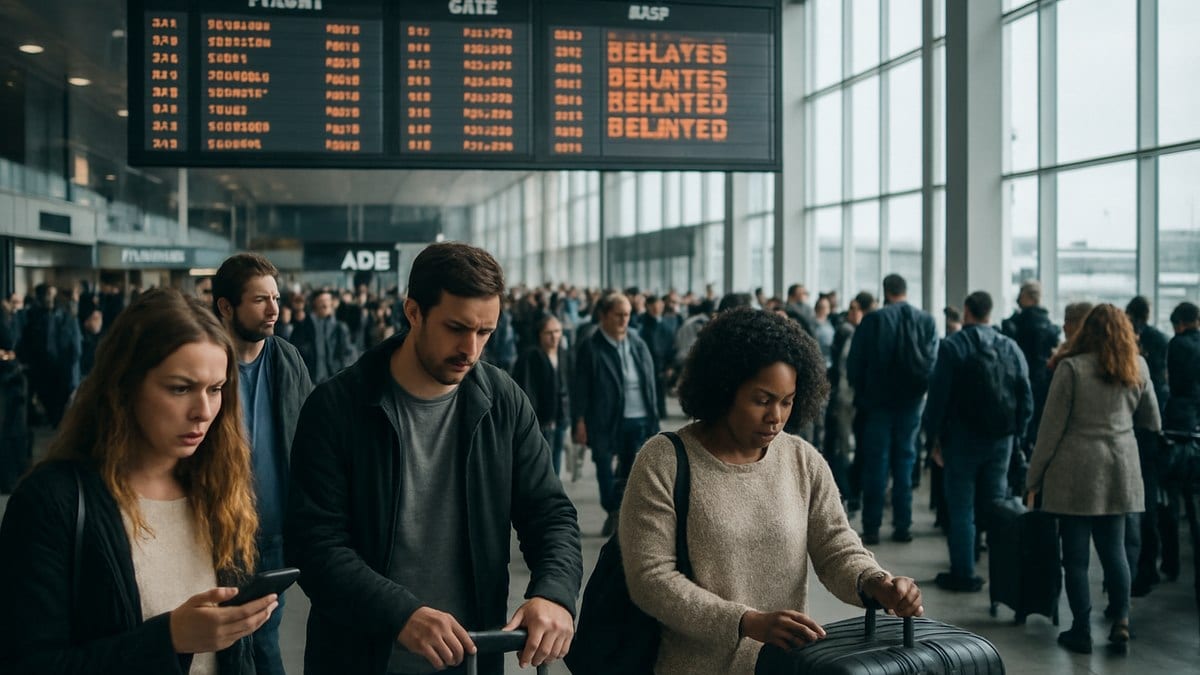
For passengers traveling on April 11, the operational statistics translated into familiar scenes of crowded concourses and departure boards dotted with yellow and red status changes. Observers at several major airports described long queues for customer service desks as travelers sought rebookings, meal vouchers and overnight accommodations.
Public guidance from airlines and travel-advocacy groups in recent months has increasingly emphasized the importance of proactive planning on high-risk days. Common recommendations include allowing extra time at the airport, monitoring flight status through carrier apps or text alerts, and considering earlier departures when forecasts call for afternoon or evening storms along key routes.
Industry data reviewed by weather and aviation analysts also underscore how quickly adverse conditions can translate to systemic disruption. Research drawing on U.S. Bureau of Transportation Statistics records indicates that while extreme weather accounts for a minority of overall delays, its impact is often concentrated in short, intense bursts that overwhelm schedules and strain customer-service resources.
As airlines, airports and federal agencies continue to invest in tools intended to improve forecasting and traffic management, the events of April 11 offer another reminder of the limits of even sophisticated planning in the face of volatile spring weather and near-record passenger volumes.