

More news on this day
Travelers passing through Detroit Metropolitan Wayne County Airport on Sunday faced a fresh round of disruptions, with at least 53 flight cancellations and 199 delays rippling through the schedules of Delta, SkyWest, Spirit, Endeavor and other carriers amid wider operational strain at major U.S. hubs from New York to Miami and Washington to Minneapolis.
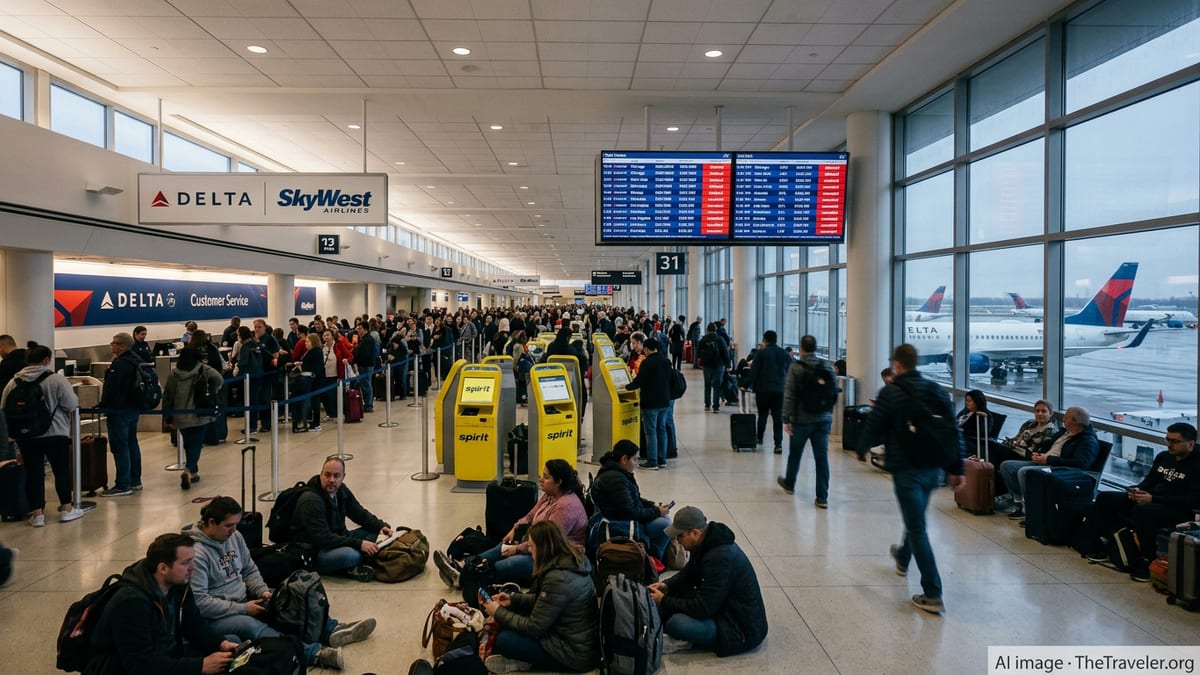
Detroit Metro Feels the Impact of a Strained U.S. Air Network
The latest figures from airline status boards and tracking services on March 8 indicate that Detroit Metro has not been spared as congestion and lingering weather issues squeeze capacity across the system. While Detroit itself reported relatively benign afternoon conditions, delays and cancellations elsewhere in the network translated into missed aircraft routings and crew imbalances that fed directly into DTW’s operations.
Delta Air Lines, the dominant carrier at Detroit, absorbed a significant share of the disruption as it worked to recover from earlier weather problems across the Midwest and East Coast. Regional operator Endeavor Air, which flies many of Delta’s shorter routes under the Delta Connection brand, also reported scattered cancellations as tight turn times and rolling traffic management programs left little buffer in the schedule.
Spirit Airlines, which operates out of Detroit’s North Terminal with a largely domestic leisure network, reported delays primarily on Florida and East Coast flights, where congestion and air traffic control restrictions were heaviest. SkyWest, operating regional flights on behalf of several major airlines, saw its own irregular operations cascade into Detroit as inbound aircraft from affected hubs arrived late or were removed from rotation entirely.
Airport officials urged passengers to arrive early and stay closely in touch with their airlines, noting that the situation remained fluid through the afternoon. Gate and customer service agents were busy rebooking affected travelers onto later departures and, in some cases, next-day flights where available capacity had already been exhausted.
Weather Hangover and Traffic Management Programs Drive Disruptions
The difficulties at Detroit on Sunday followed a turbulent 48 hours for the U.S. air travel system. Severe thunderstorms in parts of the Midwest and Southeast, combined with low ceilings, residual icing concerns and high traffic volume, had already triggered multiple rounds of ground delay programs and temporary ground stops at several large hubs. As those airports tried to work through backlogs of aircraft and passengers, knock-on effects reached far beyond the areas directly hit by bad weather.
New York area airports were again in the spotlight, with LaGuardia, John F. Kennedy and Newark Liberty all facing periodic arrival and departure metering as controllers managed congested airspace and shifting weather bands along the Northeast corridor. Flights feeding into Detroit from New York and New Jersey often left late or were held on the ground, compressing connection windows and forcing some passengers to misconnect.
Farther south, Miami and other Florida gateways reported heavy demand as winter-weary travelers continued to head for warm-weather destinations. Periods of thunderstorms and route saturation along the busy East Coast and Atlantic flows led to stacked departure queues and holding patterns, slowing turn times for aircraft that would later operate services to and from Detroit. Washington-area airports and Minneapolis also cycled through delay programs as low clouds and crowded arrival banks combined with already tight schedules.
Operational planners across the major carriers emphasized that even brief interruptions at multiple hubs create major challenges when networks are running near full capacity. When storms or low visibility require greater spacing between aircraft, the number of flights that can be handled in a given hour falls, and airlines must decide which departures to delay, consolidate or cancel outright to keep the system moving.
Delta, SkyWest, Spirit and Endeavor Among Hardest Hit Carriers
At Detroit, Delta and its regional partners were especially exposed, given the carrier’s role in connecting passengers between the East Coast, Midwest, South and international destinations. Aircraft arriving late from New York, Washington and Florida did not always have enough time for crews and ground staff to complete safety checks, cleaning and refueling before scheduled departures, leading to a series of cascading delays through midday.
SkyWest, which operates flights for Delta as well as for United and American on other parts of its network, reported a patchwork of cancellations and rolling delays that reflected constraints at several of its key hubs. With crews and aircraft positioned across multiple time zones, the company faced the dual challenge of recovering from earlier cancellations while also meeting the day’s scheduled demand.
Spirit’s point-to-point business model meant that disruptions in Florida and along the East Coast were quickly felt on Detroit routes. Popular leisure flights to Orlando, Tampa and Fort Lauderdale were among those experiencing knock-on delays as congested departure banks at Florida airports forced outbound aircraft to wait for takeoff slots, pushing arrivals into Detroit later into the evening.
Endeavor Air, flying smaller regional jets on shorter sectors, faced limited flexibility once weather and air traffic constraints delayed early-morning and mid-morning rotations. With limited spare aircraft and crews available, even a small number of cancellations and long delays could leave travelers in smaller Midwest and East Coast markets facing long waits for alternative options.
New York, Miami, Washington and Minneapolis Hubs Under Pressure
Beyond Detroit, the day’s disruption pattern underscored how closely linked major U.S. airports have become. New York City’s trio of airports dealt with a combination of shifting winds, intermittent low clouds and saturated airspace, prompting metered arrival flows that slowed down traffic headed toward Detroit and other Midwestern hubs. Airlines worked to smooth out bank structures to reduce peak congestion, but high passenger loads on Sunday departures left little room to redistribute demand.
Miami International, a major gateway for Latin America and the Caribbean, saw heavy afternoon and evening departure banks complicated by passing showers and route congestion over the Atlantic and Gulf. Aircraft scheduled to return to Detroit after morning and midday runs to Florida often left late, squeezing turnaround times and forcing some Detroit-bound flights to depart behind schedule.
In Washington, Ronald Reagan Washington National and Washington Dulles International each reported intermittent delays as controllers balanced security-related airspace constraints with busy weekend traffic. Connections from these airports into Detroit, particularly on business-heavy routes, experienced rolling delays that added to the pressure on Detroit’s afternoon and evening banks.
Minneapolis Saint Paul International, another key Delta hub, also felt the strain as it handled a mix of regional and long-haul services amid lingering upper-level weather and high demand. Any imbalance in aircraft or crew availability there could easily ripple into Detroit’s schedule, given the tight integration between the two hubs in Delta’s network.
What Travelers at Detroit Should Expect and How to Respond
For passengers at Detroit Metro, the cumulative effect of 53 cancellations and nearly 200 delays translated into long lines at check in counters, crowded gate areas and rapidly changing departure boards. Many travelers reported being rebooked onto later flights with limited remaining seat availability, particularly on routes to Florida, the Northeast and major Midwestern hubs.
Airlines encouraged customers to use mobile apps and text alerts to track their flight status in real time and, where possible, to confirm or adjust itineraries before heading to the airport. Same-day change options and rebooking waivers were made available on some affected routes, particularly for passengers connecting through the most heavily delayed hubs in New York, Florida and the Mid-Atlantic.
Airport staff at Detroit also sought to ease the strain by directing passengers toward less crowded security checkpoints and encouraging the use of self-service kiosks and automated bag drops. Even with those measures, travelers were advised to allow extra time both before departure and during tight connections, given the continuing possibility of rolling delays.
With weather systems and high demand expected to remain factors in the coming days, airlines serving Detroit Metro signaled that they would continue to adjust schedules and deploy additional staff where possible to stabilize operations. For now, though, passengers across the network are being reminded that seemingly localized storms or slowdowns at a handful of hubs can disrupt travel hundreds of miles away, as Detroit’s latest day of cancellations and delays made clear.