

More news on this day
Passengers traveling through Vancouver International Airport in recent days have faced mounting delays and cancellations as turbulent spring weather and wider network strains combine to squeeze capacity across Canada’s key air corridors.
Get the latest news straight to your inbox!
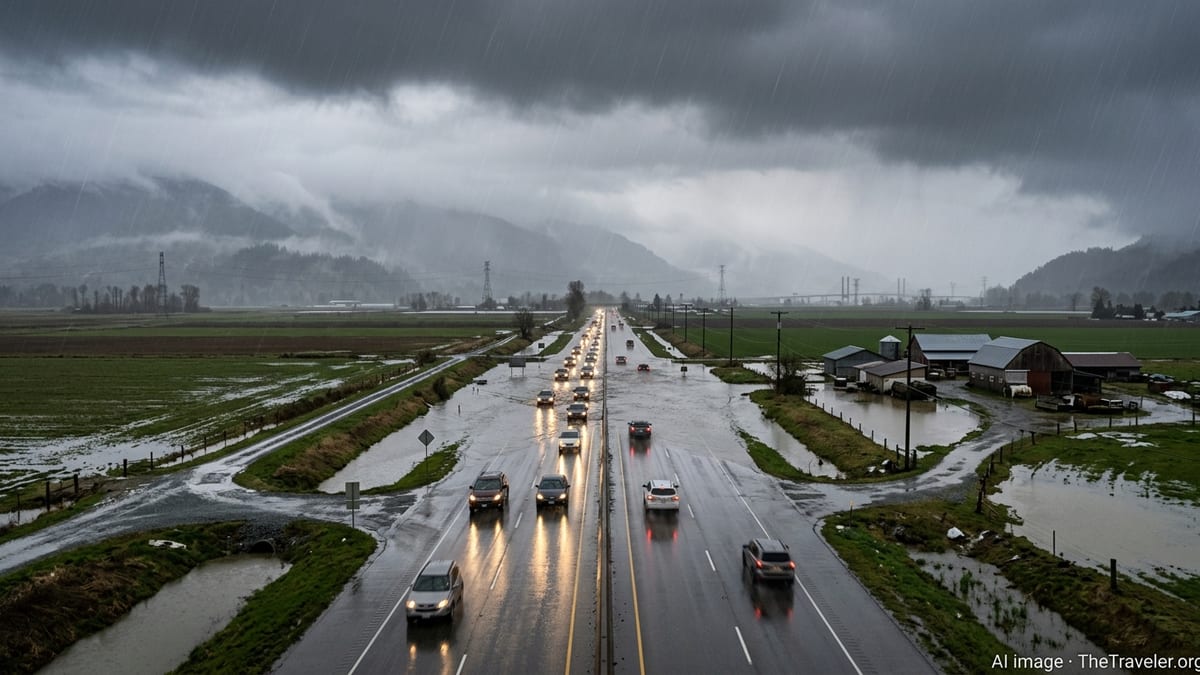
Stormy Spring Adds Turbulence to Busy Travel Period
Fresh snow, freezing rain and strong winds across parts of Canada and the northern United States at the start of April have created a difficult backdrop for airlines working through the busy Easter and early spring travel period. Publicly available flight data and media reports indicate that a series of late-season storms over the weekend of April 4 to 6 triggered hundreds of delays and dozens of cancellations nationwide, with Vancouver International Airport among the hubs experiencing disruption.
National tallies compiled from airport boards and aviation analytics suggest that on April 5 alone more than 400 flights were delayed and over 80 were cancelled across major Canadian airports, including Toronto, Montreal, Calgary and Vancouver. While the heaviest weather impacts were concentrated in central and eastern Canada, the knock-on effects constrained aircraft and crew availability across the network, amplifying even minor scheduling issues along the west coast.
Coverage by travel and industry outlets describes a patchwork of conditions, with some airports contending with icy runways and low visibility while others, including coastal British Columbia, dealt with shifting wind patterns and capacity reductions. The result has been a choppy operating environment in which airlines are more vulnerable to minor disturbances that might otherwise be absorbed on less busy days.
At Vancouver, where spring typically brings a mix of rain, low cloud and occasional wind events, the latest pattern coincided with elevated holiday demand, narrowing the margin for on-time operations. Passengers have reported missed connections, extended time on the tarmac and rebookings through secondary hubs as carriers worked to reposition aircraft and crews.
Vancouver Feels the Ripple From Network-Wide Strain
Although weather conditions at Vancouver have fluctuated rather than remaining consistently severe, the airport’s role as a transpacific and domestic hub means that any instability elsewhere in the system is quickly felt on its schedules. Recent reporting shows that disruptions in Toronto, Montreal and several U.S. hubs earlier in April contributed to a backlog of delayed aircraft flowing through Vancouver’s gates.
Analyses of Canadian air travel performance over the 2025–26 winter season indicate that carriers have generally maintained high overall completion rates but faced clusters of intense disruption concentrated into a handful of days. When those clusters coincide with peak periods such as holiday travel, Vancouver’s arrivals and departures boards can quickly tilt toward yellow and red as upstream delays propagate west.
Data snapshots from early April show that on certain days Vancouver logged only a modest number of outright cancellations but a significantly higher volume of delayed flights, particularly on domestic routes linking the airport with Calgary, Edmonton and eastern Canadian cities. Short-haul services are often used to feed long-haul and international departures, so even a one- or two-hour hold on an inbound aircraft can cascade into missed long-haul connections for onward passengers.
Observers note that this pattern is consistent with broader North American trends over recent years, in which major hubs outside the immediate storm zone nonetheless experience substantial knock-on disruption as capacity reductions, air traffic flow programs and crew duty-time limits interact across multiple time zones.
Network and Technology Pressures Limit Recovery
Beyond the immediate impact of snow, ice and wind, the recent disruption at Vancouver has highlighted how sensitive modern airline operations are to network and technology constraints. Aviation analysts point out that even short-lived weather events can cause prolonged recovery periods when fleets are tightly scheduled and ground resources are already stretched.
In Canada and elsewhere, recent high-profile technology outages have shown how dependent airlines are on crew-tracking systems, flight-planning software and airport operational databases. While there have been no widely reported system failures of that scale at Vancouver in early April, public commentary and past regional incidents illustrate how any slowdown in these tools can exacerbate weather-related strain, making it harder to reshuffle crews, reassign aircraft and communicate changes to passengers.
Reports focusing on the Canadian network stress that once a wave of delays takes hold, gate availability, de-icing capacity where needed, and runway slot management become critical bottlenecks. At a constrained coastal airport such as Vancouver, with finite runway capacity and a dense schedule of widebody and regional movements, these factors can mean that the effects of a brief storm or gusty wind period continue to be felt well into the following day.
Travel data providers also note that growing passenger volumes and the rapid rebound of international travel have left less slack in the system compared with earlier in the decade. Airlines operating at or near pre-pandemic capacity have fewer spare aircraft and crews to deploy when schedules begin to unravel, lengthening recovery times at hubs like Vancouver.
Travellers Navigate Uncertain Schedules and Changing Rights
For passengers, the recent conditions at Vancouver have reinforced the importance of monitoring flight status closely and understanding the limits of compensation rules. Public guidance referencing Canada’s Air Passenger Protection Regulations explains that eligibility for monetary compensation often depends on whether a disruption is within an airline’s control or linked to external factors such as severe weather or air traffic restrictions.
Consumer advocates note that this distinction can be confusing when weather and operational factors combine, as has been the case in recent days. A flight may be delayed initially by a storm at another airport, but subsequent crew availability or maintenance decisions can influence whether a traveller is entitled to rebooking options, meal vouchers or refunds. Passengers transiting through Vancouver from other Canadian cities or from the United States may encounter differing rules and practices depending on the airline and the nature of the disruption.
Published advice from travel organizations encourages travellers to keep electronic boarding passes, receipts and screenshots of delay information when disruptions occur. These documents can be useful later if passengers file claims under national regulations or seek goodwill gestures from carriers. At times of network-wide strain, however, even successful claims do little to offset the immediate inconvenience of missed holidays, business meetings or family events.
Despite the frustration, early indications suggest that the latest round of disruption has not deterred most travellers from flying through Vancouver, which remains one of the country’s busiest and most strategically important gateways. Industry observers expect airlines and airport operators to review performance data from this spring’s storms to refine contingency plans, with a particular focus on how to reduce the time it takes to clear backlogs once the weather improves.
Outlook: More Volatility in a Changing Climate
Meteorological assessments of recent years point to increasingly erratic weather patterns across North America, with late-season snow events, sharp temperature swings and strong wind systems becoming more common. For a coastal hub like Vancouver, this can mean rapid transitions from calm, mild conditions to gusty, rain-lashed periods that reduce runway capacity and complicate approaches.
Climate and insurance analysts observing the Easter-period storms have emphasized that such volatility poses a growing challenge for airline scheduling models that were built around historical norms. When previously rare combinations of weather now appear multiple times a season, both carriers and airports must adjust planning assumptions for crew, maintenance and spare capacity.
For passengers moving through Vancouver in the coming weeks, this translates into a continuing need for flexibility, from allowing more connection time to considering earlier departures on days with adverse forecasts. While the current disruption is expected to ease as storm systems move away and aircraft are repositioned, the episode has provided another reminder that Canada’s west coast gateway sits within a highly interconnected and increasingly weather-sensitive aviation network.