

More news on this day
Passengers traveling through New York’s John F. Kennedy International Airport on April 2 faced mounting delays and a growing number of cancellations as multiple U.S. regional carriers and British Airways struggled to keep services running on time amid poor weather and operational constraints across the Northeast air corridor.
Get the latest news straight to your inbox!
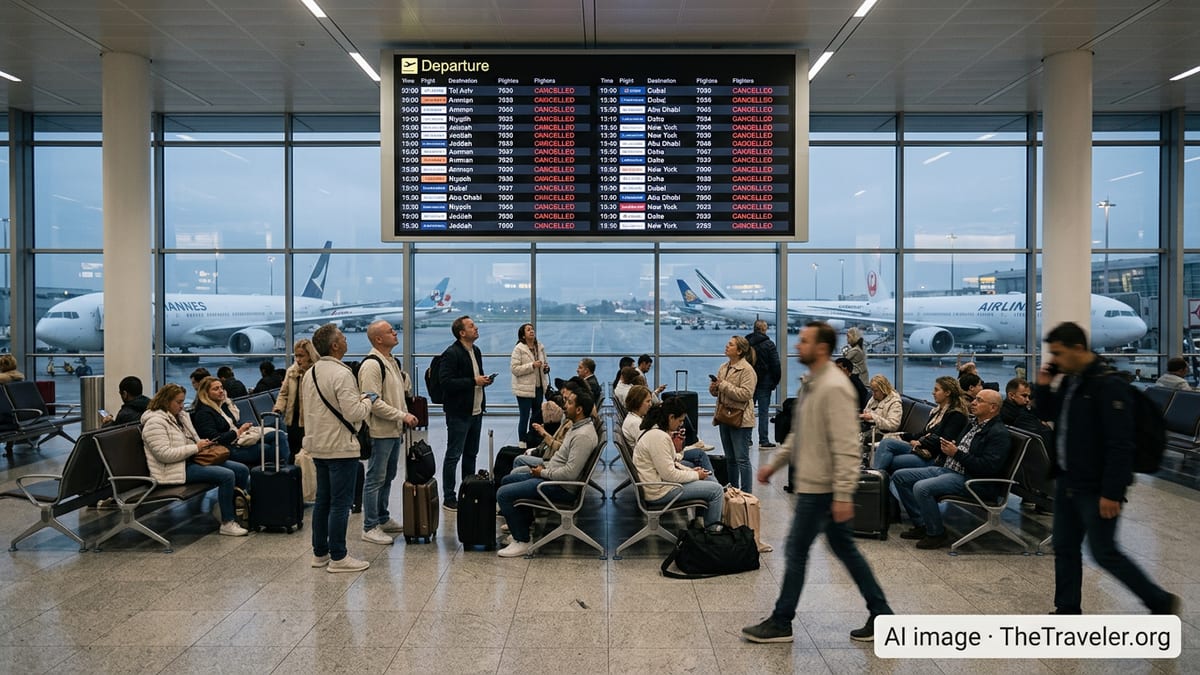
Ground Delays at JFK Ripple Across Key Hubs
Publicly available flight operations summaries for April 2 indicate that the Federal Aviation Administration implemented a series of ground delay and flow management programs affecting major hubs, including New York and Chicago. Weather systems bringing low clouds and rain into the region contributed to reduced arrival rates and longer taxi times, creating early bottlenecks in the schedule.
Industry tracking services show that JFK was listed among airports at risk for ground delay programs, alongside Chicago O’Hare, Boston and several other large facilities. This shift from forecast risk to active restrictions meant that carriers operating into and out of JFK had to reduce or resequence flights, affecting both domestic and international operations.
The New York region already accounts for a disproportionate share of air traffic snags in the United States, with historical transportation data showing that a significant portion of nationwide delays often originates at the three main metropolitan airports. When additional constraints are layered on top of this baseline congestion, minor disruptions can quickly cascade into widespread schedule changes.
On April 2, this dynamic played out as tighter airspace management over the Northeast combined with runway and approach constraints at JFK, forcing airlines to push back departure times and hold arriving aircraft, which in turn delayed aircraft and crew for later rotations.
Regional Carriers Endeavor and Republic Hit JFK–Chicago Links
At JFK, regional affiliates Endeavor Air and Republic Airways were among the operators most exposed to knock-on effects from the Chicago and New York traffic management programs. These carriers handle a large share of Delta and American branded feeder services that connect JFK with Midwestern hubs such as Chicago O’Hare.
Historical federal consumer reports show Endeavor and Republic as regular operators on high-frequency JFK to Chicago routes, which are particularly sensitive to any slowdown at either end of the corridor. When Chicago O’Hare was placed under a ground stop earlier in the day and then transitioned into a delay program, flights linking JFK and O’Hare saw extended departure queues and longer en route spacing.
As aircraft and crews became misaligned, schedules that rely on rapid turnarounds began to fray. By midafternoon, tracking dashboards pointed to dozens of delayed regional movements touching JFK, with a portion of those tied to Endeavor and Republic services. While many flights still operated, they did so behind schedule, increasing the likelihood of missed connections for passengers heading deeper into the domestic network.
Some services on the Chicago corridor were ultimately canceled as operators adjusted their plans to focus on core rotations that could still be reliably completed within crew duty limits. This left travelers rebooked onto later departures or routed through alternative hubs, extending journey times by several hours.
British Airways and Transatlantic Passengers Face Knock-On Delays
The disruption at JFK also affected transatlantic operations, notably for British Airways, which operates multiple daily services between New York and London. Flight tracking data for the carrier’s evening departures showed shifting departure times as inbound aircraft and connecting passengers encountered delays earlier in the day.
British Airways has faced periods of elevated delay and limited cancellations across its European network in recent weeks, according to regional aviation coverage that has highlighted operational strains during late winter and early spring. While the bulk of this activity has centered on London, the cumulative effect has been reduced slack in the system when unforeseen constraints emerge at key U.S. gateways such as JFK.
On April 2, as ground delays and approach restrictions altered the flow of traffic into New York, British Airways services departing JFK toward London were forced to adjust their schedules. In several cases, departures pushed back later than planned to accommodate delayed inbound connections or to align with revised air traffic control slots over the North Atlantic.
These shifts created additional disruption for passengers connecting onward in Europe, turning what are typically overnight flights into journeys that arrived later into the morning arrival banks. Travelers booked on early connections from London to continental destinations faced tighter margins and, in some cases, missed onward services.
Jazz Aviation and Montreal Routes Squeezed by Northeast Weather
The stormy pattern over the broader Northeast corridor also placed pressure on cross border services linking New York with eastern Canada. Jazz Aviation, which operates regional flights for Air Canada, has a prominent role in routes from Montreal and Toronto into New York area airports, including JFK and LaGuardia.
Recent incidents in the region, including weather related tarmac delays on services involving Jazz Aviation, illustrate how sensitive these shorter sectors are to sudden changes in airport operating conditions. With both Canadian and U.S. hubs subject to low ceilings and precipitation, turnaround times tightened and departure slots became more difficult to secure.
On April 2, passengers traveling between Montreal and New York reported extended waits as aircraft repositioning and slot availability combined to slow operations. Where services did operate, they often did so with departure delays, putting pressure on connections from JFK to onward U.S. destinations.
A limited number of cancellations on cross border routes added to the strain, concentrating demand on the flights that remained. That contributed to fuller cabins, limited same day rebooking options, and longer lines at customer service desks for travelers attempting to reroute via other U.S. or Canadian gateways.
Travelers Urged to Plan for Ongoing Volatility
The April 2 pattern at JFK fits into a broader trend of heightened travel volatility during the spring shoulder season, as active weather systems coincide with tight airline staffing and aircraft utilization. Aviation analysts note that when multiple hubs such as New York and Chicago are affected simultaneously, regional affiliates, long haul carriers and cross border operators can all experience cascading disruptions within a single day.
Consumer advocates advise passengers flying through JFK and other major hubs to build extra buffer time into itineraries, particularly when relying on short regional legs to feed longer haul flights. Choosing earlier departures where possible and avoiding tight minimum connection windows can reduce the risk of misconnecting in the event of delay programs or ground stops.
Travel planning services also recommend closely monitoring airline notifications and federal aviation advisories in the 24 hours leading up to departure. Ground delay programs and airspace flow restrictions are often updated throughout the day as weather evolves, and early awareness can give travelers more options to adjust plans before flights become heavily oversold.
With the Northeast airspace forecast to remain active through the early part of April, industry observers expect periodic flare ups of disruption similar to those seen at JFK. For passengers on routes to Chicago, Montreal and other key hubs, flexibility and advance preparation are likely to remain important tools in navigating an increasingly unpredictable travel environment.