

More news on this day
Passengers across the Netherlands, Germany, the United Kingdom and Italy are facing fresh travel disruption as a wave of delays and cancellations sweeps through major European airports, with London Heathrow, Berlin Brandenburg and other hubs reporting 151 delayed and 88 cancelled flights affecting carriers including easyJet and KLM on routes touching Amsterdam, Rome and several other cities.
Get the latest news straight to your inbox!
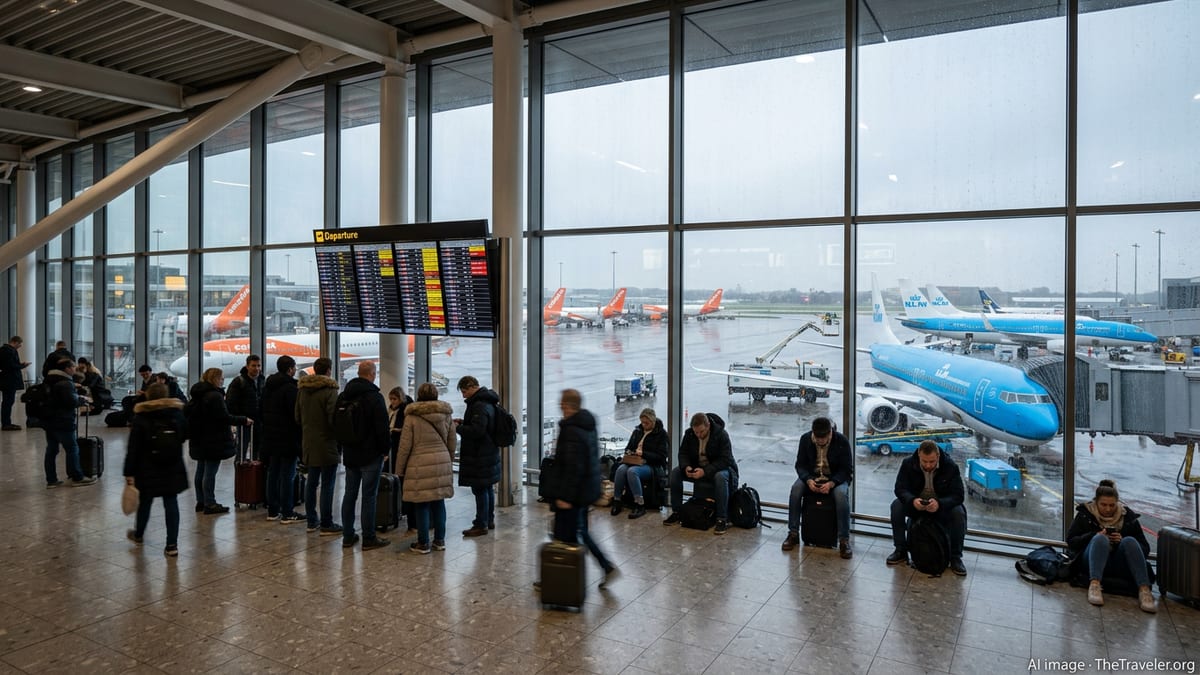
Multiple European Hubs Hit by Fresh Disruptions
Operational data and airport tracking services indicate that London Heathrow and Berlin Brandenburg are among the worst affected, as a combination of winter weather, tight operating windows and staffing issues constrains flight movements. The disruption is rippling through wider European networks, leading to knock-on delays at airports such as Amsterdam Schiphol and Rome Fiumicino as aircraft and crews arrive late or are repositioned.
At London Heathrow, already one of Europe’s most capacity constrained hubs, even modest schedule changes can have outsized effects. Recent reports on punctuality show that the airport typically runs with limited slack in its daily program, so any weather or air traffic restriction can quickly translate into dozens of delayed departures and arrivals across short-haul and long-haul routes.
Berlin Brandenburg has also emerged as a recurring pressure point this winter. Publicly available information and recent passenger accounts describe frequent suspensions or reductions in operations during periods of freezing rain, snow or low visibility, with several incidents in recent weeks where runway conditions led to extended holds, diversions and cancellations affecting both domestic and international services.
The current episode, involving at least 151 delayed and 88 cancelled flights across the affected airports and partner hubs, reflects the fragility of the regional network when multiple constraints occur at once, especially during peak morning and evening waves.
Weather, Night Curfews and Tight Schedules Compound Delays
Across northern Europe, a notably unstable winter pattern has increased the likelihood of disruption. Recent storms and cold snaps over the Netherlands and Germany have brought snow, strong winds and freezing rain, conditions that slow down de-icing, runway clearing and ground handling. Even brief closures for safety checks can push departures into time windows that airports cannot accommodate, particularly where strict night curfews are in place.
Berlin Brandenburg, for example, operates under night-time restrictions that limit takeoffs and landings during late hours. Passenger reports in recent months describe flights being diverted to other German airports or cancelled outright when earlier disruptions pushed scheduled arrivals past curfew, leaving airlines with few operational alternatives late in the day.
Amsterdam Schiphol, a key hub for KLM and a major base for easyJet, has also been repeatedly affected by high winds and reduced runway capacity during strong Atlantic systems. When air traffic control limits the rate of arrivals or departures for safety reasons, airlines often face long holding times that can in turn trigger crew duty-time limits, forcing additional cancellations as the day progresses.
In southern Europe, Rome Fiumicino has felt the secondary effects of these northern constraints. Delayed inbound aircraft from London, Amsterdam and German cities have caused late turnarounds and departures, creating an uneven flow of traffic that complicates stand allocation and baggage handling and extends queues at security and passport control for connecting passengers.
Impact on easyJet, KLM and Other Carriers
The disruption is particularly visible at airlines with dense intra-European networks. easyJet, which operates significant point-to-point schedules from London and Berlin into major leisure and business markets, is vulnerable when multiple bases are hit simultaneously. Recent schedule snapshots show clusters of easyJet services to and from the United Kingdom, Germany, the Netherlands and Italy operating with extended delays, alongside a smaller number of outright cancellations.
KLM, as the flag carrier of the Netherlands and primary operator at Amsterdam Schiphol, has also faced pressure. During earlier winter storms, Schiphol saw hundreds of cancellations and delays in a single day, with KLM forced to trim schedules to match reduced runway capacity. The latest wave of disruption appears less severe than the most extreme recent episodes but is still significant enough to affect connections between European short-haul flights and intercontinental services via Amsterdam.
Other network airlines and low-cost carriers are also affected to varying degrees, especially those with tight turnaround times and high aircraft utilization. When an aircraft arrives an hour or more late into a hub such as Heathrow or Amsterdam, the delay can cascade across subsequent rotations, contributing to the total of 151 delayed flights recorded during the current disruption window.
For passengers, the practical impact ranges from missed connections and overnight stays to rebookings on alternative routings through less affected airports. Social media posts and traveller forums from recent weeks describe a pattern of rolling notifications, with flights initially delayed, then rescheduled, and in some cases cancelled as operational limits are reached.
Strikes and Staffing Constraints Add Another Layer
Alongside weather-related challenges, industrial action continues to play a role in Germany and other parts of Europe. Past nationwide airport strikes in Germany, including actions that have affected Berlin Brandenburg, Frankfurt, Munich and several regional hubs, demonstrate how walkouts by ground staff or security workers can shut down large parts of the network for an entire day, with residual delays lingering well into subsequent schedules.
While the latest disruption figures at Heathrow and Berlin are primarily linked to weather and operational limits, staff availability remains a critical background factor. Industry reports and union communications over the past year highlight ongoing disputes over pay and working conditions, as well as persistent shortages in some specialist roles, particularly in ground handling and security screening.
In the United Kingdom, earlier technical issues and staffing pressures at air traffic control and handling providers have illustrated how quickly capacity can be reduced when key systems or teams are constrained. Even when no formal strike is under way, high sickness rates, training backlogs or overtime limits can leave airports with less resilience than scheduled timetables assume.
These structural vulnerabilities mean that when storms or freezing temperatures hit, the system has limited ability to absorb the shock without sliding into the kind of multi-airport disruption now being reported across the UK, Germany, the Netherlands and Italy.
What Travellers Can Expect in the Coming Days
With weather forecasts indicating continued variability across northern Europe, travellers using Heathrow, Berlin Brandenburg, Amsterdam, Rome and other connected hubs are likely to face further schedule adjustments in the short term. Airlines have increasingly shifted toward proactive cancellations and schedule thinning when severe conditions are predicted, aiming to reduce on-the-day chaos at terminals and on the airfield.
European air passenger rights rules provide a framework for assistance and, in some circumstances, compensation for affected travellers, but the level of support depends on the cause of disruption and the length of delay. Passengers experiencing multi-hour delays or cancellations are generally entitled to basic care at the airport, while monetary compensation may not apply where airlines can classify the disruption as the result of extraordinary circumstances such as severe weather.
Operational data over recent seasons suggests that major hubs like Heathrow and Amsterdam are likely to keep experiencing periodic clusters of delays during peak travel periods and adverse weather. As airlines refine their schedules for the remainder of the winter and into the busy summer season, observers expect a continued focus on building additional buffers into turnaround times and concentrating capacity on the most profitable or strategically important routes.
For now, the tally of 151 delayed and 88 cancelled flights across the latest disruption window serves as another reminder of how interconnected Europe’s air travel system has become, and how quickly issues at a handful of key hubs can affect passengers from the UK and Germany to the Netherlands, Italy and beyond.